
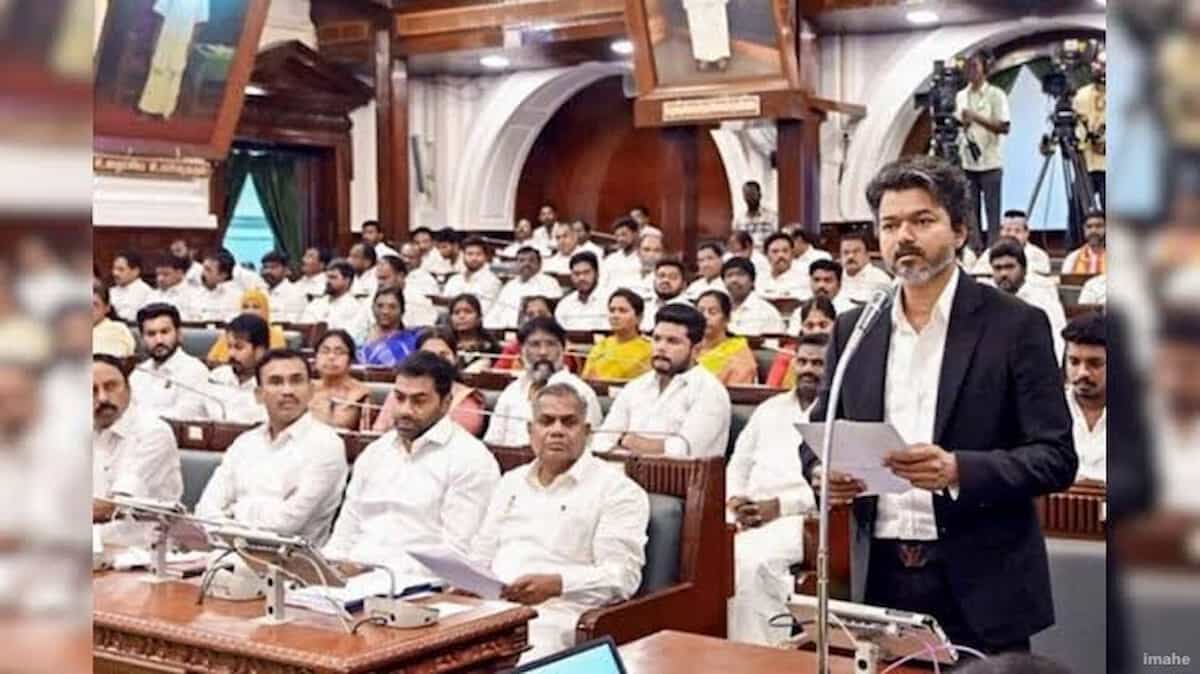
Thalapathy Vijay’s big demand: Will this chaos end forever by bringing education in the state list?

There is no sign of stopping the anger of students over the paper leak and alleged irregularities in the medical entrance exam NEET across the country. Meanwhile, South Indian cinema megastar turned politician Thalapathy Vijay has played a very tough and big political bet on this sensitive issue. Taking the ball out of the Central Government’s court, Vijay has made a strong demand to include education back in the ‘State List’. He argues that unless the states get the right to decide the examination and education system according to their local conditions, such paper leaks and scams that play with the future of students cannot be stopped. After this statement of Thalapathy Vijay, a new debate has started in the political circles from South India to the national capital whether this step can really prove to be a permanent solution to all the problems of the country’s education system. Why has the NEET exam and paper leak controversy gained momentum? For some time now, the transparency of NEET exam, the functioning of the National Testing Agency (NTA) and the continuously emerging cases of paper leaks have forced lakhs of meritorious students and their parents of the country to take to the streets. Students say that despite working hard year after year, when papers get leaked due to shortcomings in the system, their entire future becomes bleak. Understanding this public anger and the pain of the students, political parties and regional leaders have now started openly raising questions on the centralized examination system of the Central Government. What will change by bringing education in the state list? In the Indian Constitution, education was originally a subject of the State List, which was put in the ‘Concurrent List’ through the 42nd Constitutional Amendment in the year 1976, which means that both the Center and the States can make laws on it. Thalapathy Vijay and other regional parties believe that education should be brought back fully into the state list. The main logic behind this is that: Local needs: The social, economic and linguistic situation of every state is different, hence the education and entrance examinations there should be based on local priorities. Transparency and Accountability: When the control of the examination rests with the state governments, immediate and strict local action can be taken in case of any irregularities or leaks. The pressure of the centralized system is over: Students will be freed from the burden of the centralized system operated from Delhi and children from remote rural areas will be able to get justice. Will the chaos of NEET and paper leaks really end? Political analysts believe that bringing education back in the state list is a complex and far-reaching process, on which it is not easy to reach a consensus across the country. On one hand, the central government argues that one country, one examination system provides an equal platform to the students of the entire country, while on the other hand, regional parties consider it to be a direct interference in the rights of the states. However, this demand of Thalapathy Vijay has given a new political and ideological turn to the NEET controversy, due to which we may see more conflict on this issue in the coming days, from Parliament to the streets.

Comments are closed.