


These exercises maintain muscle and support visceral fat loss—all from the comfort of your home.
Reviewed by Dietitian Katey Davidson, M.Sc.FN, RD, CPT
Key Points
- Strength training helps reduce visceral fat while preserving muscle after age 50.
- Body-weight exercises can improve metabolic health without needing heavy weights.
- Sleep, protein, fiber and daily movement also support visceral fat loss.
You probably know that strength training builds and helps you maintain muscle, but it also plays a vital role in metabolic health—including reducing visceral fat. Muscles are metabolically active, which can help you burn calories at rest and use energy more efficiently.
Unfortunately, it’s often the missing piece to a healthy body composition as people age. Considering muscle loss accelerates with age, prioritizing strength training is crucial.
But before you grab a 100-pound barbell and attempt a squat, experts say you don’t have to lift heavy to see benefits. Even body-weight exercises can help. Below, experts spill the tea on how strength training actually reduces visceral fat and share five body-weight exercises you can do anywhere, anytime.
How Strength Training Reduces Visceral Fat
When you strength-train, you activate your muscles to either push or pull against resistance. Repeating those movements builds strength and size in those muscles. This added muscle mass—or lean mass—naturally revs up your metabolism, helping you to burn more calories and better manage unhealthy visceral fat.
“Research continues to show that resistance training can reduce body fat percentage, total fat mass and even visceral fat, the deeper abdominal fat linked with metabolic disease,” says Elizabeth Shaw, M.S., RDN, CPT. “What’s especially important is that these benefits can occur even without extreme calorie restriction.”
Resistance training can help reduce this type of fat even without dramatic weight loss on the scale, explains Lindsy Jackson, PT, D.P.T. These exercises create the metabolic demand for fat reduction while simultaneously building and preserving much-needed muscle mass.
It also improves insulin sensitivity, which is closely linked to visceral fat accumulation, adds Kaitlyn Hanelt, PT, D.P.T., NCS. “Insulin is a hormone responsible for regulating blood sugar levels but when the body becomes resistant to insulin, excess glucose is more likely to be stored as fat. Resistance training helps muscles absorb and use glucose more effectively, lowering circulating insulin levels and reducing fat storage.”
Inflammation plays a role in insulin resistance and visceral fat, too. “Resistance training also appears to help lower chronic systemic inflammation over time, another factor closely tied to excess visceral fat accumulation,” says Shaw.
Still, more isn’t always better. “One of the biggest mistakes I see is people assuming they need punishing workouts to address visceral fat,” says Lori Diamos, M.S., PT, FAFS. “The goal is finding strategic, sustainable movement that improves metabolic health without overwhelming the joints or recovery system.”
It’s important to note that no single exercise on its own is enough to promote fat loss. Rather, the goal is to incorporate strength-training exercises that target all major muscle groups, which can lead to increased muscle mass and potentially support visceral fat loss. The following exercises target multiple muscle groups, can be performed almost anywhere and rely only on your body weight.
1. Body-Weight Squats

Body-weight squats target large muscle groups in the legs, hips and core. “The legs contain some of the body’s largest muscles; strengthening them helps the body use more energy and supports visceral fat loss over time,” says Hanelt. Lower-body strength is also critical for maintaining long-term mobility, balance and independence, adds Diamos.
How to do it:
- Start standing with feet about shoulder-width apart.
- Engage your core and keep your chest upright.
- Bend your knees and push your hips backward as if sitting into a chair.
- Lower until your thighs are nearly parallel to the floor, or as low as you can safely go.
- Push through your heels to return to standing.
- Repeat 8–12 times (or until you’re close to failure) for 2–3 sets.
Tip: If this is a challenge, try a seated squat. Sit toward the edge of a chair with your feet planted firmly on the floor. Lean slightly forward, stand up fully, then slowly lower back down with control.
2. Step-Ups
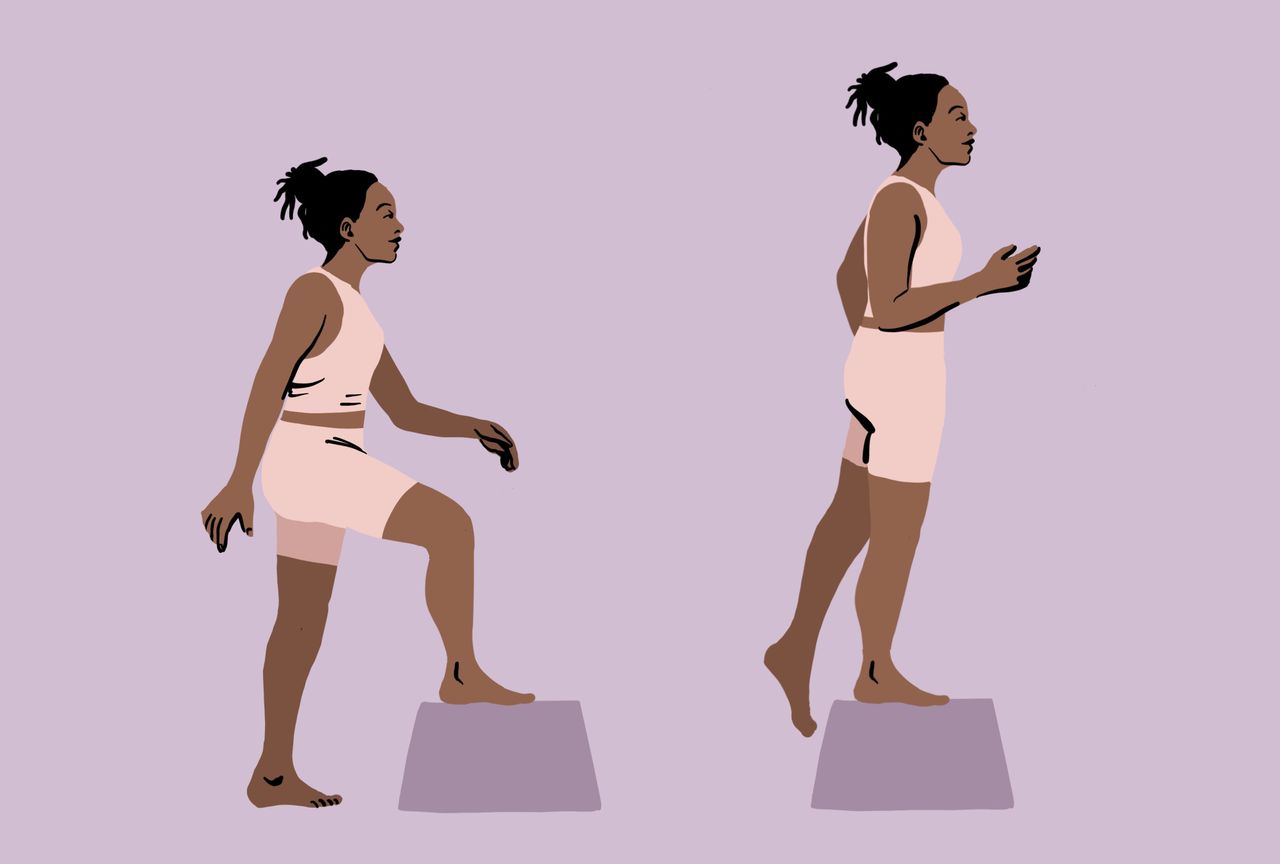
Step-ups not only improve lower body strength but also challenge your balance. Because they recruit multiple muscle groups and elevate your heart rate, they can be an efficient exercise for improving overall metabolic health, says Jackson. “They are also highly functional because they mimic stair climbing and daily movement patterns.”
How to do it:
- Start standing in front of a low, stable step or bench.
- Engage your core, step up with your right foot and press through the heel, keeping your knee aligned with the outside of your foot. Avoid pushing off your left foot.
- Bring the left foot up to meet your right on the step.
- Step your left foot back down slowly, controlling the descent and preventing your knee from collapsing inward.
- Repeat 8–12 times for 2–3 sets per leg.
3. Plank
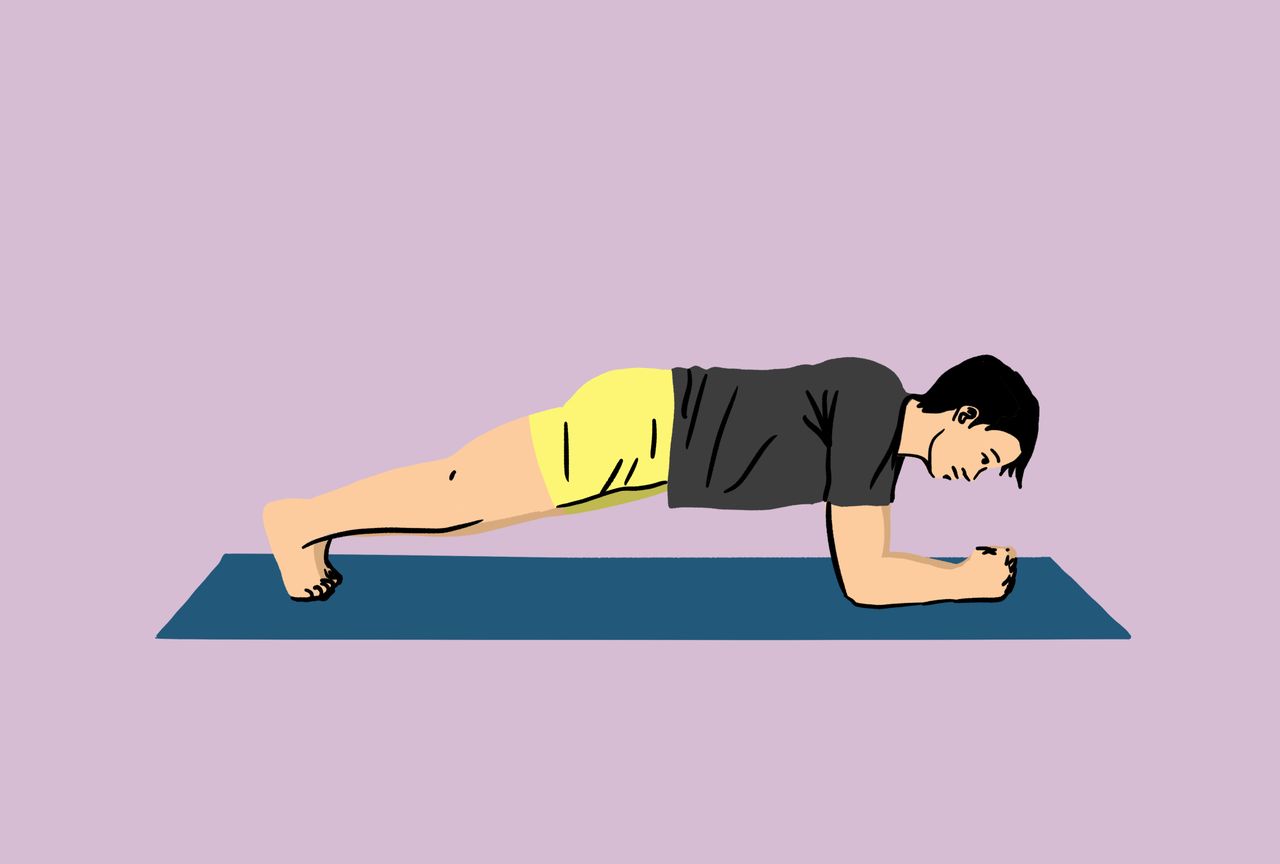
The plank is a static exercise that requires you to hold the position for as long as you can while maintaining proper form. “The plank is a highly effective full-body exercise that can be adapted for all fitness levels and is especially helpful for building core and upper-body strength,” says Shaw.
How to do it:
- Start face-down with your forearms on the floor, elbows directly under your shoulders and forearms parallel or with your hands clasped.
- Step your feet back one at a time to form a straight line from your head to your heels.
- Engage your core and glutes, keeping a neutral neck position, and breathe steadily. Avoid holding your breath.
- Set a stopwatch and see how long you can hold a proper plank with good form. Use that time as a baseline, then try adding 2–3 seconds each day.
Tip: To modify, lower your knees to the ground while maintaining alignment through your upper body.
4. Modified Pushups
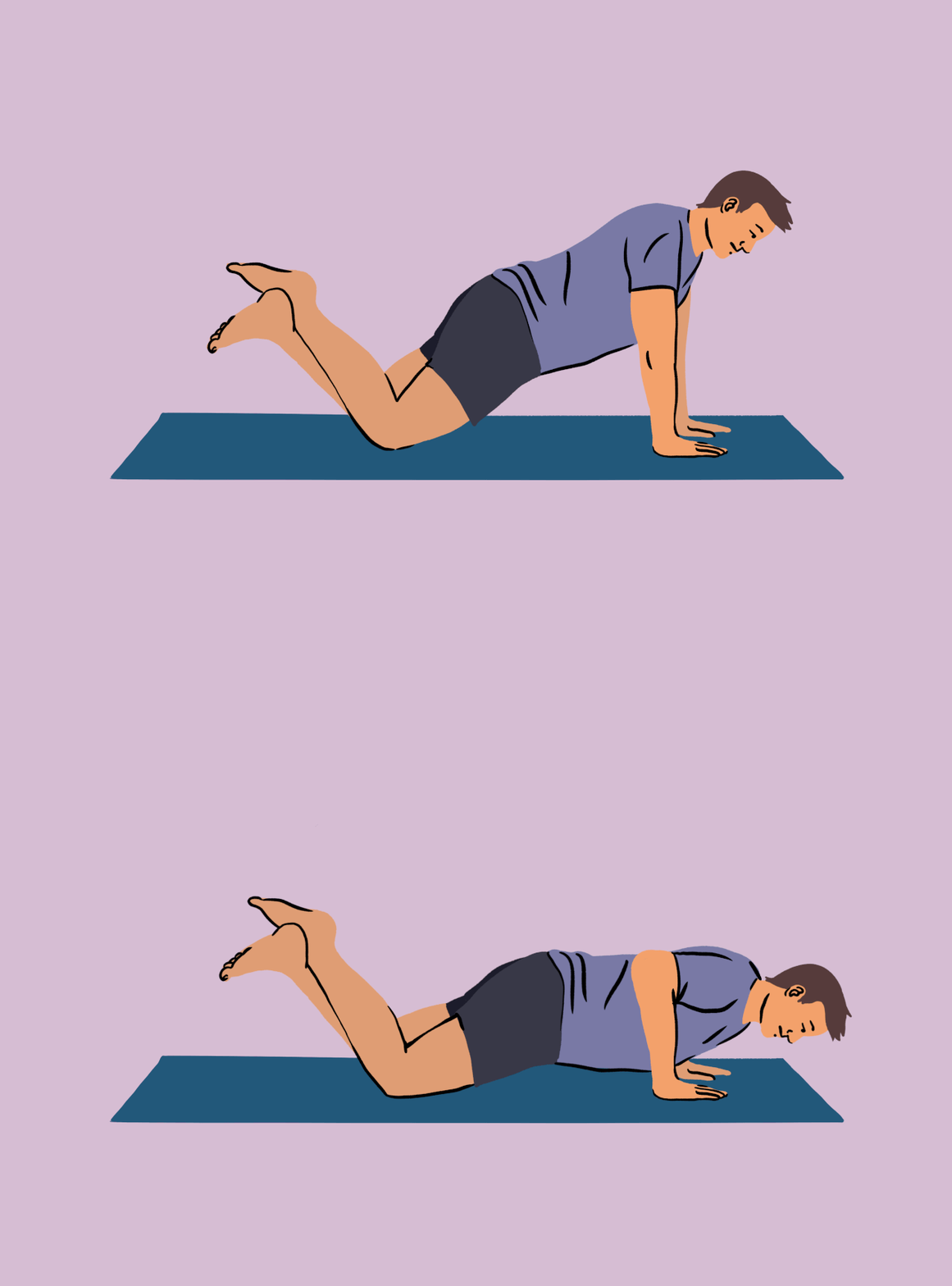
Modified pushups are a full-body exercise that helps strengthen the chest, shoulders, arms, legs and core. They recruit multiple muscle groups, creating greater metabolic demand that may support overall fat reduction, says Jackson. “They are easy to modify based on strength level and can be integrated into short movement breaks throughout the day,” adds Diamos.
How to do it:
- Start on your knees with your hands slightly wider than shoulder-width apart and arms straight.
- Keep your body in a straight line from your head to your knees.
- Slowly lower your chest toward the floor by bending your elbows. Avoid flaring your elbows more than 45 degrees from your body.
- Push yourself back up to the starting position.
- Repeat 8–12 times, or until you’re close to failure, for 2-3 sets
Tip: You can also modify this exercise using a wall, countertop or sturdy bench. Keep your body in a straight line and slowly lower your chest toward the surface before pressing back up.
5. Walking Lunges
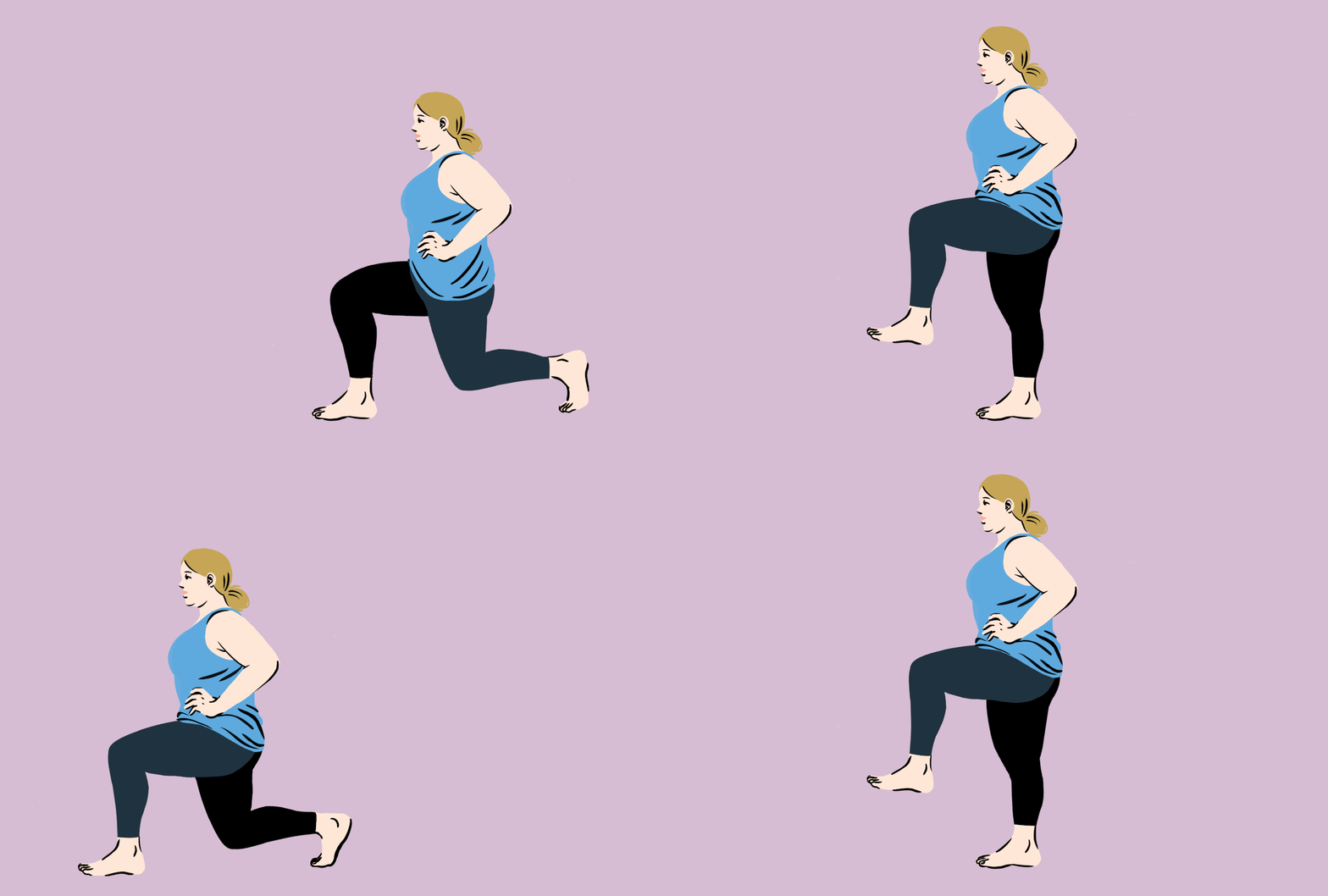
Walking lunges engage the legs, glutes and core while increasing heart rate and calorie expenditure. They also improve balance and coordination, which are important after age 50, says Hanelt.
How to do it:
- Stand upright with your feet together.
- Step forward with your right leg and lower your body until both knees form 90-degree angles.
- Push through your right heel to stand, bringing your left leg forward into the next step.
- Continue alternating legs until you run out of room or have taken 8–10 steps.
- Turn around and repeat for 2–3 rounds.
Other Tips to Lose Visceral Fat
While regular strength training is important for reducing visceral fat, experts say other lifestyle habits matter, too.
- Move More, Sit Less. Most adults will benefit more from frequent movement throughout the day than from occasional intense workouts, so increase your daily movement outside of exercise, says Diamos. “Small movement bursts performed consistently can create meaningful metabolic benefits over time.” Try a few minutes of walking, taking the stairs, desk squats or pushups every hour.
- Get Enough Sleep. Poor sleep is strongly associated with increased visceral fat accumulation, elevated stress hormones and disrupted hunger hormones. Most adults should aim for seven to nine hours of quality sleep each night to support metabolism and overall health, says Hanelt.
- Eat Plenty of Protein. Research shows older adults need more protein to combat the natural decline in muscle mass. It also supports recovery and keeps you full for longer. Include a high-quality protein at every meal and snack, such as lean beef, chicken, turkey, fish, eggs, dairy milk, edamame, strained (Greek-style) yogurt, beans or lentils.
- Eat a High-Fiber Diet. Fiber is also key for satiety and long-term weight management, says Shaw. Include foods like fruits, vegetables, whole grains, beans, lentils, nuts and seeds at most meals and snacks.
Our Expert Take
After 50, strength training becomes increasingly important for maintaining muscle mass and keeping visceral fat at bay. Body-weight exercises are accessible, convenient and effective for supporting a healthy body composition. Full-body moves like squats, step-ups, planks, modified pushups and walking lunges are great options.
Along with strength training, be sure to sit less and move more, prioritize sleep and eat a balanced diet. A well-rounded lifestyle is the best tool you have to help reduce visceral fat and support overall health at any age.

Comments are closed.