
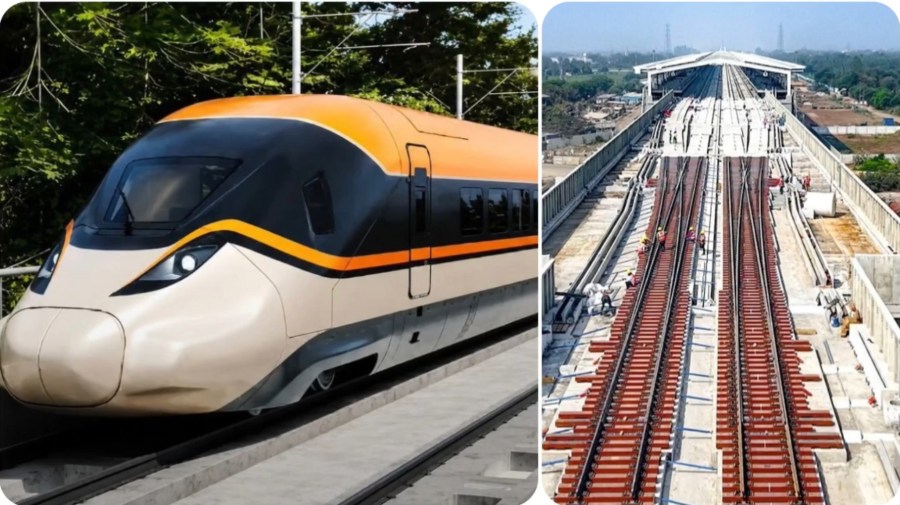
After the displeasure of former Japanese minister, Indian Railways shared the latest update of Bullet Train Project, there will be stoppage at 12 stations.

India’s First Bullet Train: Preparations for India’s first Bullet Train have intensified. The 508 km long high-speed rail corridor to be built between Mumbai-Ahmedabad will be started in a phased manner. According to reports, the first phase of the project may start from August 15, 2027. The construction and electrification work of the corridor is being carried out at a rapid pace by Indian Railways and National High Speed Rail Corporation Limited (NHSRCL).
Corridor being built using Japanese Shinkansen technology
Japan’s state-of-the-art Shinkansen technology is being used in the Mumbai-Ahmedabad Bullet Train Project. Its objective is to significantly reduce the travel time between the two major economic cities of the country. The work of track, power system and other important infrastructure on this 508 km long corridor is progressing rapidly.
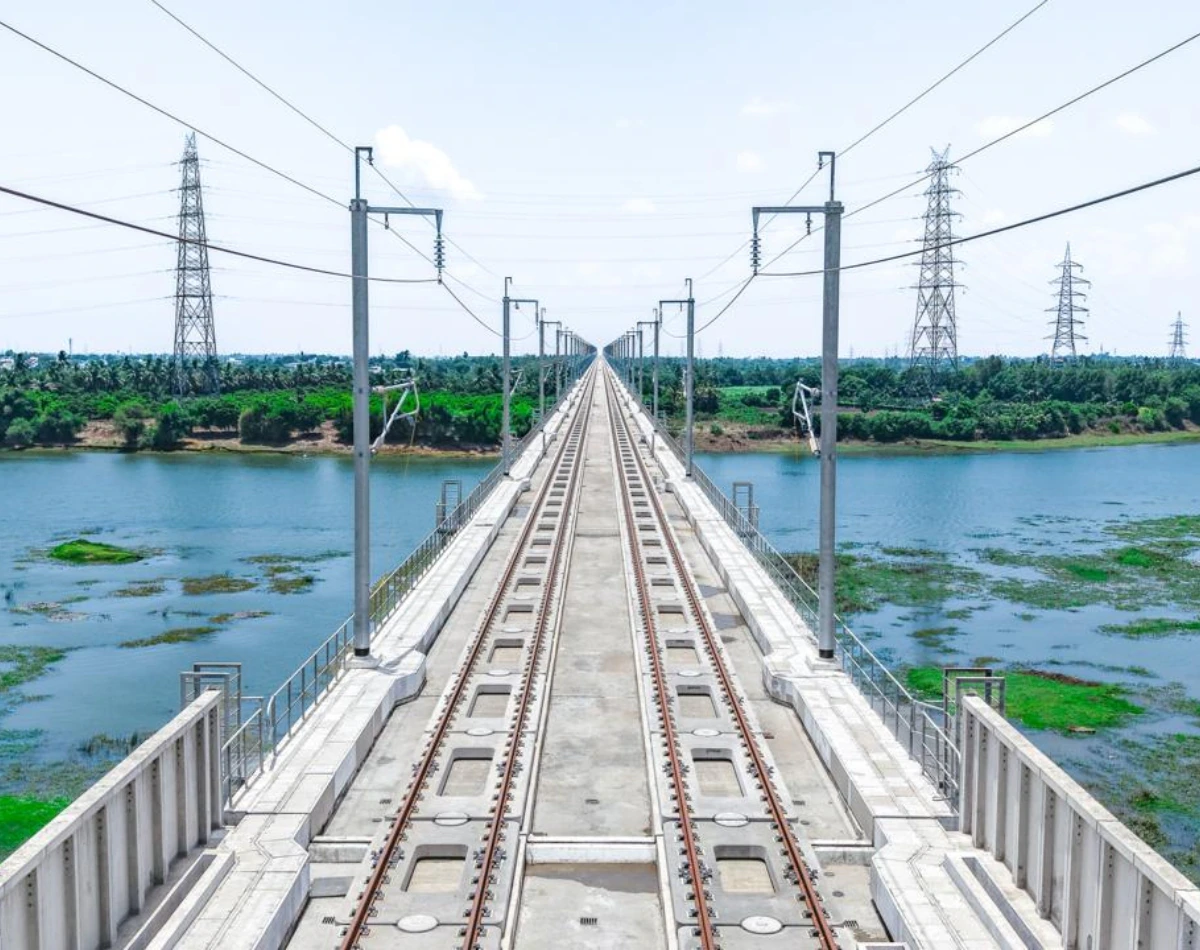
2×25KV overhead traction technology will be used for the first time
This high-speed rail corridor is being equipped with 2×25KV overhead traction system. This technology has been designed to provide adequate power supply to trains running at speeds of up to 320 kilometers per hour. This technology is being used for the first time for high-speed rail in India.
Mumbai to Ahmedabad in 2 hours, there will be 12 stations
The maximum operating speed of the bullet train will be 320 KM per hour. Due to this, the journey from Mumbai to Ahmedabad, which takes about 6 hours by existing trains, is expected to be completed in about 2 hours. 12 stations are proposed on the corridor including Mumbai (BKC), Thane, Virar, Boisar, Vapi, Bilimora, Surat, Bharuch, Vadodara, Anand, Ahmedabad and Sabarmati.
Former Japanese minister had expressed his displeasure over the delay of the project
Former Justice Minister of Japan Hideki Makihara had made serious allegations regarding India’s ambitious Mumbai-Ahmedabad High-Speed Rail (MAHSR) project. On social media platform X, he claimed that the biggest reason for the delay in the project was the attitude of the Indian side. Sharing a report by Japanese media Toyo Keizai Online, Makihara wrote that he himself has been involved in the Shinkansen project.
According to him, during international meetings, the Indian side kept retreating from its promises even after agreements and remained adamant on personal interests. He also alleged that the behavior of the Indian minister concerned was not cooperative, which led to difficulties in taking the project forward.
Concern was expressed about the security system
The former minister claimed that India did not include Japan’s state-of-the-art Shinkansen signaling system in the project, even though it is considered very important from security point of view. He described this as a matter of serious concern for the project.
Isao Tsujimura, a Delhi-based Japanese railway engineer and metro consultant, said in his report that India’s bullet train project has gone in a significantly different direction from the original Japanese Shinkansen blueprint. According to the report, this project, which started in 2017, was to be completed by 2023, but now it has been significantly delayed.
Japan’s big investment in the project
In this project costing about Rs 2 lakh crore, Japan’s agency JICA is providing a loan of about Rs 88 thousand crore. This loan is given for 50 years at only 0.1% annual interest, in which there will be no need to repay the installment for the first 15 years.
Follow the LALLURAM.COM MP channel on WhatsApp

Comments are closed.