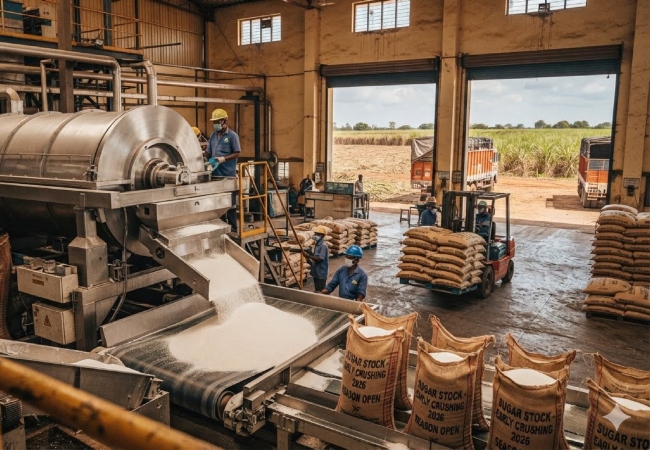
The central government has prepared a comprehensive action plan to meet the growing demand for sugar during the upcoming festival season and curb record sugar prices. As agreed between the sugar industry and the government, this year, sugar mills will begin their crushing season 10 to 15 days ahead of schedule, starting in the third week of October. The government has taken this step to ensure adequate sugar availability in the market during the festive season and to provide relief to consumers from rising prices.
How will the supply be during the festive season?
The early start of sugar mills will ensure the supply of new sugar in the market just before major festivals like Dussehra, Diwali, and Chhath, ensuring a smooth supply chain. Furthermore, sugar organizations such as ISMA and NFCSF have clarified in their official statements that the country has sufficient sugar stocks available for domestic consumption.
Three strict measures by the government to prevent hoarding
To control prices and prevent artificial shortages in the market, the government has implemented several strict rules—
Read: Brokerages favor the 83-year-old bank sold to a Dubai sheikh, set a huge target; you’ll be tempted to see it!
Strict Stock Limit
According to this, the government has set a maximum stock limit of 4,000 quintals, or 400 tons, for dealers and wholesalers. This rule will come into effect immediately and will remain in effect until November 30, 2026.
30-Day Rotation Rule
According to this rule, to prevent any trader from dumping sugar, dealers will be required to sell the new stock within 30 days of receiving it.
Complete ban on exports
Read: Take these precautions when booking a ride; auto-cab scams on the rise during the rainy season; learn how to travel safely
According to this third rule, the government has extended the ban on sugar exports to maintain adequate availability in the domestic market.
It should be noted that premature crushing of sugarcane reduces sugar recovery, which increases the production costs for mills. To avoid this financial loss, sugar mills have placed three main demands before the government: a temporary exemption from CGST, additional sales quotas, and a partial ban on jaggery and sugar.