
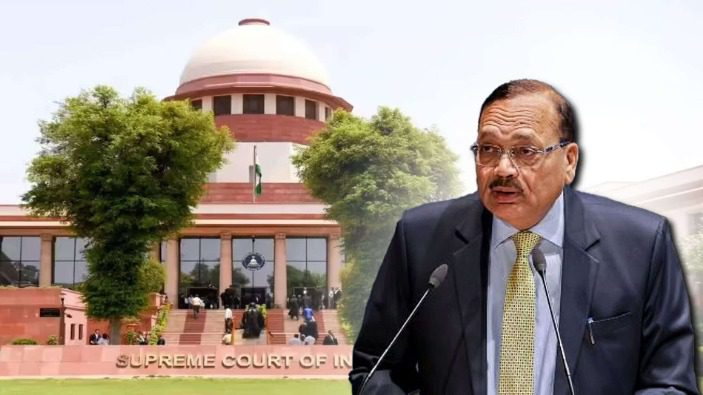
Big order of Supreme Court: Ban on recording, sharing or uploading videos of court proceedings without permission

The Supreme Court has issued a major interim order, taking a tough stance on the uncontrolled dissemination of audio and video recordings related to court proceedings. The apex court has said that Audio-video recording of any judicial proceeding cannot be recorded, edited, shared, re-posted, uploaded or monetized without the prior permission of the concerned court.
Chief Justice suryakantJustice Joymalya Bagchi and justice V. Mohana The bench issued this interim direction while hearing the PIL filed in this regard. The court expressed serious concern over selective and out-of-context videos of court proceedings being circulated on social media.
The Supreme Court clarified in its order that sharing of audio-video material related to the proceedings of any High Court is subject to the permission of the concerned High Court. Registrar General Permission will be required, whereas for material related to the proceedings of the Supreme Court Secretary General Prior permission will have to be taken.
However, the court also clarified that this order Will not apply to reporting of court proceedings by news media. The court said that this should not be considered as any kind of ‘gag order’ on freedom of press or media.
During the hearing, Justice Joymalya Bagchi said that uncontrolled dissemination of court recordings on social media is now “The genie came out of the bottle” As it has happened. He said that the purpose of the court is only to control video recording and its dissemination, so that the dignity of the judicial process is maintained.
He also said that the courts Cannot become a 24 hour entertainment channel. Therefore it is necessary to control access to virtual hearings and live streaming also. According to him, if any party wants to watch the live proceedings then it has to obtain proper permission and there should not be uncontrolled dissemination of the link.
Solicitor General during the hearing Tushar Mehta also raised fears of misuse of court clips on social media and tampering of videos through artificial intelligence (AI). He said that with the help of AI technology, misleading videos can be created by changing the statements of judges and lawyers.
Chief Justice Surya Kant also expressed concern about media reporting during this period. He said that in recent times such things were published about him which he had never said. Especially in the matter related to the students’ demonstration, he made it clear that no formal petition was filed before him, only a representation was sent. Despite this, some reports claimed that he refused an urgent hearing, which was completely false.
Supreme Court in this case Meta,X (formerly Twitter) Notice has also been issued to other social media platforms. The court said that the role and responsibility of digital platforms regarding dissemination of videos related to judicial proceedings will also be reviewed.
This interim order of the apex court is being considered an important step towards maintaining the dignity, fairness and credibility of judicial proceedings. At the same time, the court also made it clear that this order will not have any adverse impact on the transparency of the judiciary and independent reporting of the media.

Comments are closed.