
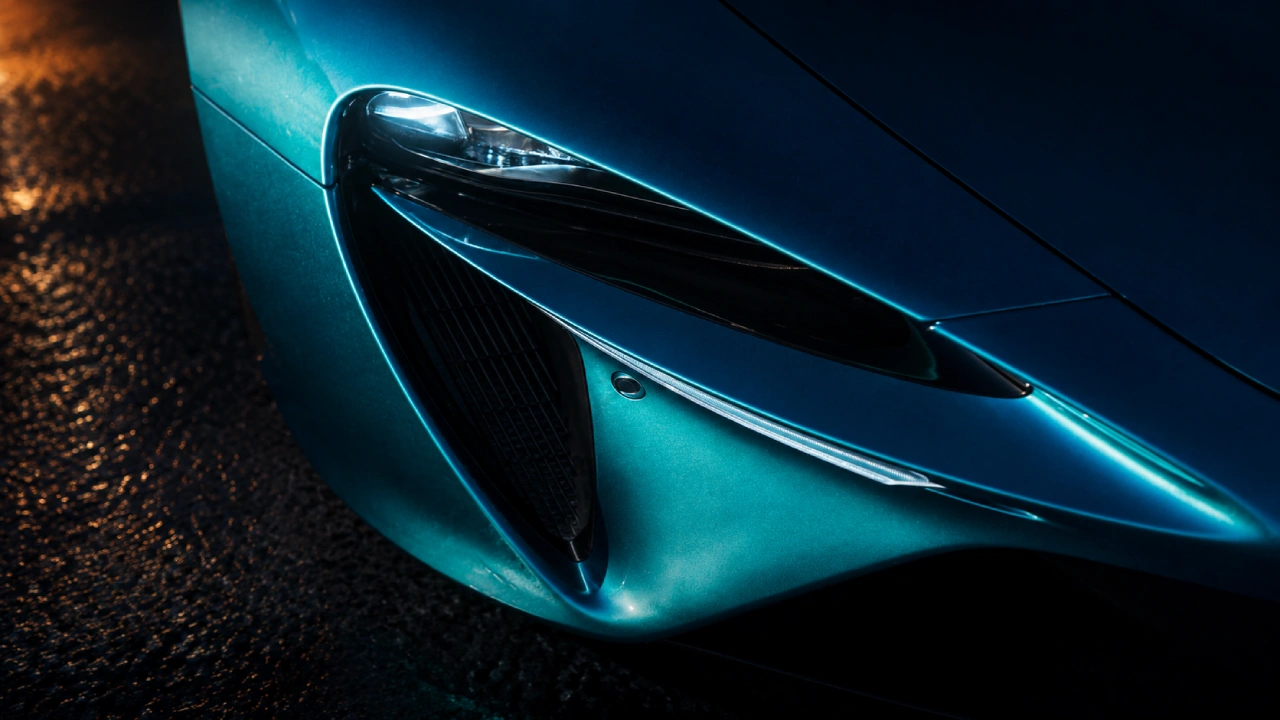

The McLaren Artura hybrid supercar enhances performance and even boosts the overall driving dynamics, all while still keeping that unmistakable McLaren character. It’s basically placed as McLaren’s next-gen series-production supercar, and it brings a new lighter platform, an all-new V6 powerplant, plus a refined plug-in hybrid setup meant to give thrilling performance without really getting in the way of day-to-day usability.
And yeah, unlike the older hybrid cars that mostly chase efficiency first, the Artura shows a different angle. It proves electrification can sharpen acceleration, make the throttle feel more immediate, improve responsiveness, and even boost the overall driving dynamics, all while still keeping that unmistakable McLaren character.
McLaren Artura: Twin Turbo V6 Hybrid Makes 690 Horses
Deep in the Artura sits a brand new 3.0-liter twin-turbocharged V6, and it comes paired with a compact axial flux electric motor. Altogether, the hybrid setup puts out around 690 horsepower, with that instant shove coming from the electric motor while still keeping the sharp high-performance vibe you kinda expect from a McLaren supercar.
The power goes to the rear wheels via an 8-speed Seamless Shift Gearbox, or SSG. This unit also tucks the electric motor inside the transmission casing, so the whole package stays tight. The gearbox moreover does away with the usual reverse gear, letting the electric motor do the reversing work and giving a small bit of mass reduction.
You can also flip into E-Mode, which allows brief all-electric driving. That’s especially handy for city streets, or when you’re rolling slowly near crosswalks and traffic lights.
Built Around McLaren’s Carbon Lightweight Architecture
One of Artura’s defining innovations is the McLaren Carbon Lightweight Architecture (MCLA), which is a next-generation carbon-fiber platform made especially for hybrid cars. The lightweight chassis has been engineered so it can take the hybrid powertrain, while still keeping the structural rigidity and low weight that are basically part of McLaren’s driving philosophy.
This newer architecture also helps packaging efficiency, meaning engineers can fit the battery pack, the cooling systems, and the hybrid components without really pushing the vehicle’s overall dimensions higher or messing with cabin space.
And when you add aluminum suspension components, plus that broader lightness engineering across the whole car, the Artura ends up with agile handling and very sharp responsiveness, whether you’re on the road or out on track.
Advanced Dynamics And Driver-Focused Technology
McLaren has put in the Artura a cluster of tech meant to push driving engagement further along. The supercar brings an electronically controlled rear differential, adaptive suspension, carbon-ceramic braking, and a set of selectable driving modes that shift things like power delivery, suspension character, steering feedback, and transmission logic depending on what you want.
Also, the hybrid setup does more than just add speed; it helps smooth out torque gaps during gear changes so the pull feels less interrupted and more immediate. With electric assistance teaming up with the twin-turbo V6, it can deliver fast acceleration while keeping the throttle response sharp through varied conditions.
Inside, the cabin leans toward a minimalist layout that is really about the driver. There’s a digital instrument cluster, an HD infotainment display, smartphone integration, premium materials, plus controls placed in an ergonomic way so you can stay keyed on the road, not hunting around.
Designed for Everyday Driving, No Real Tradeoff On Performance
Even if the Artura brings supercar-level speed, McLaren clearly also cares about how it feels when you’re just out there living your day. They’ve worked on ride comfort, and the visibility seems improved too, plus there are more practical storage solutions, and the cabin is quieter than you’d expect from something in this category. So, for regular driving, it can feel more usable than a lot of classic exotic sports cars.
The hybrid setup really helps with that versatility, since it can handle low-speed electric driving. At the same time, it boosts overall efficiency during mixed conditions where you’re stopping, cruising, and moving along. When you add in the refined suspension and the lightweight build, the Artura lands as one of McLaren’s more approachable supercars, especially if owners want both thrill and everyday comfort without sounding too dramatic about it.
McLaren’s Electrified Future Starts With The Artura
The Artura isn’t only another model tucked into McLaren’s lineup; it basically signals the company’s long-term push toward electrified high-performance vehicles. It’s built around Formula 1-inspired engineering, a lightweight approach, and advanced hybrid technology. In doing so, McLaren wants to keep that real emotional pull people associate with supercars, while still adapting to shifting performance expectations and emissions standards, you know.
As electrification keeps getting more important across the automotive world, the Artura works like a showcase for how hybrid tech can actually enhance the driving experience, rather than dull it. And beyond that, it also sets the stage for what comes next in McLaren, with future models that are expected to bring even more sophisticated electrified powertrains.
Conclusion
The McLaren Artura shows that hybrid tech and supercar performance can live together, with no real compromise. It has 690 hp, twin-turbo V6 hybrid power, plus McLaren Carbon Lightweight Architecture, and all that driver-first engineering stuff, so it feels like the kind of thrilling rush you’d expect from a British marque, yet it also brings better efficiency and day-to-day usability.
And since this is McLaren’s next-generation hybrid supercar, it sort of becomes a major milestone in their electrification journey, you know, and gives a little peek into where high-performance automotive engineering might be heading next.

Comments are closed.