
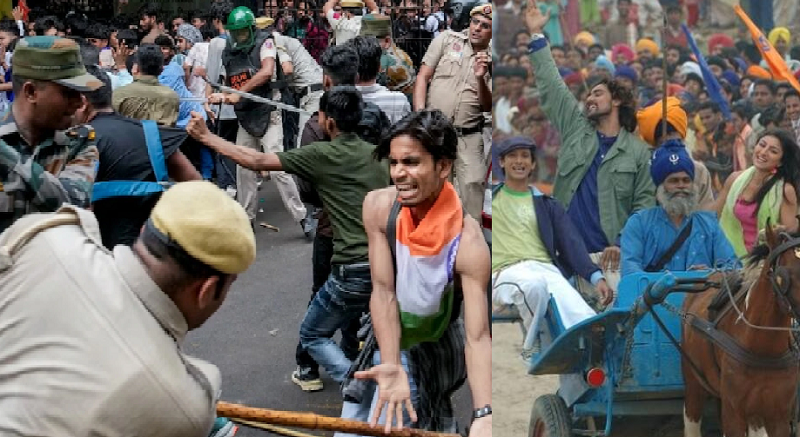

New Delhi . At present, there is a wide discussion going on at the national level across the country regarding issues related to the education system, entrance examinations and the future of the youth. Amidst this environment, the discussion has again intensified on that era of Indian cinema, which had presented the anger of the students, their social struggles and anti-system movements on the big screen in a very realistic manner. There have been many films produced in Bollywood, which not only achieved commercial success at the box office, but also highlighted the political consciousness and influence of student politics in the society.
‘Rang De Basanti’ released in the year 2006 is considered to be the most influential creation among the films made on the background of student movements. In this film, the voice raised by the carefree college youth against the corrupt governance system and the process of its transformation into a big mass movement is shown. Similarly, the film ‘Yuva’ directed by Mani Ratnam inspires the positive aspects of student politics and direct participation of youth in the governance system. At the same time, ‘Hazaron Khwaishein Aisi’, based on the political movements of the 1970s and the ideological struggle of the students of St. Stephen’s College, has exposed the serious aspects of youth consciousness.
The electoral politics, violence and power struggles that flourish within universities have been depicted in a very realistic manner in films like Anurag Kashyap’s ‘Gulaal’ and Tigmanshu Dhulia’s ‘Haasil’. ‘Haasil’, which focuses on student politics of Allahabad University, makes it clear how student union elections in educational institutions are influenced by muscle power and crime and divert the future of the youth. These films show that student movements are not limited to just idealism but sometimes also get entangled in complex political webs.
Cinema has also made the historical student movements against social justice and policy decisions its subject matter. While Prakash Jha’s ‘Aarakshan’ highlights the social impact of the education system and reservation policy, the film ‘Huddang’ reflects the nationwide student protests in the 1990s against the recommendations of the Mandal Commission. In today’s era, when the youth are vocal about their demands, these films prove that cinema has always provided a powerful medium to the real struggles of the society and the youth.

Comments are closed.