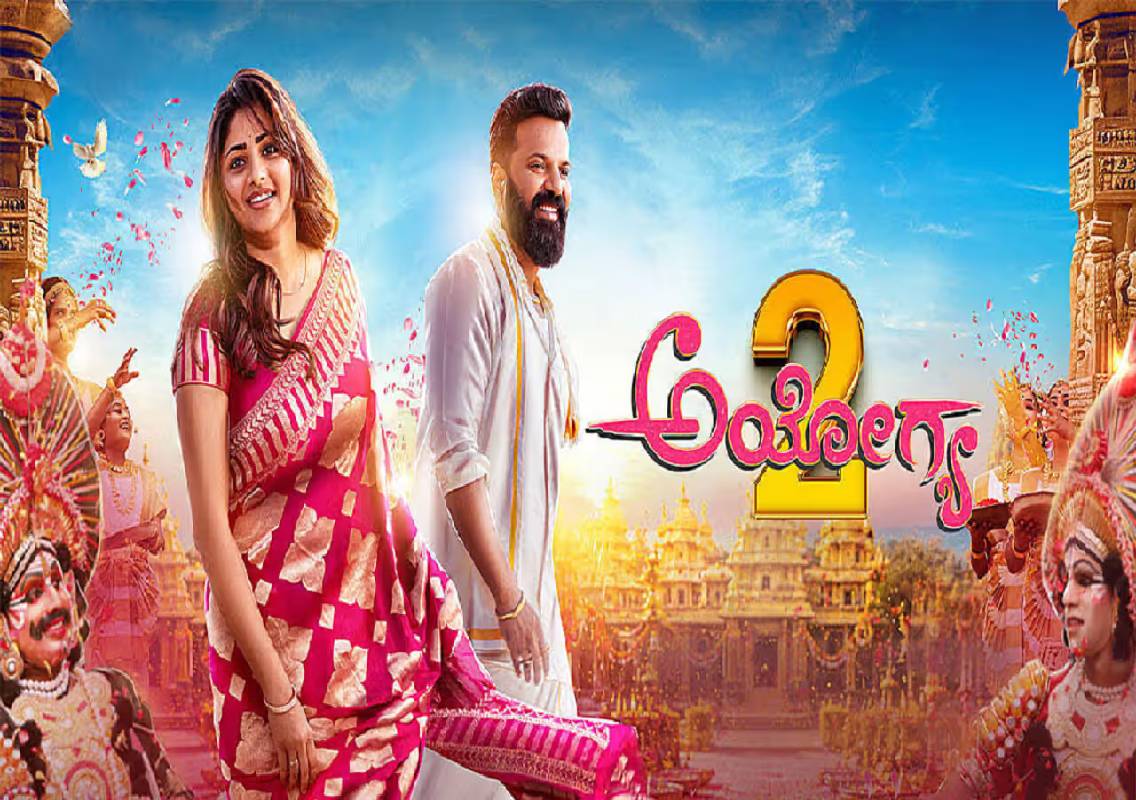
Bengaluru: Ayogya 2, starring Sathish Ninasam and Rachita Ram, takes the rural political world of the 2018 hit forward, shifting the focus from winning an election to dealing with the responsibilities that come with power. Directed by S. Mahesh Kumar, the Kannada sequel brings Siddhegowda back as a Gram Panchayat member and places him at the centre of a larger political battle.
The film, which released in theatres on August 7, 2026, retains the rural flavour of its predecessor but expands its political canvas. Critics have largely appreciated Sathish Ninasam’s performance and the film’s grounded approach, even as the sequel is seen as less fresh and emotionally simple than the original.
Ayogya 2 story: Siddhegowda faces a new challenge
The first Ayogya followed Siddhegowda’s transformation from an aimless young man into a leader who won the trust of his village.
Ayogya 2 begins after that victory. Siddhegowda is now a Gram Panchayat member and has to prove that winning an election is only the beginning of leadership.
His new challenge is to balance personal responsibilities with public duty while navigating the complicated world of village politics.
The sequel therefore moves away from the underdog-election story of the first film and focuses more heavily on governance, political influence and the pressure of holding office.
Sathish Ninasam returns as Siddhegowda
Sathish Ninasam once again plays Siddhegowda and remains the strongest link between the two films.
His performance reportedly works because he does not portray Siddhegowda as someone who has suddenly become larger than the people around him. Instead, the character continues to feel connected to his village roots.
The actor balances humour, emotion and mass moments without making the character appear forced or overly heroic.
The sequel also benefits from the familiarity of Siddhegowda. Audiences who connected with the character in the 2018 film get to see how he has changed after entering public life.
Rachita Ram gets a stronger role
Rachita Ram returns as Nandini, Siddhegowda’s wife.
Her character receives more narrative importance in the sequel. Nandini pursues a government job and succeeds on her own merit, creating a personal conflict within Siddhegowda’s family.
Her decision to work also leads to disagreements with Siddhegowda’s mother, adding a social dimension to the story.
This subplot gives Nandini a stronger identity beyond simply being the protagonist’s romantic partner. However, the larger political narrative sometimes takes precedence over the emotional elements of the relationship.
Ravi Shankar plays a political rival
Ravi Shankar plays Bacchegowda, Siddhegowda’s political opponent.
Rather than functioning as a conventional loud villain, Bacchegowda is portrayed as an experienced political operator who understands influence, alliances and public perception.
This makes the rivalry more closely connected to the film’s political setting.
The conflict between the two characters revolves around power within the Panchayat and Siddhegowda’s attempt to strengthen his position as a leader.
Village politics takes centre stage
One of the biggest changes in Ayogya 2 is its emphasis on governance.
The film explores Panchayat elections, shifting political loyalties, village development and the struggle for influence.
Its central idea is that democracy does not begin only inside state assemblies or Parliament. It begins at the grassroots, including in Gram Panchayats.
This gives the sequel an identity of its own rather than simply repeating the story structure of the first film.
Mandya flavour remains strong
The film continues to draw heavily from the rural culture associated with the Ayogya universe.
References to Mandya pride, local personalities and hero worship help establish the setting.
The rural environment is not merely a backdrop but remains part of the film’s identity.
The visuals reportedly capture the earthy character of the region, helping the sequel retain the grounded atmosphere that audiences associated with the original.
Ravichandran makes a surprise appearance
One of the notable elements of the sequel is the appearance of Crazy Star Ravichandran.
His presence expands the political world of the film rather than functioning merely as a star cameo.
According to the review, the appearance also creates curiosity about the direction of the story and the already announced third instalment.
The involvement of Ravichandran could therefore become important to the future of the franchise.
Humour and commercial elements
While politics drives much of the narrative, Ayogya 2 retains the commercial elements associated with the franchise.
The film combines humour, emotion, action and mass moments instead of becoming a purely political drama.
The songs are integrated into the narrative, while the action is described as measured rather than excessive.
This balance allows the film to remain accessible to audiences looking for a mainstream Kannada entertainer.
Where the sequel falls short
The biggest challenge for Ayogya 2 is that it follows a popular original.
The 2018 film had a relatively simple emotional core: an aimless youngster finds purpose and earns the trust of his village.
The sequel deals with a more complicated question — how a person behaves after gaining power.
That makes the story more ambitious but also reduces some of the freshness and emotional simplicity of the original. The political narrative occasionally relies on familiar commercial elements, particularly in the second half.
Ayogya 2 rating
The New Indian Express has rated Ayogya 2 3.5 out of 5 stars, describing it as an ambitious political sequel with a strong rural flavour.
The review particularly highlights Sathish Ninasam’s performance, the film’s focus on grassroots democracy and its expansion of the story beyond the original’s election narrative.
Other available listings confirm the film’s theatrical release in Kannada on August 7, 2026.
Ayogya 2 vs Ayogya
The two films approach Siddhegowda’s journey from different angles.
Ayogya (2018):
- Focused on Siddhegowda’s transformation
- Revolved around village politics and an election
- Mixed romance, comedy and political drama
- Centred on winning the trust of the villagers
Ayogya 2 (2026):
- Begins after Siddhegowda’s political victory
- Focuses more on governance and leadership
- Explores Panchayat power struggles
- Gives greater weight to personal and public responsibilities
- Expands the political world of the franchise
The sequel therefore works less as a repetition and more as the next stage in Siddhegowda’s political journey.
A third part is already planned
The Ayogya story is not ending with the second film.
A third instalment has already been announced, with Ravichandran’s appearance in Ayogya 2 suggesting that the political world could become even larger in the next chapter.
Interestingly, one of Siddhegowda’s unfinished promises continues to hang over the character: providing a proper sewage system for his village.
That unresolved responsibility could become a significant measure of whether Siddhegowda ultimately succeeds as a leader.
Ayogya 2 verdict
Ayogya 2 may not recreate the exact emotional freshness of the 2018 original, but it gives Siddhegowda’s story a meaningful continuation.
The film’s decision to focus on what happens after political victory gives the franchise a more mature direction.
Sathish Ninasam remains the heart of the film, while Rachita Ram’s expanded role and Ravi Shankar’s political rivalry add depth to the narrative.
Conclusion
Ayogya 2 takes Sathish Ninasam’s Siddhegowda from the excitement of winning an election to the much harder task of governing.
Directed by S. Mahesh Kumar, the film combines rural politics, humour, emotion and commercial entertainment while exploring questions about leadership, responsibility and grassroots democracy.
The sequel may not have the same simplicity as Ayogya, but its broader political ambitions give the franchise room to grow. With a 3.5/5 rating from The New Indian Express and a third instalment already announced, Siddhegowda’s political journey appears far from over.