
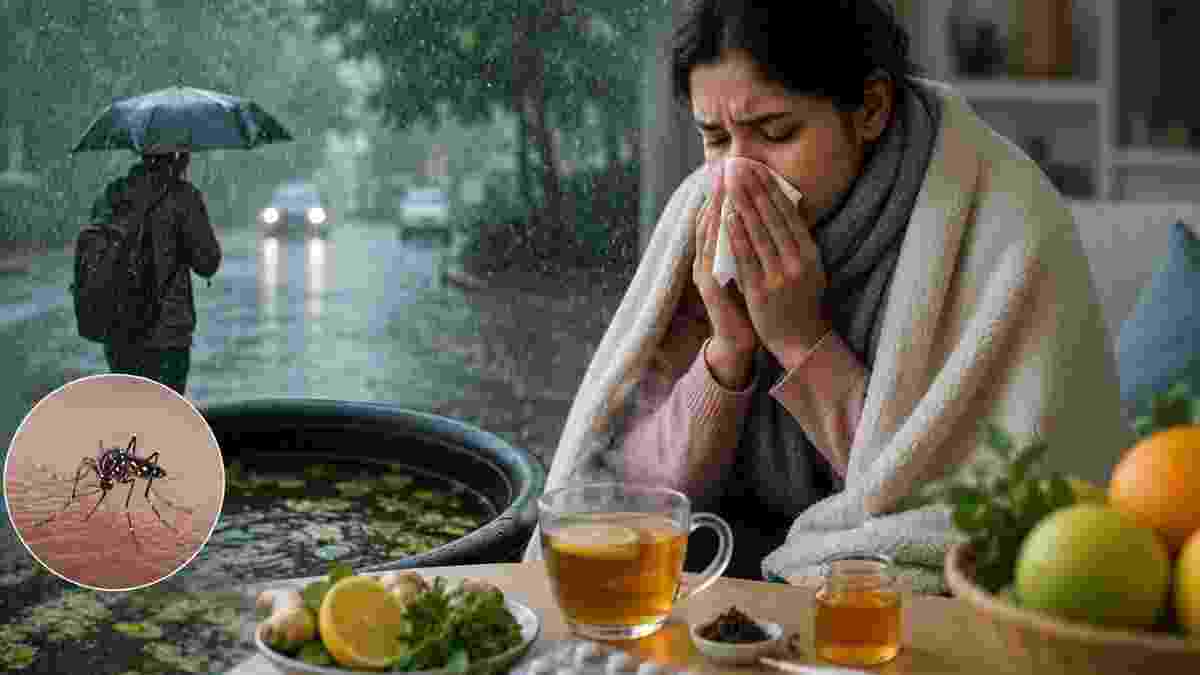
Do you also fall ill again and again during monsoon? Know the right way to avoid dengue, flu and viral fever

Even though the rainy season provides relief from the heat, it also brings with it the invitation of many diseases. These days, due to constant changes in humidity and temperature, viruses grow rapidly. This is the reason why as soon as monsoon arrives, cases of cold, cough, flu and viral fever start increasing rapidly in homes. For those whose immunity is a little weak, this season is no less than a ‘series of infections’. Dr. Raman Gaikwad, a renowned infectious disease specialist at Sahyadri Hospital, Pune, says that waterlogging, dirt and contaminated water are the biggest causes of diseases in this season. Let us understand in simple language why we fall ill again and again, what are its symptoms and how it can be avoided. Why do diseases increase in monsoon? In fact, during rains there is a lot of moisture in the air, which helps in keeping the virus active for a long time. Flooded water and dirt at various places increases the risk of infection manifold. Aedes mosquitoes, which spread dengue and chikungunya, breed in this stagnant water. Apart from this, contaminated food and water also transmit the virus directly to our body. As the weather changes, our body’s immunity also weakens for some time, due to which we easily become vulnerable to viral infections. Main symptoms of viral infection: If you suddenly get high fever, sore throat or cough bothers you, then it could be viral. Apart from this, running or blocked nose, severe headache, body and joint pain, and feeling very tired are also its common symptoms. If you have dengue or chikungunya, red rashes may also appear on the body. Some people also have to face problems like vomiting, diarrhea or nausea. What is the correct treatment for viral infection? According to experts, most viral infections heal on their own within a few days. Its main treatment is to control your symptoms. The most important thing is that you give complete rest to your body and drink plenty of water. Include liquid items and healthy food in your diet, this makes recovery much faster. Always take any medicine for fever or pain only on the advice of a doctor. The biggest mistake people make is taking antibiotics on their own. Remember, antibiotics have no effect on viral infections, so do not take them without a doctor’s prescription. In some serious conditions like flu, doctors may give you antiviral medicines. How to protect yourself from infection in the rain? To avoid infection, take special care of cleanliness and wash hands frequently with soap and water. Always use boiled or filtered water for drinking. Eat fresh and clean home-cooked food. Avoid coming in direct contact with a sick person. To protect yourself from mosquitoes, wear full-sleeved clothes and use good quality mosquito repellent. Do not allow water to accumulate around your house or on your rooftops. Get enough sleep and eat a nutritious balanced diet so that your immunity remains strong. When to consult a doctor immediately? If your fever is not subsiding even after two-three days, you are having trouble breathing, you are vomiting continuously, or red rashes start appearing on your body, then do not delay at all. Apart from this, if there is suspicion of low platelets or serious symptoms of dehydration (lack of water in the body) are seen, then immediately contact your nearest doctor.

Comments are closed.