
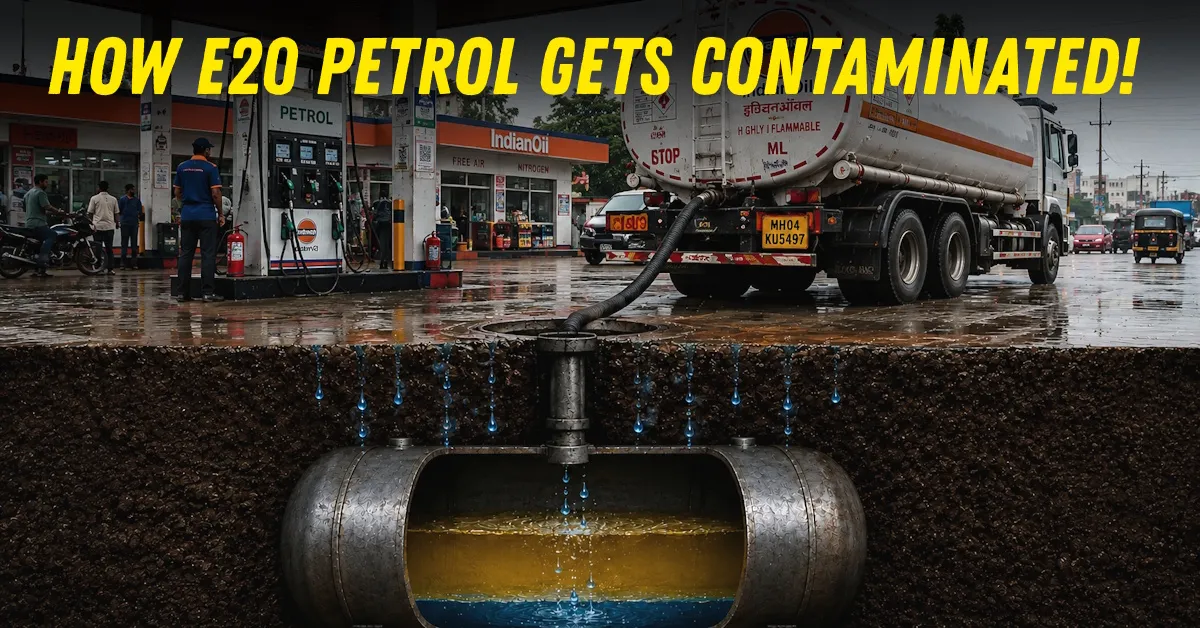

The nation-wide rollout of E20 petrol (20% ethanol blend) is now raising fresh concerns as monsoons intensify in various parts of the country. Petrol pump owners are now raising concerns about fuel contamination due to the water-absorbing nature of Ethanol in E20 petrol. Pump owners have now explained how this happens. The primary reason seems to be the infrastructure limitations. Storage tanks at most bunks aren’t designed to handle higher ethanol blends.
The core issue lies in the chemical nature of ethanol. Petrol pump operators explain that ethanol is hygroscopic, which means it easily absorbs moisture from its surroundings. In bunks, petrol is stored in underground storage tanks. If water somehow enters these tanks, phase separation happens and the stored fuel gets damaged.
Water ingress can happen through multiple ways. Rainwater seepage can be common during monsoons. Condensation due to temperature changes can be another reason. Even traces of water in fuel tankers can introduce moisture into these tanks. This is manageable with regular petrol, but E20 behaves differently.
When the water content in the stored fuel crosses a certain limit, usually around 0.5 percent, ethanol starts binding with the water. This process is called phase separation. If this happens, the water and ethanol mix settles at the bottom of the tank. The petrol forms a separate layer above it.
Dispensers at petrol pumps draw fuel from the bottom of these underground tanks. This means that the ethanol-water mixture, settled at the bottom, will get sucked up first. This will reach the vehicles’ fuel tanks. This is why people recently received a muddy water-like mixture from dispensers.
These, if used in modern vehicle engines, can be damaging. Vehicles may face starting troubles or breakdowns. In many cases, petrol pump operators only become aware of contamination when customers return with complaints.
The situation becomes worse during the monsoon season. Increased moisture content in the air raises the chances of water entering the underground tanks.
Petrol pumps in coastal regions also possess risks. The presence of sub-soil water content in those regions is high. If the seals of underground tanks are not tight and secure enough, water may seep in and contaminate the stock. Pump owners say these conditions significantly increase the chances of phase separation and fuel contamination.
Petrol pump operators claim that most underground tanks and pipelines were originally built for conventional petrol, and not ethanol-blended fuel.
They also warn that ethanol’s ability to absorb water may increase the risk of corrosion in tanks and pipelines, especially those made of mild steel. This could further worsen contamination over time.
Oil marketing companies have reportedly been replacing seals and washers in dispensing units with neoprene rubber to better handle E20 blends. However, pump owners say this is not enough.

To manage the issue, petrol dealers have been instructed to check regularly for water contamination. In normal conditions, tanks are checked three times a day. During the monsoon, this increases to once every two hours.
Many pumps use dipsticks with a water-detecting paste that changes colour when it comes in contact with water. If contamination is found, the oil marketing company is informed, and the water is removed using pumps.
However, dealers say this process comes at a financial cost. Since they purchase fuel stock in advance, any contaminated fuel that has to be discarded leads to direct losses. Some dealers have reported losses of hundreds of litres. In one case, the loss was as high as 20,000 litres. Pump owners are now seeking clear guidelines on how to safely dispose of contaminated fuel
They also believe that more awareness is needed among customers. Vehicle owners should be informed about protecting their fuel tanks from water ingress, during the monsoons and while washing. Recently, several oil marketing companies had put up advisories regarding the same, at bunks.
Some dealers, on the contrary, say that oil companies have discouraged them from displaying such informational boards. This, they feel, is limiting transparency and increasing the chances of disputes with customers.
Source
Comments are closed.