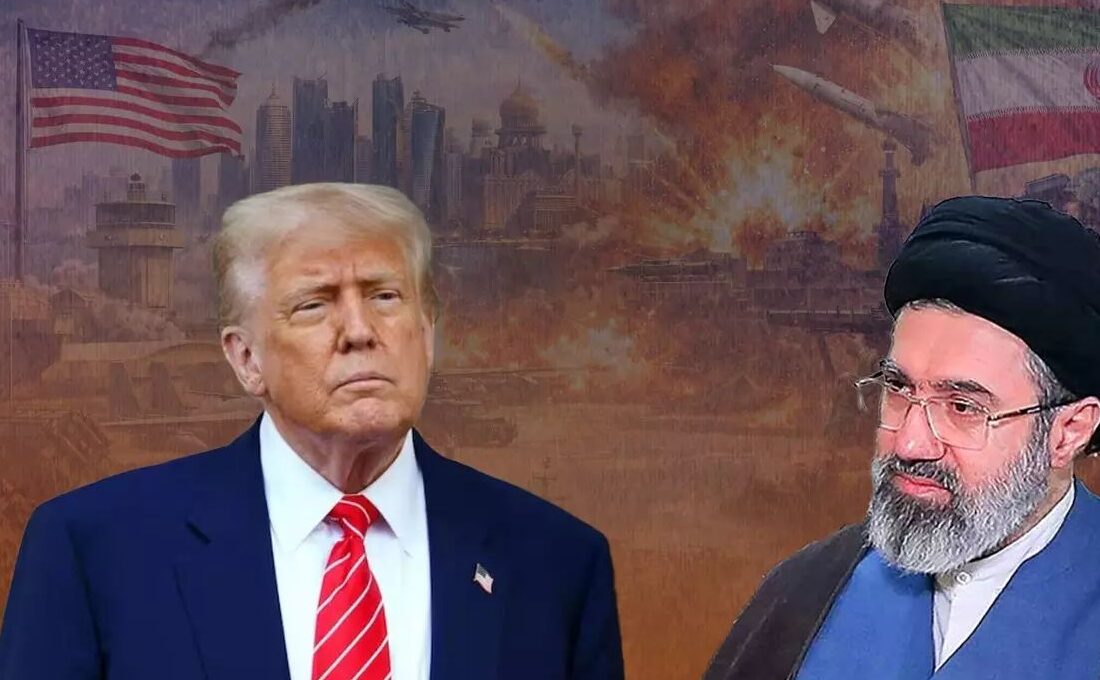
Trump-Iran Conflict: Amid the ongoing conflict in West Asia, a significant report has emerged regarding US President Donald Trump . According to The Wall Street Journal, Trump may consider ending the conflict even by abandoning his demand for a deal on Iran’s nuclear program, provided Iran fully reopens the Strait of Hormuz. This means that the Strait of Hormuz appears to be the most significant issue in this entire dispute.
According to reports, Trump has discussed this option with his senior aides. If maritime traffic through the Strait of Hormuz returns to normal, he could end the conflict and present it as a major achievement. However, Iran has imposed several conditions in return, further complicating the matter.
What are Iran’s major demands in exchange for Hormuz?
- Iran wants the US to not only limit its talks with it to the nuclear programme, but also make concessions on the war and broader issues related to it.
- According to the report, Tehran’s demands include billions of dollars in payments from the US, compensation for war damage, withdrawal of US troops from the region and ending the US naval blockade on Iran.
- Iran has also demanded that the ongoing war and attacks against its allies be stopped.
- In such a situation, the issue of opening Hormuz is no longer just about maritime traffic, but has become a part of a broader political and military deal between America and Iran.
Why is the Strait of Hormuz so important?
- The Strait of Hormuz is a vital sea route connecting the Persian Gulf with the Gulf of Oman and the Arabian Sea. It is of great strategic importance to the global oil and gas trade.
- If shipping along this route is disrupted, the impact will not be limited to Iran and the US. It could also impact oil supplies, fuel prices, and global markets.
- For this reason, Iran’s control over the Strait of Hormuz gives it a significant strategic advantage over the US. The WSJ report also indicated that Iran’s ability to blockade this waterway has limited Trump’s options for exiting the conflict.
Why is the challenge increasing for Trump?
- The US President has repeatedly stated that the Strait of Hormuz is open, but reports suggest that the waterway has not actually reopened. Trump has also threatened a major military operation against Iran… but Iran appears in no mood to back down.
- According to the report, Tehran is signaling its readiness for a long and exhausting conflict. The question facing the US is whether to escalate military pressure or pursue a compromise that would at least restore maritime traffic through the Strait of Hormuz.
Iran made it clear that Hormuz will not open without accepting the conditions.
- Iran’s Revolutionary Guards said on Sunday that there is no question of reopening the Strait of Hormuz until the United States accepts its demands.
- Iran’s security chief, Mohammad Bagher Zolghadr, had previously set several conditions for opening the Strait of Hormuz, including a halt to hostilities and attacks against Iran and its allies.
- The Iranian Revolutionary Guards have described the Strait of Hormuz as not just a strait, but as part of the ongoing conflict. This clearly implies that Iran is using the Strait of Hormuz as its biggest strategic leverage.
Elections also a big reason for America?
The report also cites the upcoming US midterm elections as a possible reason behind Trump’s efforts to end the conflict quickly. Since the war began, US gasoline prices have risen compared to before. If the conflict continues and pressure on oil supplies persists, it could have a direct impact on American voters and the economy. Therefore, it may be crucial for Trump to find a way to open the Strait of Hormuz, normalize oil supplies, and exit the conflict, while he can present it as a domestic political achievement.
What will happen next?
The biggest question in this entire development is whether the US will be willing to make any concessions to Iran’s demands, and whether Iran will fully open the Strait of Hormuz in return. If the two sides reach an agreement, it could both ease tensions in West Asia and provide relief to the global energy market. However, currently, there are significant differences between the two countries’ terms. Iran has clearly indicated that it is not willing to open the Strait of Hormuz until its demands are met.