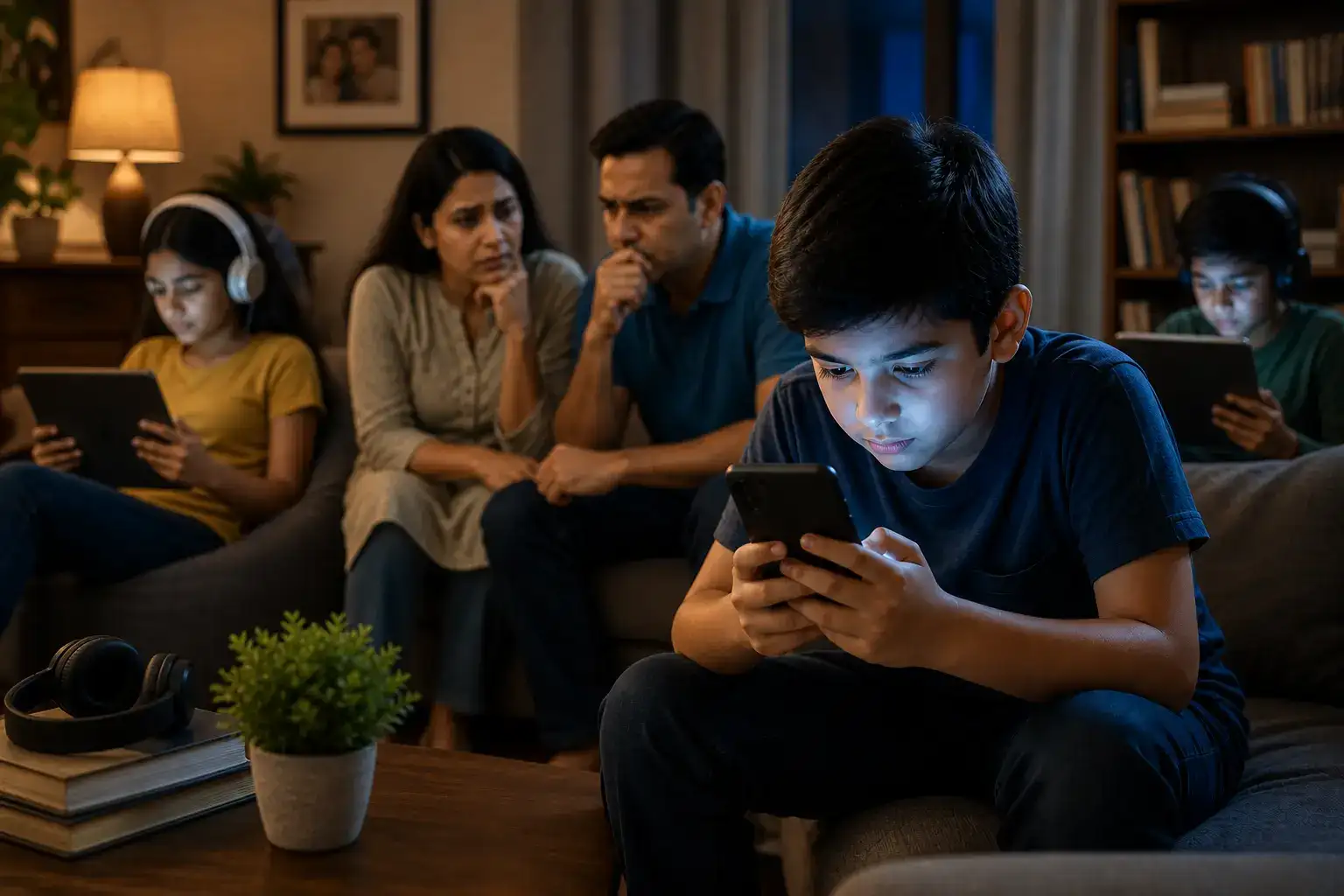
Reels addiction… today, it has become a common problem in almost every Indian household. People spend hours watching Reels, from the time they wake up in the morning until they go to sleep at night. While it weakens us mentally, few people realize how it creates distance in relationships. When a person starts watching Reels, they become lost in their own world. According to an NCBI report, Reels addiction has a detrimental effect on both the mind and body; prolonged exposure to screens can lead to vision impairment, while lack of physical activity can lead to obesity and diabetes. Amidst all this, a major risk is the breakdown of relationships or the growing distance between people. Living like strangers in the same house, without any communication or emotional connection—these are the problems that distance people from their loved ones. Let’s find out what experts have to say…
Why do people get addicted to Reels?
Research shows that the constant flow of new videos every few seconds releases dopamine in the brain. This process is called the “variable reward system.” Essentially, the brain expects the next video to be more entertaining than the previous one. As a result, people can spend an hour or two watching just ten-minute Reels. It’s a form of addiction.
The novelty of each Reel becomes a problem
Dr. Pankaj Kumar (Principal Consultant Psychiatrist, Max Hospital) says that Reels have become a common part of our lives, viewed by people of all ages. Experts say that Reels addiction affects our relationships. Its format delivers new content every few seconds and provides an instant dopamine reward. Our brain gets used to this fast pace, and this behavior starts affecting the way we interact with others; conversations with family members become less interesting in comparison.
What is “phubbing”?
Real life doesn’t move as fast as Reels. Reels offer something new every 30 seconds, which isn’t possible in real life; as a result, real life starts to feel boring. This situation encourages “phubbing” in relationships – that is, ignoring the person sitting in front of you to use the mobile phone. **Emotional Distance**
Nowadays, in many homes, people are together in the same room, but the mobile phone in their hands becomes their virtual world. Experts say that the biggest disadvantage of this is that despite being together, the emotional distance between people increases. Conversation decreases, which increases misunderstandings.
The beginning of loneliness
This situation can turn into loneliness. Thoughts like “no one understands me” or “I don’t matter” start coming to mind. We see content of our choice in Reels, which increases our expectations, and we start having the same expectations from our loved ones. This often leads to conflicts and people start retreating into a world of loneliness created by themselves. Alarm bells ring when everyday activities – like eating, sleeping, talking, or spending time with family – start to feel boring. A situation may also arise where a person starts considering their loved ones “toxic.”
**Solution: Digital Detox**
Experts recommend a “digital detox” as a solution. You don’t need to give up your phone completely; just set limits on your use.
You can establish a “no-phone time” at home – for example, a strict rule about not touching your phone while eating.
Avoid using your phone at least two hours before bedtime, as the blue light emitted from screens is harmful to mental health.
Make sure to spend at least half an hour with your family.