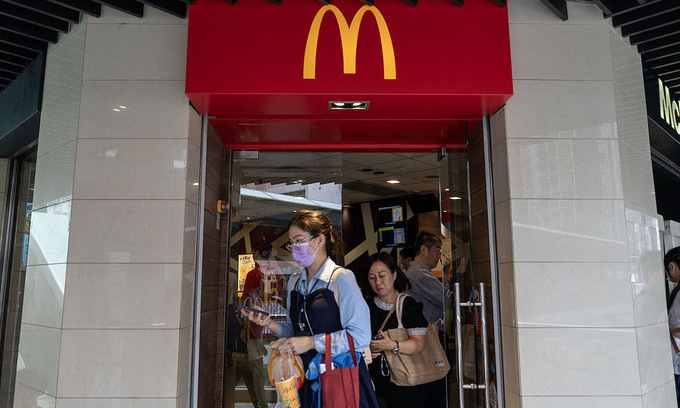
Since launching the disposal plan with property consultancy JLL in July last year, the chain has sold 11 properties for more than HKD900 million (US$703 million), according to the South China Morning Post calculations.
Eunice Tang, executive director of capital markets at JLL, which has been marketing six of the McDonald’s shops, said the sales demonstrated continued investor interest in high-quality retail properties despite the wider market downturn.
“Retail transactions for properties valued above HKD50 million have been sluggish since last year,” Tang said. “Nevertheless, the availability of prime-location retail assets backed by blue-chip tenancies has captured the attention of high-net-worth buyers.”
McDonald’s plans to sell all of its 23 retail spaces, valued at nearly HKD3 billion in total, but it would continue operating in existing locations as tenants, and the sale would not affect its operations in the city, Hong Kong Economic Times reported in July last year.
McDonald’s has around 256 restaurants in Hong Kong, the report said, many in rented spaces.
|
People are exiting a McDonald’s in Hong Kong, on July 22, 2024. Photo by NurPhoto via AFP |
The pace of sales (five last year and six so far this year) is notable amid Hong Kong’s retail property downturn. While McDonald’s continues to realize gains over its historical purchase costs, other shops have traded at prices more than 30% below peak valuations or original asking prices.
Analysts said shop values remained more than 50% below pre-pandemic highs as veteran investors and major landlords continued to sell assets. Only 379 shop transactions were completed in the first half, little changed from a year earlier, according to property agency Centaline Commercial.
The McDonald’s sales did not indicate a broad recovery, analysts said, but showed that investors remained willing to buy properties with the right attributes, including prime locations, long leases and blue-chip tenants.
The McDonald’s shops were sold through sale-and-lease-back agreements, allowing the chain to continue operating its restaurants under leases of up to 20 years. Most properties offered initial rental yields of more than 6%, giving investors stable income while rents and capital values remained under pressure.
The buyers included high-net-worth individuals, family offices and experienced private investors. Local investor Ng Yin acquired three McDonald’s properties worth a combined HKD300 million, while veteran investor Chang Yen-hsu, known in the market as “Taiwan’s Chang,” purchased two.
Other buyers included Malaysian developer MB World Group and private investors from mainland China, according to Land Registry and Companies Registry data.
The properties were owned by MCD Real Properties, a company linked to McDonald’s U.S. parent, which retained them after selling the local operating business to a Citic Capital-led consortium in 2017. Many of the properties were acquired during the company’s expansion in the 1980s and early 1990s, enabling McDonald’s to unlock decades of appreciation.
Stanley Poon, managing director at Centaline Commercial, attributed the results of the disposal plan to both the quality of the properties and McDonald’s strategy of releasing the portfolio in phases rather than flooding the market.
“Selling this many shops in today’s market is not easy,” he added.
The next phase could prove more difficult, however. Several properties, including the flagship Star House shop in Tsim Sha Tsui, remain unsold.
Poon said the challenge was less related to the location than to the larger ticket size, which narrowed the pool of potential buyers. The property’s basement portion also made it less appealing than a conventional street-front shop.