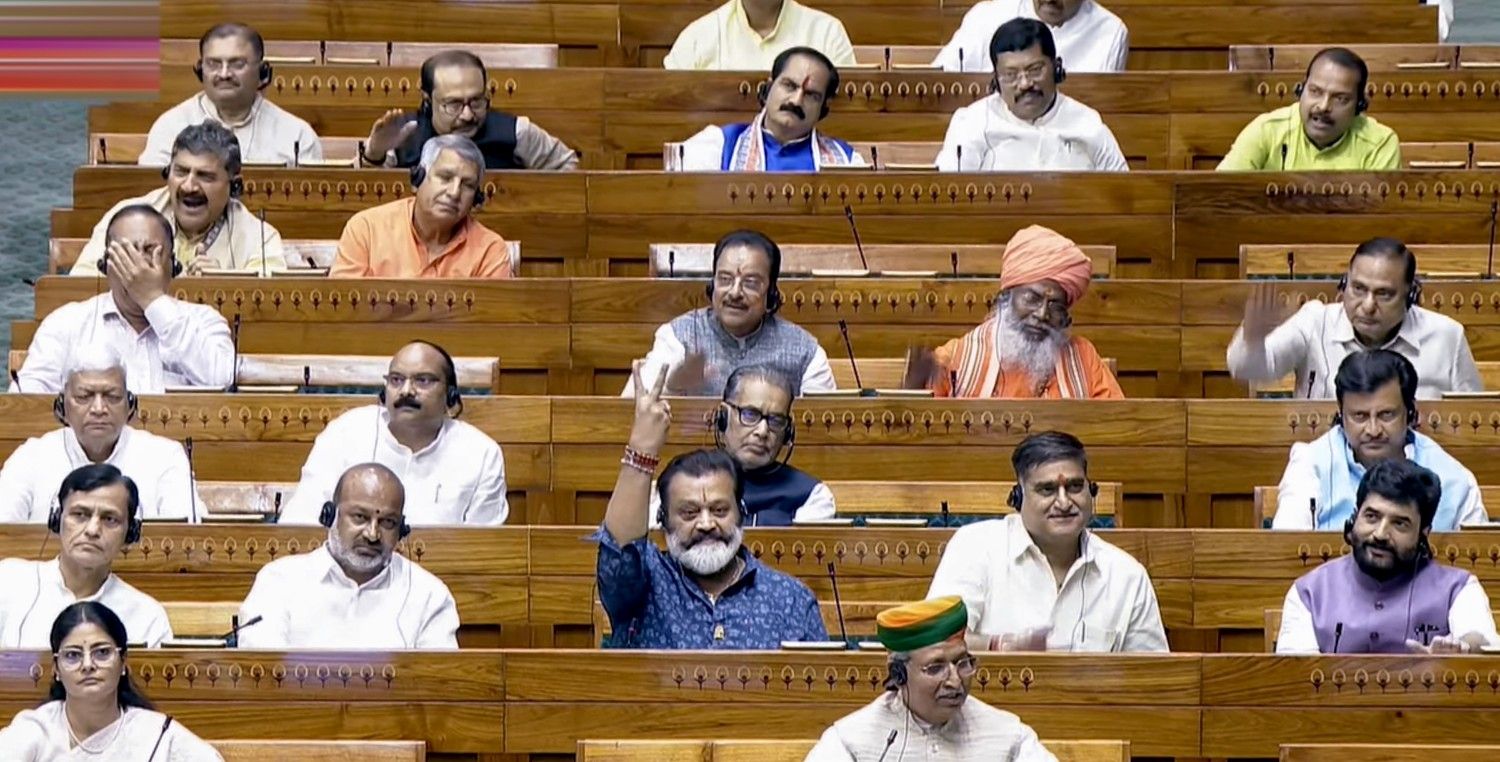
Amid the Union government’s push to redraw constituencies and nearly double the number of Lok Sabha seats—raising the count from 543 to 850—a fierce debate has erupted.
While the Centre argues that a massive population surge demands more parliamentarians to effectively serve citizens, the Opposition dismisses the move as gerrymandering aimed at altering national political leverage.
At the heart of this controversy lies a fundamental question: What does an Indian Member of Parliament actually do for his or her constituents, and would adding more MPs bridge the governance gap?
What do MPs do for electorates?
Beyond their high-profile battles in Parliament, floor-crossing speeches, and legislative votes, a massive portion of an MP’s mandate revolves around grassroots representation. They serve as vital conduits between the state and the citizen, expected to juggle grievance redressal, development works, and administrative coordination.
1. Grievance redress and public interface
MPs spend significant time listening to local demands and individual troubles. From processing issues related to pensions, ration cards, and land disputes to following up with central ministries, Railways, and banks, the constituency office is a constant hub of administrative coordination.
2. Development execution: the MPLADS mandate
To drive local infrastructure, each MP is allocated Rs 5 crore annually under the Member of Parliament Local Area Development Scheme (MPLADS). These funds are designated for durable community assets based on local needs—ranging from village roads and bridges to schools and health centres.
Also read: Explained: DMK’s 3 conditions that could make or break Delimitation Bill
However, the efficacy of MPLADS is severely hindered by institutional bottlenecks:
The execution gap: MPs lack executive powers; they can only recommend projects, while execution is handled by district collectors and implementing agencies.
Low utilisation rates: Comptroller and Auditor General (CAG) reports and tracking portals consistently reveal dismal fund utilisation. According to the India Elections portal, which tracks the allocation and utilisation of the fund across 36 states and UTs, only 30.66 per cent (Rs 3539.82 crore) of a total allocated fund corpus of Rs 11543.97 crore to 745 MPs has been utilised.
The reasons behind the low expenditures are late recommendations, procedural delays, and technical hurdles. Even top leaders, including Prime Minister Narendra Modi, Home Minister Amit Shah, and Opposition leader Rahul Gandhi, have recorded varying and often low utilisation percentages ranging from 8 per cent to 34 per cent of their total allocations.
3. Scheme monitoring and oversight
MPs are also mandated to review the grassroots progress of flagship central and state schemes—such as PM Awas Yojana, Ayushman Bharat, and MGNREGA—by participating in district-level vigilance and monitoring committees. Yet, because they lack executive enforcement powers, they are often reduced to playing watchdog roles without direct correction capabilities.
Does India really need more MPs?
The government’s primary justification for expanding seats is simple mathematics: workload.
The staggering ratio: When the current strength of 543 was frozen based on the 1971 census, each MP represented roughly 1 million citizens. Today, with India’s population crossing 1.46 billion, a single Lok Sabha MP represents an average of 2.65 million constituents.
Global comparison: This dwarfs international standards. A member of the UK House of Commons represents roughly 100,000 citizens, while a US congressman serves about 760,000 constituents.
Also read: Inside the delimitation battle: What Centre wants and why Opposition is resisting
Proponents argue that shrinking the constituency size through delimitation would give lawmakers fewer people per head to manage, allowing for sharper public outreach, better supervision of local development, and more responsive representation.
Does more mean better?
Critics and structural analysts argue that simply adding more MPs will not solve systemic governance deficits. The core impediments facing Indian parliamentarians are institutional, not numerical:
The anti-defection law: Party whips tightly bind how MPs vote, diluting individual legislative independence regardless of how many seats exist.
Resource and staff constraints: Unlike western counterparts who enjoy robust institutional research and large professional staff, Indian MPs operate with minimal official research assistance.
Fewer working days: Parliament sits for a mere 60 to 70 days a year—down drastically from decades past—leaving diminishing windows for deep legislative scrutiny and meaningful debate, a problem that additional bodies alone cannot fix.
Final perspective
The debate over the delimitation bill touches a raw nerve in Indian federalism, balancing accusations of political re-engineering against the undeniable strain of representing millions of citizens per seat.
Also read: Why delimitation Bills appear more ominous than originally thought
While expanding the Lok Sabha could theoretically lighten the gargantuan constituent burden borne by individual MPs, true democratic efficiency will require more than just a larger headcount—it demands empowering lawmakers with better institutional support, streamlined development funds, and expanded parliamentary working days.