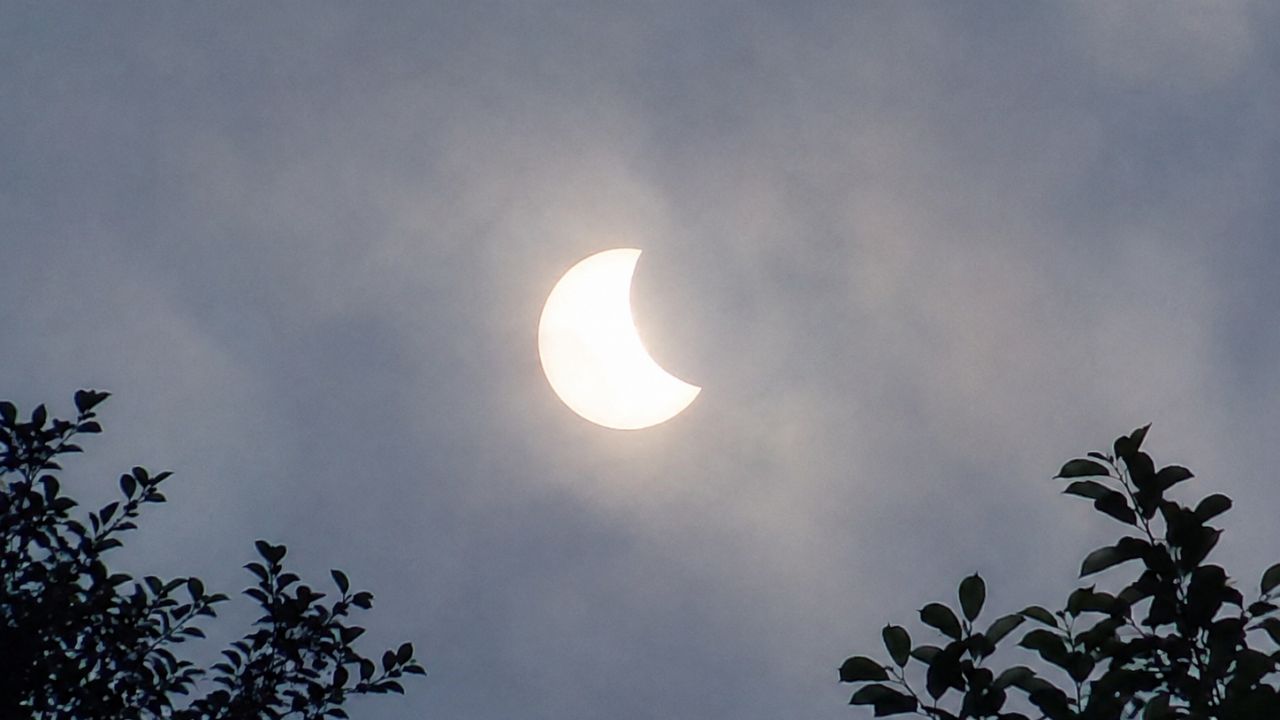
August 2026 is going to be very special in terms of astronomical events. This month, two major events of solar and lunar eclipse are going to happen in a span of just 15 days. The first eclipse will take place today in the form of a solar eclipse on the day of Hariyali Amavasya, while about two weeks later there will be a lunar eclipse on August 28, 2026.The special thing is that both the eclipses will not be visible in India. In such a situation, according to Indian religious beliefs, the Sutak period of these two eclipses will not be valid in India. This means that people living here will not need to make any changes in worship, food or daily religious activities due to the eclipse.
Solar eclipse will happen today
Today, on the day of Shravan Amavasya i.e. Hariyali Amavasya, the last solar eclipse of the year will occur. According to Indian time, the eclipse will start at 9.04 pm. It will end at 1:27 pm on 13th August.
This will be a total solar eclipse, but due to it being night time in India and the eclipse not being visible, it will not be visible here. According to religious belief, if the eclipse is not visible at any place, its Sutak period is not valid there. Therefore, during this eclipse in India, religious obligations like keeping the doors of temples closed, stopping worship, banning cooking or eating will not be applicable.
Lunar eclipse will take place on 28th August
A partial lunar eclipse will occur on August 28, 2026, exactly 15 days after the solar eclipse. This eclipse will also not be visible in India. This eclipse will be visible in many parts of Europe, Africa and America. Due to its lack of visibility in India, the Sutak period of lunar eclipse will also not be valid here.
Coincidence of two eclipses within 15 days
There are going to be two consecutive big eclipses in August. The first solar eclipse will take place on 12th August on the new moon day and the second lunar eclipse will take place on 28th August on the full moon day. From astrological point of view, eclipses falling on the new moon and full moon are given special importance. The occurrence of solar and lunar eclipses in the same month is considered an important astronomical coincidence in astrology. However, both eclipses will not be visible in India, hence their religious impact and Sutak period will not be valid here. This will not affect religious festivals like Rakshabandhan.
Why are two eclipses considered special in astrology?
In astrology, solar and lunar eclipses are considered important events. It is believed that when solar and lunar eclipses occur within a short period of time, their effects can be seen on a wide scale. According to astrological beliefs, two eclipses in the same month can lead to changes in political and social situations, tension and instability. There is a possibility of challenges to power and governance, increase in protests and increase in pressure at the administrative level. In some astrological opinions, this period is also considered sensitive from the point of view of natural events. Heavy rains, storms, earthquakes or other natural events are associated with eclipses.
In which parts of the world will both eclipses be visible?
In astrological calculations, two eclipses falling at short intervals are considered sensitive times. According to such beliefs, there may be an increase in social and political activities during this period. There is a possibility of increase in protests, tension or law and order related challenges in some areas.