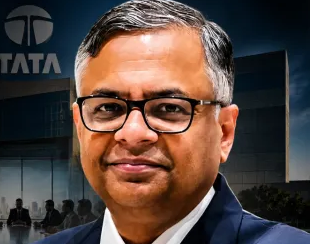
Digital Desk: The process of change of leadership has started in Tata Group, one of the leading business groups of India. Tata Sons Chairman N. Chandrasekaran has resigned from his post. However, this resignation will not come into effect with immediate effect. He will continue to hold the responsibility of chairman till the end of his current term i.e. February 2027.
After his resignation, speculations and discussions have intensified regarding the next chairman of Tata Sons. At present, the name of the successor has not been announced by the group.
Took command of Tata Sons in January 2017
N. Chandrasekaran took over as chairman of Tata Sons in January 2017. Before this he had been the CEO of Tata Consultancy Services (TCS).
Under his leadership for nearly a decade, the Tata Group expanded beyond its traditional business and into many new areas. The group made big investments in sectors like airlines, semiconductors, electronics, batteries, digital business and defence.
The biggest strategic events of his tenure also included the acquisition of Air India.
Why is resignation important before the AGM of August 18?
Chandrasekaran’s resignation comes at a time when Tata Sons’ Annual General Meeting (AGM) is proposed on August 18. In this meeting his reappointment as director was to be considered.
Since the post of Chairman is linked to his membership on the board of Tata Sons, the AGM is also considered to be of special importance. However, even after his resignation he will complete his current tenure.
Now the biggest question is who will be handed over the command of Tata Sons after February 2027?
Differences with Tata Trust also in discussion
News of differences between Tata Sons and Tata Trusts have also been in the news from time to time during Chandrasekaran’s tenure. Reports have revealed differing views on issues such as the group’s strategy, investment in new businesses, capital needs and future direction.
Tata Trust holds about 66 percent stake in Tata Sons. In such a situation, the role of trust is considered important in the selection of the chairman and the future strategy of the group.
Profit increased by 21.8% in financial year 2025-26
Tata Sons’ financial performance also strengthened under Chandrasekaran’s leadership. The company’s standalone profit increased by 21.8 percent to Rs 31,961 crore in the financial year 2025-26.
During the same period, the company’s revenue increased by 9.1 percent to Rs 42,366.55 crore. However, losses have increased in some of the group’s new businesses due to large investments made in new businesses, including Air India.
Chandrasekaran has described these investments as steps of long-term strategic importance.
Now eyeing the next direction of Tata Group
N. Chandrasekaran’s resignation is not an immediate leadership change, but it has definitely started a discussion about the strategy for the next phase of Tata Group. The group will have to complete the process of selecting a new chairman during his tenure till February 2027.
Now all eyes will be on what name the boards of Tata Trusts and Tata Sons agree on as the next chairman and how the group’s current expansion strategy is taken forward.