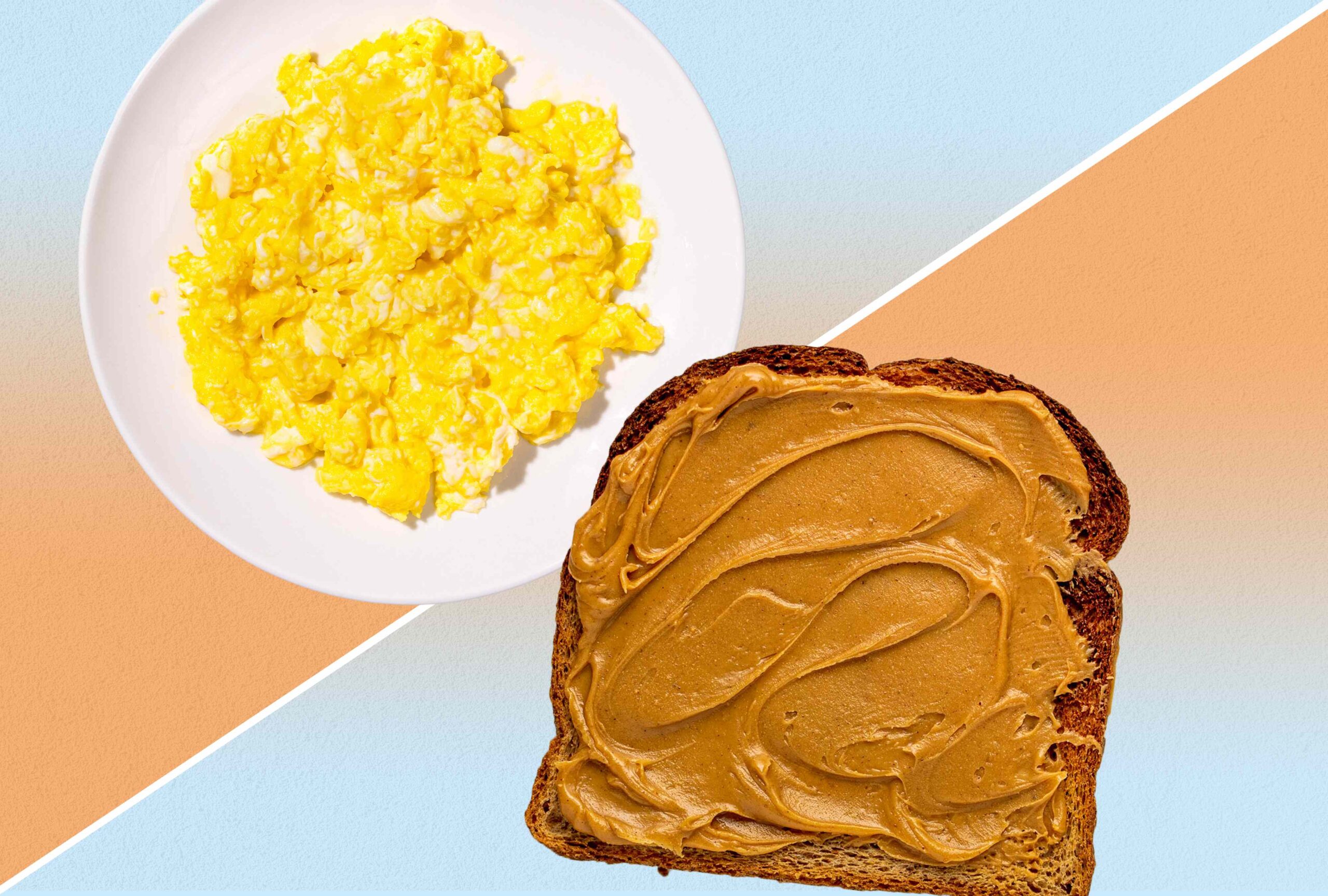
The better blood sugar–friendly breakfast may combine two favorites.
Reviewed by Dietitian Katey Davidson, M.Sc.FN, RD, CPT
Key Points
- Scrambled eggs need a fiber-rich carbohydrate to make a more balanced breakfast.
- Pair peanut butter toast with extra protein to better support steady blood sugar.
- Combining eggs and peanut butter toast creates a balanced, blood sugar–friendly meal.
A simple, filling breakfast can help you power through a busy morning. But when it comes to diabetes, it’s important to choose a breakfast that is both filling and blood sugar–friendly.
Scrambled eggs and peanut butter toast are two common breakfast staples people rely on, and for many, they easily check the first two boxes: They take just a few minutes to make and leave you satisfied.
However, when it comes to long-lasting energy and stable blood sugars, the two breakfast options couldn’t be more different. Dietitians explain the benefits of a scrambled egg breakfast versus one with peanut butter toast, and which is a better choice for your blood sugar.
How Scrambled Eggs Affect Blood Sugar
Including scrambled eggs in your breakfast has some advantages for blood sugar management. “Scrambled eggs are a good source of protein and naturally low in carbs,” explains Sara Wisehart, M.S., RD, LD, CDCES. Two scrambled eggs have 182 calories, 12 grams of protein, 13 grams of fat and less than 2 grams of carbohydrates. Almost all of the calories in eggs come from protein and fat, meaning they’ll have a very minimal, if any, impact on your blood sugar after a meal.
Along with this, “Protein helps to keep you full and also supports blood sugar stabilization,” shares Wisehart. This can be particularly helpful when you’re eating scrambled eggs alongside carbohydrates, such as a piece of toast, fruit or potatoes, since it can help slow down the blood sugar response.
While eggs are a good starting point for a balanced breakfast, they’re not enough on their own. “They contain virtually no carbohydrates, and ideally you should aim to include some carbs at each meal,” says Wisehart. Carbohydrates provide your body with energy because they’re broken down into glucose, which enters the bloodstream and is used by your cells. Some carbohydrate-rich foods also provide fiber, which slows digestion and is linked with steadier blood sugar levels.
How Peanut Butter Toast Affects Blood Sugar
Unlike eggs, peanut butter toast contains a higher amount of carbohydrates. One slice of whole-wheat toast with 1 tablespoon of peanut butter has 174 calories, 6.5 grams of protein, 18 grams of carbohydrates, 2 grams of fiber and 9 grams of fat.
Whole-wheat toast provides complex carbohydrates and fiber to help fuel your body, while peanut butter contributes healthy unsaturated fats and some protein that help promote fullness.
While bread provides a higher source of carbohydrates, the combination of nutrients in peanut butter and toast together alters its impact on blood sugar. “The fat and protein in peanut butter slow gastric emptying and blunt the glycemic response of the toast’s main macronutrient: carbohydrate,” says Whitney Stuart, M.S., RDN, CDCES. However, “Depending on the type of bread used for toast, it’s likely that it still causes a faster rise in blood glucose [compared to scrambled eggs] than the fat and protein in peanut butter can fully offset,” she adds.
How much your blood sugar rises depends largely on the type of bread and peanut butter you choose. A slice of white bread topped with sweetened peanut butter will cause a much bigger spike than a slice of whole-grain bread with natural, unsweetened peanut butter. Choosing whole grains helps slow down blood sugar absorption and also feeds beneficial gut bacteria, which is linked with a lower risk of type 2 diabetes and better blood sugar management.
That said, peanut butter toast is still relatively low in protein for a meal and would benefit from other protein-rich additions or sides to further promote fullness and support a better blood sugar response.
Which Breakfast Is Better for Blood Sugar?
On their own, neither option makes a well-balanced breakfast for long-lasting energy or stable blood sugar. In fact, the best solution may be to combine the two.
“I like the idea of scrambled eggs for breakfast, with a side of peanut butter toast on whole-grain bread,” says Stuart. Adding a side of fruit, such as berries or a banana, provide additional carbohydrates, fiber and nutrients.
For example, two scrambled eggs with a slice of whole-grain toast, a tablespoon of natural peanut butter and a cup of berries combine for around 420 calories, 20 grams of protein, 35 grams of carbohydrates, 10 grams of fiber and 22 grams of fat. This creates a better balance of macronutrients to support satiety and steady blood sugar while providing enough calories to fuel your body until your next meal.
If you’re not a fan of eggs, no problem. For a more balanced peanut butter toast breakfast, try pairing it with a high-protein food such as strained (Greek-style) yogurt, cottage cheese, chicken sausage, milk or soy milk, along with a serving of fruit.
And if you’d rather have eggs without peanut butter toast, pair them with fiber-rich carbohydrates such as fruit, roasted sweet potatoes, oatmeal or whole-grain toast for a more balanced breakfast.
Our Expert Take
Peanut butter toast and scrambled eggs can both fit into a blood sugar–friendly breakfast, but neither is balanced on its own. Peanut butter toast benefits from an extra source of protein, while scrambled eggs are best paired with fiber-rich carbohydrates. Better yet, enjoy them together for a satisfying breakfast that helps support steady blood sugar throughout the morning.