7 Indian Foods That Became Symbols of Resistance During the Freedom Struggle
By Staff Reporter
India’s freedom struggle was fought not only through protests, marches and political campaigns, but also through everyday choices. Food became an unexpected way for people to express Swadeshi, reject imported products and support local producers.
Here are seven foods and food traditions that became associated with resistance during the struggle for independence.
1. Salt — The Most Powerful Symbol
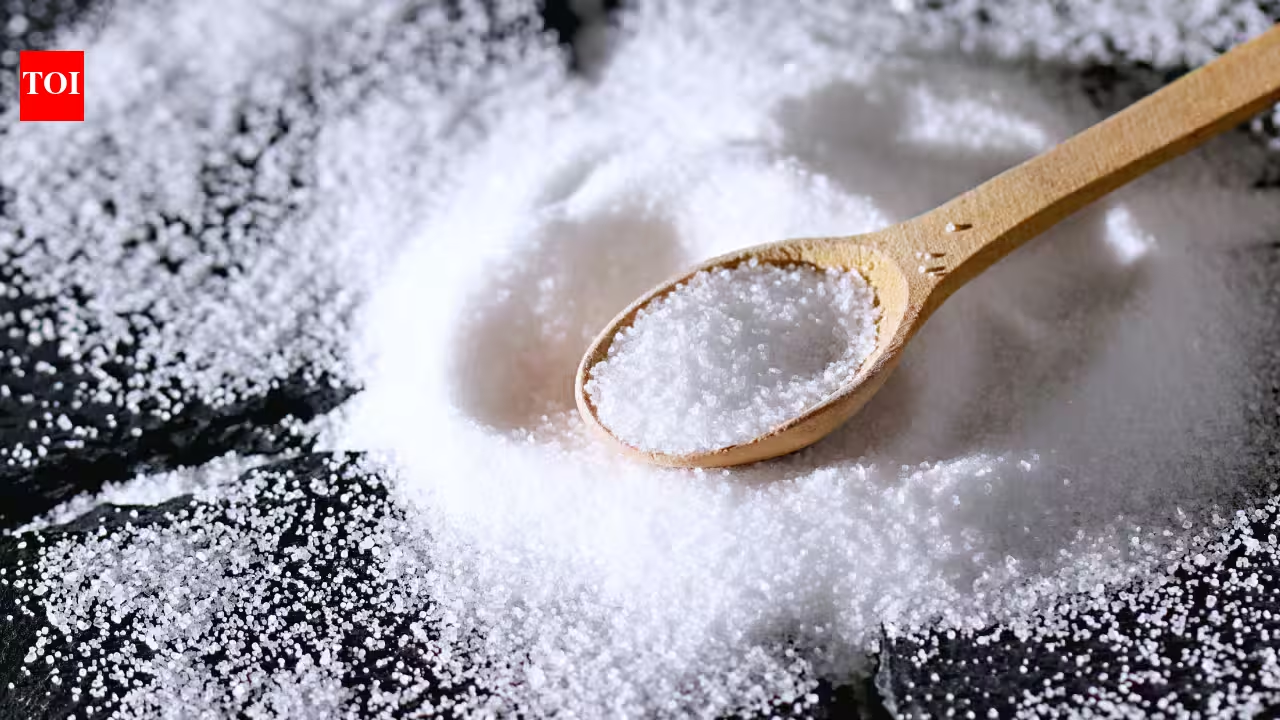
Salt became one of the strongest symbols of resistance after Mahatma Gandhi launched the Dandi March in 1930. Gandhi challenged the British monopoly and tax on salt by marching from Ahmedabad to Dandi, where he broke the salt law. The action inspired thousands of Indians to make or sell salt in defiance of British regulations.
2. Jaggery (Gur) — The Swadeshi Sweetener
Jaggery represented India’s traditional food economy and local production. Gandhi encouraged villagers to continue producing gur rather than abandoning it for refined sugar. For nationalists, choosing jaggery could mean supporting village industries and keeping money within local communities.
3. Indigenous Sugar — Boycott on the Plate
Imported sugar became a target of the Swadeshi boycott in several parts of India. In Malvan, Maharashtra, residents in 1908 resolved to boycott foreign sugar, and the campaign became so strong that imported sugar consumption reportedly fell dramatically.
4. Puran Poli — A Traditional Alternative
The popular Maharashtrian sweet puran poli also acquired a Swadeshi connection because it traditionally uses jaggery instead of refined sugar. During campaigns against imported sugar, people were encouraged to choose traditional preparations made with locally produced ingredients.
5. Mithai Made With Desi Sugar
Indian sweets became more than festive treats when sweet-makers began emphasizing indigenous ingredients. Some traditional sweet shops promoted sweets made with desi chinni or locally produced sugar, linking familiar foods with nationalist economic ideas.
6. Sakharechya Gathi — When Not Eating Became Protest
The decorative sugar garlands known as sakharechya gathi became part of the debate over foreign versus Swadeshi sugar. In some communities, people chose not to make or buy them when only imported sugar was available. The absence of a traditional sweet could therefore become a visible statement of boycott.
7. Chapati — A Symbol of Collective Action
During the upheaval of 1857, the mysterious circulation of chapatis from village to village attracted the attention of British officials. The exact purpose of the Chapati Movement remains debated, and historians have not established that the chapatis carried a secret message. Nevertheless, the episode has become an important example of how an ordinary food could acquire political meaning during a period of rebellion.
Food as a Weapon of Swadeshi
The freedom movement transformed ordinary consumption into a form of political expression. Salt challenged colonial taxation, while jaggery and indigenous sugar represented economic self-reliance. Traditional sweets and foods became reminders that the struggle for independence could begin with something as simple as what people chose to eat—or refused to buy.
The larger Swadeshi movement encouraged Indians to reject foreign goods and support indigenous production, turning everyday economic decisions into acts of nationalism.