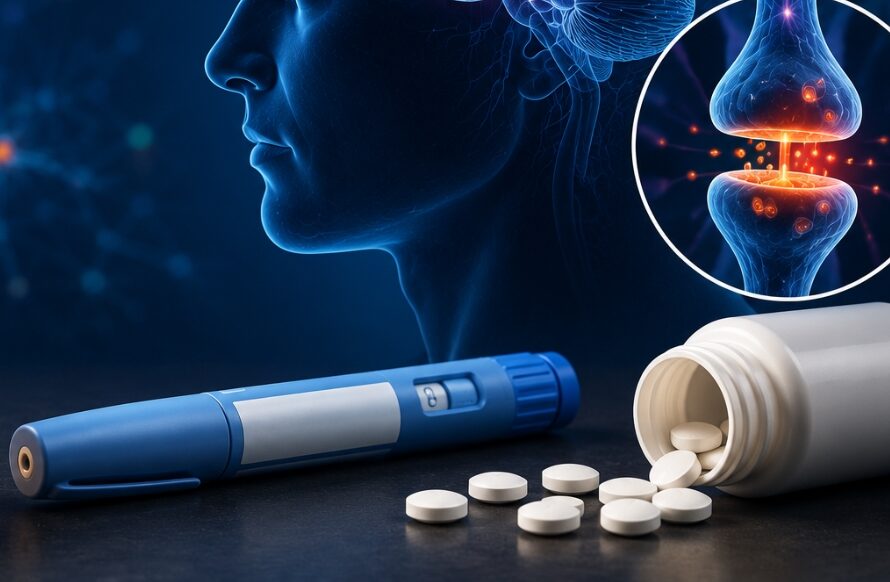
Brain Craving Center: Just as some people have a strong desire to eat something again and again, similarly in people suffering from drug addiction, cravings can dominate the mind. Now scientists have found indications that GLP-1 drugs used in weight loss and diabetes treatment are not limited to just reducing appetite, but may also affect the brain circuits that are associated with cravings and addiction. Recent research has found a septal brain circuit specifically associated with alcohol consumption and the effects of GLP-1 drugs. Now the question is, how did the research reach from hunger to drug addiction? Will these medicines become a cure for every kind of addiction? Read the big claim of scientists-
How did research reach from hunger to drug cravings?
GLP-1 receptor agonist drugs such as semaglutide and liraglutide were originally developed to treat type-2 diabetes and obesity. They work like a hormone called GLP-1 in the body, which affects signals related to hunger and food. But, scientists found that GLP-1 receptors are also present in parts of the brain associated with reward and addiction. These include areas like nucleus accumbens, ventral tegmental area and lateral septum. This link has now become interesting for scientists.
Important information found on septal circuit
In a study published in 2026, scientists studied neurons associated with GLP-1 receptors present in the dorsal lateral septum (dLS) in the brains of rats. Research found that liraglutide reduced alcohol consumption and alcohol-related dopamine release in the nucleus accumbens in rats. Scientists also identified the role of the inhibitory circuit associated with dLS in this process. If understood in simple language, this circuit appeared to play a role in controlling the ‘reward’ signal received from alcohol in the brain. However, this study has been done in rats, so its results cannot be directly applied to humans.
Initial signs found in humans too
There have also been some encouraging signs from human studies. According to the NIH, a clinical trial showed that taking GLP-1 drugs reduced alcohol consumption in people with obesity and alcohol-related problems. Meanwhile, in a small randomized clinical trial published in 2026, participants taking oral semaglutide reported fewer heavy-drinking days, lower total alcohol consumption, and weaker cravings compared to the placebo group. However, only 50 people were included in the study and its duration was also limited.
Will these medicines become a cure for every kind of addiction?
At present it is too early to say so. Scientists have found indications of possible effects of GLP-1 drugs on nicotine, opioids and other addictive substances in addition to alcohol, but strong clinical evidence in humans in these areas is still limited. A recent systematic review also described preclinical results as encouraging, while clinical evidence was considered preliminary and inconsistent.