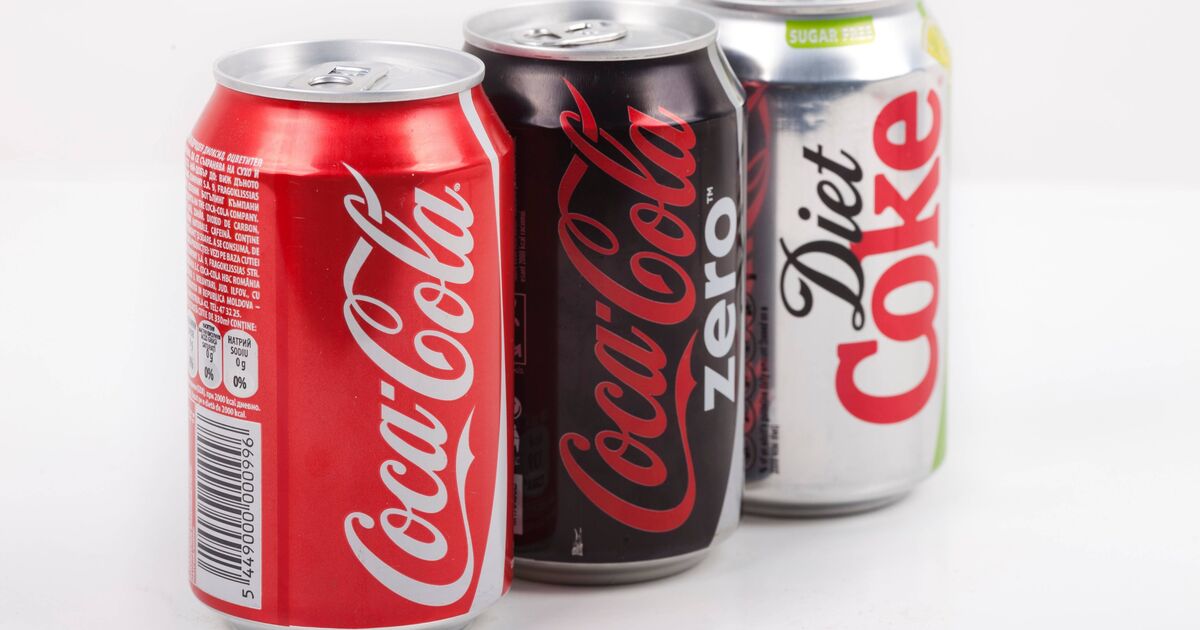
If you’ve ever struggled to distinguish between Diet Coke and Coke Zero, you’re not alone. Whether you’re trying to settle an argument or have simply been baffled when asked to clarify the difference, countless others share your confusion. Internet forums and discussion boards are brimming with people offering their own theories about what sets these two beverages apart.
Diet Coke and Coke Zero rank among the globe’s top-selling soft drinks. According to official data from the Coca-Cola Company, Coke Zero sales surged by 14% in 2025, while Diet Coke sales held steady compared to the previous year. For a corporation that recorded $47.9 billion in revenue in 2025, this equates to billions of bottles and cans of both products sold worldwide. Diet Coke was the firm’s first sugar-free cola, introduced in 1983; Coca-Cola Zero followed in 2006 and was later superseded by Coca-Cola Zero Sugar in 2016.
No-sugar and low-sugar beverages have experienced a dramatic rise in popularity recently, with numerous consumers convinced they can aid weight loss, although scientists and researchers continue to question whether this is genuinely true (more details below).
Do diet sodas help you lose weight?
Examining the nutritional label on a can of Coca-Cola Zero or Diet Coke, it might seem impossible that either could lead to weight gain. Both beverages contain not a single gram of fat, carbohydrates or sugar.
Coca-Cola Original Taste, by comparison, contains 10.6g of sugar per 330ml can. Additionally, the Coca-Cola Company’s own statement confirms that “both drinks are sugar-free and calorie-free”, prompting millions to drink them, believing they make no contribution whatsoever to weight gain.
Yet, the truth may not be entirely straightforward. In an article published on the Harvard University Medical School website, Robert H Shmerling states: “Research suggests that none of these choices may actually help with weight loss. Worse, they might even lead to weight gain.
“One worry is that artificially sweetened diet sodas may create a craving for sweet, high-calorie foods. So, even as calorie counts drops from zero-calorie sodas, consumption of other foods and drinks might add back even more. In rodent studies, at least one artificial sweetener (aspartame) has been found to damage a brain region that signals when to stop eating.
Have you ever wondered what the difference between Coke Zero and Diet Coke is? (Image: Getty)
“And a number of studies in humans… have actually found a tendency toward weight gain among people drinking artificially sweetened beverages.”
That said, he concedes the research remains inconclusive, noting that “other studies have found that artificially sweetened low-calorie beverages can help with weight loss”. He further observes that a complicating element in researching zero-calorie beverages and weight reduction is “reverse causation” – where individuals already susceptible to obesity are more inclined to choose these drinks, generating the false perception that the beverages themselves are to blame.
Are Diet Coke and Coke Zero bad for you?
With both products containing 0g of fat, carbohydrates and sugar, numerous people assume they present no danger to their wellbeing. Nevertheless, the Zoe Science and Nutrition website cautions that “just because something has no calories doesn’t mean it’s healthy”.
Both beverages contain multiple ingredients that are chemically produced rather than natural or whole foods. These include:
- Colour (Caramel E150d)
- Sweeteners (Aspartame, Acesulfame K, Enzymatically Produced Steviol Glycosides)
- Natural Flavourings
- Caffeine Flavouring.
There is growing unease among scientists, coupled with rising public awareness, about the potential damage ultra-processed foods and drinks may be inflicting on our health, including our gut health and metabolic wellness.
While he wasn’t referring to any specific brand of drink, Dr William Li, a world-renowned physician, scientist and author, told the Zoe podcast: “The preponderance of clinical evidence, public health evidence, shows that high consumption of soda is associated with everything from metabolic disease to cardiovascular disease to cancer risk.”
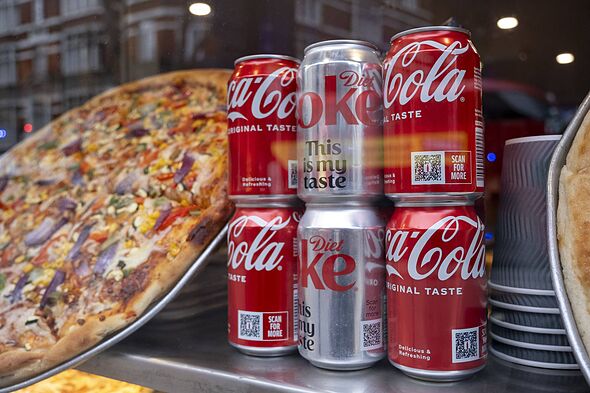
Many people can instantly tell the difference between Coca Cola and Diet Coke (Image: Getty)
Nevertheless, as acknowledged on both the Zoe Science and Nutrition website and the Harvard Medical School website, the precise impact these beverages may have on overall health remains uncertain, and “scientists continue to look into the issue”.
What’s the difference between Coke Zero and Diet Coke?
The Coca-Cola Company states that the distinction between Coca-Cola Zero and Diet Coke lies in “the taste”. They explain: “Both drinks are sugar free and calorie free. CocaCola Zero Sugar looks and tastes more like CocaCola original taste, while Diet Coke has a different blend of flavours which gives it a lighter taste.”
Examining the ingredients listed on the back of each product reveals a subtle difference between the two. Diet Coke’s ingredients are listed as follows: “Carbonated Water, Colour (Caramel E150d), Sweeteners (Aspartame, Acesulfame K), Natural Flavourings, Caffeine Flavouring, Acids (Phosphoric Acid, Citric Acid).”
Coca-Cola Zero’s ingredients list, meanwhile, reads: “Carbonated Water, Colour (E150d), Acid (Phosphoric Acid), Sweeteners (Aspartame, Acesulfame-K, Enzymatically Produced Steviol Glycosides), Natural Flavourings, Caffeine Flavouring, Acidity Regulator (Sodium Citrates).”
When someone raised the question about the differences between the two drinks in a Reddit thread, hundreds of users shared their opinions. One commented: “Flavour-wise, Coke Zero is supposed to be closer to regular Coke while Diet Coke is much more distinct.”
Another observed: “I’m a life-long Diet Coke drinker and I can definitely taste the difference. Zero is too sweet. I don’t want something that tastes like Coca-Cola. I want something that tastes like Diet Coke.”