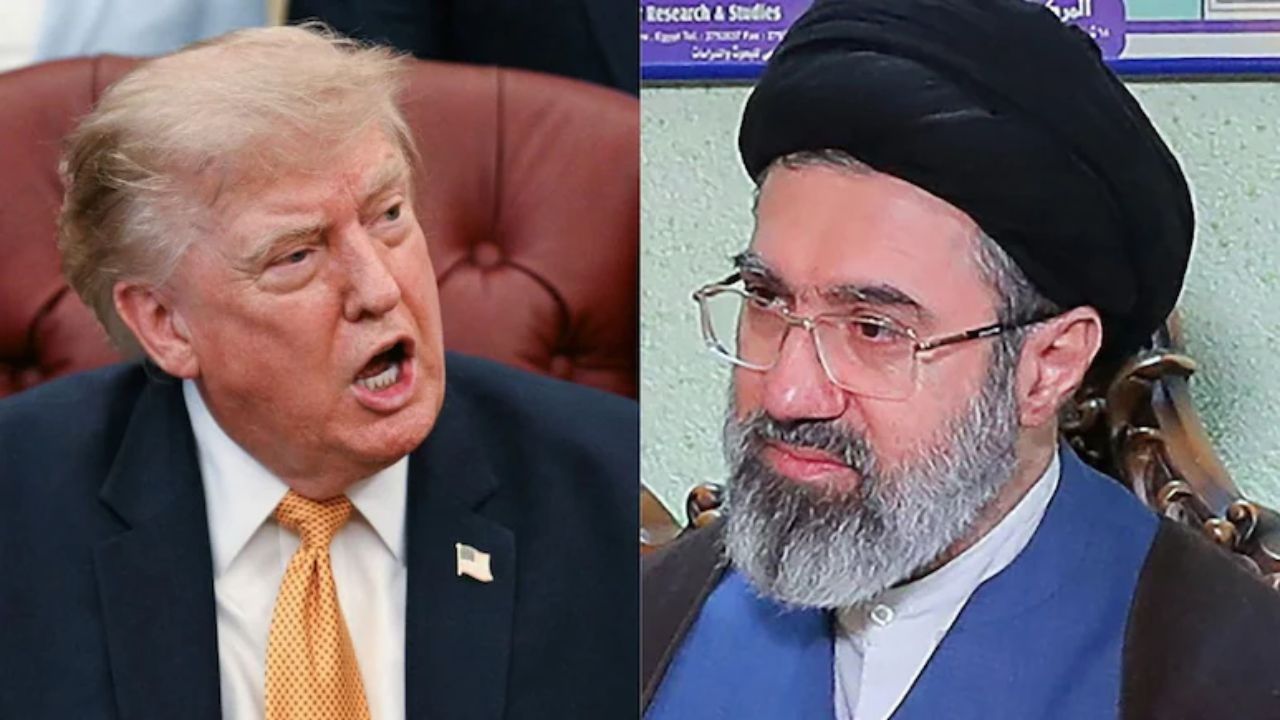
New Delhi: Iran has strongly reacted to US President Donald Trump's statement that he could “soon” declare the Strait of Hormuz as part of US territory, asserting that the strategic waterway remains under Iranian control.
Iran's Deputy Foreign Minister Kazem Gharibabadi said the strait “has been Iranian, is Iranian, and will remain Iranian,” rejecting Trump's claim and warning that it cannot be taken through announcements or military pressure.
“Trump has said that after Iran's defeat, he will soon declare the Strait of Hormuz as US territory. The Strait of Hormuz cannot be seized by tweet, nor by aircraft carrier,” Gharibabadi said in a post on X.
Trump's Claim During US Rally
Trump had made the remark while addressing a political rally in New York, saying the United States would “finish defeating” Iran and would “soon” declare the Strait of Hormuz a US territory.
“After we finish defeating Iran… pretty soon I'll be declaring the Hormuz Strait a territory of the United States,” Trump said during the event. A White House official later clarified that Trump's comment was made jokingly, according to reports.
Tehran Says Control Remains With Iran
Iranian officials maintained that the waterway remains under Tehran's authority. Iran's military spokesperson Ebrahim Zolfaghari accused Washington of making false claims about shipping movement through the strait.
He said the Strait of Hormuz was under the “complete management and control” of Iran's armed forces and that vessels could not pass without Iranian approval.
Iran's top diplomat Abbas Araghchi also accused the US of making strategic miscalculations regarding the region.
Why Strait of Hormuz Matters
The Strait of Hormuz is one of the world's most important energy routes, through which a significant share of global oil shipments passes. Any disruption in the waterway can have major consequences for international energy markets.
The latest exchange adds another layer of tension between Washington and Tehran amid the ongoing Middle East conflict and rising military confrontation in the region.