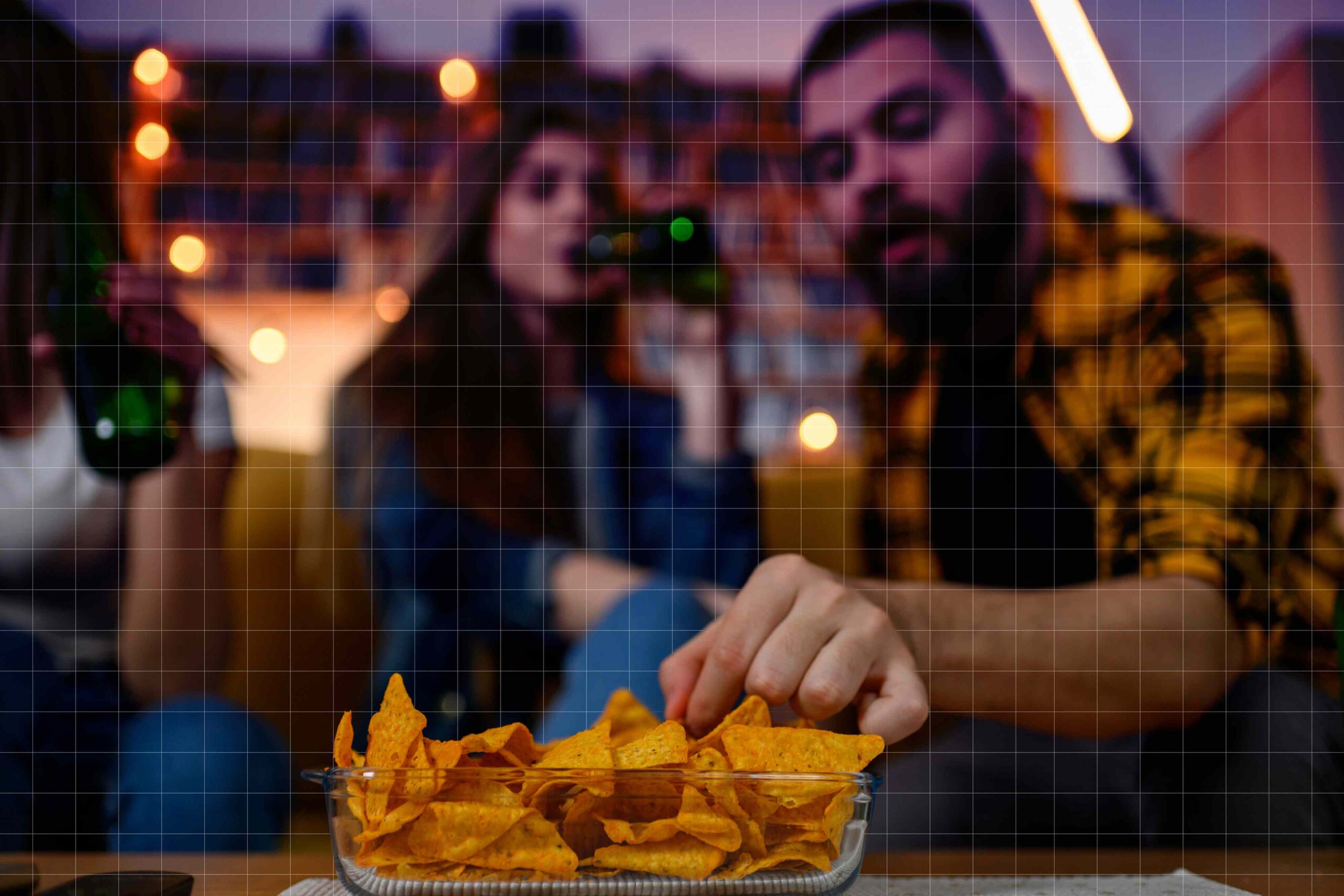
These snacks may lead to digestive discomfort if you eat them right before bed.
Reviewed by Dietitian Jane Leverich, M.S., RDN
Key Points
- High-fat and high-sugar snacks slow digestion and can trigger reflux once you lie down.
- Dietitians recommend which snacks to skip before bed, plus what to reach for instead.
- A small, easy-to-digest snack a couple of hours before bed is your safest bet.
You’ve brushed your teeth, you’re halfway to bed, and then the kitchen calls. Maybe it’s the pint in the freezer or the open bag of chips on the counter. There’s nothing wrong with a bedtime snack, but what you grab at at that late hour may affect you—and your gut—differently than your afternoon nosh.
That’s because your body is getting ready to rest and go to sleep at night. As you wind down for bed, digestion doesn’t necessarily stop, but certain foods can be harder to tolerate when you eat them closer to bedtime. One reason for that is that lying down changes things. Gravity is no longer helping keep stomach contents where they belong. Another reason? Certain popular late-night snacks can slow digestion or trigger digestive symptoms as your body is trying to power down.
When it comes to late-night snacks and gut health, here’s what two dietitians say to skip before bed, plus what to reach for instead.
High-Fat Dairy Foods
Dairy-based snacks that have a high fat content—like a bowl of ice cream—just hit differently in the evening. “Ice cream is a high-fat food that slows gastric emptying and may cause indigestion, which leads to poorer sleep,” says Jackie Bridson, M.A., RDN. “Plus, a lot of adults have some degree of lactose intolerance and don’t realize it, which can lead to gas or bloating late at night.”
High-fat foods are among the commonly reported triggers for reflux, and lactose intolerance is more common than many people realize., However, that doesn’t mean everyone needs to avoid ice cream or dairy at night. If you notice that ice cream leaves you feeling bloated, uncomfortable or experiencing reflux before bed, it may be worth choosing something lighter or eating it earlier in the day.
If you want something cold and creamy, nice cream or Greek-style (strained) yogurt may serve as good replacements. “As a rich source of probiotics and protein, Greek yogurt is one of the best options for gut health—the live probiotic cultures help maintain healthy gut bacteria, while the protein keeps you feeling full and satisfied,” says Tina Sergi, MS, RD, CSSD, CSCS, TSAC-F.
Salty Snacks
Chips may feel like a light snack, but your stomach may disagree, as the sodium content can make them less than ideal right before bed.
Most people in the U.S. consume roughly 3,400 milligrams of sodium a day, well above the 2,300-mg limit recommended for adults. A late-night handful of chips, pretzels or other salty snacks can add a significant amount of sodium to your daily intake. “Salty chips and pretzels can make you extra thirsty before bed, causing more frequent bathroom trips overnight and leading to bloating and water retention,” Bridson says.
And if your go-to salty snack is also high in fat, there’s another potential downside. Research suggests that high-fat, greasy foods are commonly reported triggers for reflux. “High-fat foods relax the muscular valve between your esophagus and stomach (also known as the lower esophageal sphincter, or LES), causing acid reflux and heartburn,” says Sergi. “In other words, think of the LES like a drawstring bag —when working properly, it keeps the stomach acid where it belongs — in the stomach!”
If you’re looking for something crunchy before bed, Bridson suggests carrot sticks with hummus, which will give you the same snap plus a little fiber.
Spicy Foods
“Spicy foods are a classic trigger for indigestion and can irritate the stomach lining and relax the valve between your stomach and esophagus and cause reflux—not something you want as you’re about to lie down for sleep,” Bridson says.
Research suggests that spicy foods are commonly cited as reflux triggers. They may also be particularly bothersome for people with sensitive digestive systems. “For individuals with irritable bowel syndrome, or IBS, a common nutrition intervention includes limiting trigger foods, including spicy foods,” Sergi says.
If you’re looking for something savory before bed, try a few whole-grain crackers with cheese, roasted chickpeas or a slice of whole-grain toast with avocado. These options will satisfy you without the spice that may trigger digestive discomfort or reflux.
Sugary Snacks
Choosing candy close to bedtime can cause your blood sugar to rise, which may affect your gut health over time. “Candy will cause blood sugar to spike and crash quickly, and eating a diet consistently high in sugar can disrupt the gut microbiome, favoring a ratio of more bad bacteria to good bacteria in the gut,” Bridson says.
For something naturally sweet that also brings some fiber to the table, dietitians suggest snacking on different fruits. Specifically, Sergi recommends bananas or kiwi. “Bananas are a great source of prebiotic fiber, which feeds the good bacteria in your gut. For an extra boost of prebiotic fiber, reach for one that’s slightly underripe.”
Kiwi is another good option, says Sergi. “They also contain actinidin, an enzyme that helps digest protein in the stomach. If you had a heavy, high-protein dinner, opting for a kiwi is a gut-friendly choice to help ease digestion.”
Late-Night Snack Tips to Support Gut Health
What you eat is only part of the equation. When and how much you eat before bed can also affect how your gut feels overnight. Here are a few habits worth building into your routine:
- Give yourself a buffer. “My rule of thumb: Eat your last meal or snack two to three hours before bed, and size portions down the closer you get to bedtime. You don’t want to go to bed too full, but you also don’t want to go to bed hungry,” Sergi says.
- Keep the snack portion small. If you need a snack before bed, a smaller portion may be easier to digest than a full meal. The goal is to take the edge off your hunger without leaving you feeling overly full.
- Pick foods that are easy to digest. A hard-boiled egg with a few low-sodium crackers, or half an apple with a tablespoon of nut butter can make a satisfying snack.
- Stay upright for a bit. Sitting upright for 20 to 30 minutes before lying down gives gravity some time to help keep stomach contents where they belong.
- Track your own patterns. “If you feel like your nighttime nutrition is affecting your gut health and sleep, try keeping a food and symptom journal to spot patterns and avoid your triggers,” Sergi says.
Our Expert Take
Late-night snacking isn’t off-limits. However, to support your gut health, dietitians recommend avoiding snacks that may trigger digestive symptoms like spicy, salty, sugary or high-fat snacks. Trading those for something lighter and smaller, eaten a couple of hours before bed, may give your digestive system a better chance of settling down before you hit the hay. Just don’t expect a universal rulebook. “Nutrition is individualized—what works for you might be different than what works for someone else,” Sergi says. The most reliable guide is how your own gut feels after that late-night snack.