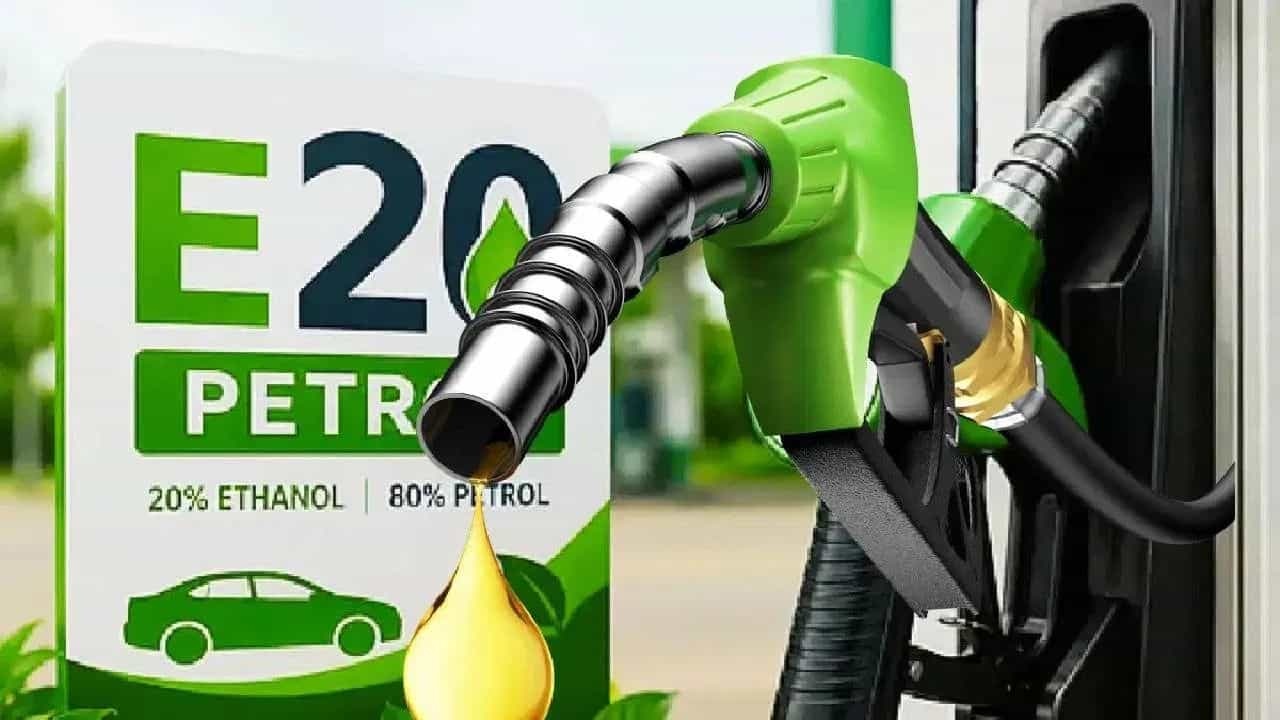
With the increase in the availability of 20 percent ethanol blended i.e. E20 petrol at petrol pumps across the country, discussions have intensified among the drivers regarding the decline in mileage. Many vehicle owners are claiming on social media that due to the use of E20 petrol, the mileage of their cars and bikes has become less than before. After concerns raised on this subject and questions asked in Parliament, Union Road Transport and Highways Minister Nitin Gadkari, Ministry of Petroleum and Natural Gas (MoPNG) and Minister of State for Petroleum have completely clarified the situation by presenting official figures. The government has clarified that E20 fuel does make a slight difference in the mileage of some vehicles, but there are scientific reasons behind it and the fuel alone cannot be blamed for the huge drop in mileage. Real scientific reason for low mileage: Difference in calorific value and energy density According to the government and automobile research institutes (ARAI and IIT Kanpur), there is a fundamental difference in the chemical structure of ethanol and conventional pure petrol. Compared to pure petrol, the energy density and calorific value of ethanol is about 30 to 33 percent less. This simply means that one liter of pure ethanol produces less energy than the amount of energy released by burning one liter of pure petrol. When 20 percent ethanol is mixed with gasoline, the total energy efficiency of the composite fuel is reduced by about 6 percent. The vehicle's electronic control unit (ECU) and the engine inject slightly more fuel into the combustion chamber to maintain the same speed and power. However, the Research Octane Number (RON) of ethanol is much higher than pure petrol, which reduces knocking in the engine and makes the pickup smoother, but due to lower energy density, there is a slight reduction in distance per liter. Government's official data in Parliament: Impact on mileage can be 2% to 6% According to the joint test data of Automotive Research Association of India (ARAI), Society of Indian Automobile Manufacturers (SIAM) and Indian Oil Corporation (IOCL) presented by the government on the floor of Parliament, the use of E20 petrol can see an average reduction of 2 percent to 6 percent in mileage depending on the type of vehicles and their technology: E20 Compliant New Vehicles (E20 Tuned Vehicles): There is only a slight and negligible difference of 1% to 2% in mileage between BS6 Phase-2 and E20 tuned engines manufactured after April 2023. Older Non-Conforming Vehicles (E10 / Older BS4 & BS3 Vehicles): 2016 or earlier vehicles, which were designed for E10 or regular petrol, may see a mileage drop of 3% to 5% or up to 6%. The ministry stressed that if a vehicle normally gives a mileage of 20 km/l, then with E20 fuel its mileage will come down to around 19 to 19.4 km/l, which is not a huge difference in daily use. 'E20 petrol alone is not responsible for reduction in mileage': Petroleum Ministry enumerated other factors. The Ministry of Petroleum and Natural Gas has clarified that in actual circumstances, the mileage of any vehicle is not determined only by the petrol poured in the fuel tank. Many other practical and mechanical factors are equally responsible for reducing mileage in actual driving: Driving Habits: Repeatedly pressing the accelerator, sudden braking at high speed and unnecessary gear changes reduce the mileage by 15 to 20 percent. Traffic and Idling (Traffic Conditions): In heavy traffic jams, frequent stopping of the vehicle, idling and keeping the engine running at red lights consumes a huge amount of fuel without moving. Low tire pressure: Lower than recommended tire pressure increases rolling resistance, which reduces mileage by 3% to 5%. Continuous heavy use of air conditioning (AC): Running the AC on full blower during extreme summer seasons puts additional load on the engine, increasing fuel consumption by 10 to 15 percent. Irregular maintenance: Dirty air filters, old spark plugs and bad engine oil make the engine work harder to breathe and generate power, which directly affects mileage. Stand of the government and auto companies on rumors of engine damage and rust. The government and automobile manufacturers have also rejected the misleading news circulating on social media, in which it was being claimed that E20 petrol is causing engines to seize or rust. In Parliament, the government cited the servicing data of the country's largest car manufacturer Maruti Suzuki. According to the data, out of the 2.84 crore vehicles serviced during the financial year, 1.5 crore were old vehicles which were not E20 certified, but there have been no confirmed cases of engine failure, rusting or fuel line damage due to ethanol in any of those vehicles. All major automakers are providing standard warranty on their E20 compliant vehicles. Auto companies say that E20 petrol has been tested for millions of kilometers in various labs and field trials before being implemented across the country. Major National Benefits of E20 Petrol: Drastic Reduction in Pollution and Economic Security The Petroleum Ministry, while outlining the national and environmental benefits of the Ethanol Blending Programme, said that E20 fuel is providing multi-dimensional benefits to the country: Reduction in carbon emissions and pollution: Due to the higher oxygen content in ethanol, the combustion of the fuel in the engine is more complete and cleaner. This results in a huge reduction in toxic smoke of carbon monoxide, hydrocarbons and particulate matter (PM) by 30% to 50%. Saving in crude oil import bill: India imports about 85% of its requirement of crude oil from abroad. By adding 20% ethanol, the country's foreign exchange reserves are being saved annually by more than ₹ 50,000 crore. Direct economic support to farmers: Ethanol is produced mainly from sugarcane juice, molasses, corn and surplus grains, for which direct payment is being made to the sugarcane and grain producing farmers of the country. Safety of the general public from the global oil crisis: According to the government, when crude oil reached close to $135 per barrel in the international market, only on the basis of domestic ethanol blending, the prices of petrol in the country could be prevented from rising to ₹125 per liter and the prices remained stable. 5 Easy Ways to Improve Vehicle Mileage with E20 Petrol If you want to get maximum mileage and better engine life from your vehicle, then follow these 5 basic tips: Drive at a smooth and steady speed: Maintain a steady speed of 50 to 70 km/hour on highways and city roads and avoid sudden acceleration or hard braking. Regular check of tire pressure: Every 10 to 15 days ensure correct air pressure (PSI) as specified by the manufacturer. Timely servicing and filter cleaning: Change the engine oil every 5,000 to 10,000 km and get the air filter cleaned or replaced. Reduce idling: Make it a habit to switch off the engine during signals or jams that last more than 30 seconds. Take fuel only from authorized and reputed petrol pumps: Always fill petrol only from the pumps of trusted oil marketing companies (IOCL, BPCL, HPCL) so that there is no doubt about the purity and quality of the fuel. The clear message from the government and automobile experts is that E20 petrol is a safe and environmentally friendly step towards modern clean energy. A marginal difference of 2 to 5 percent in mileage pales in comparison to the broader benefits of clean air, a strong economy and farmer prosperity. By adopting a little intelligent driving, drivers can easily balance this difference.