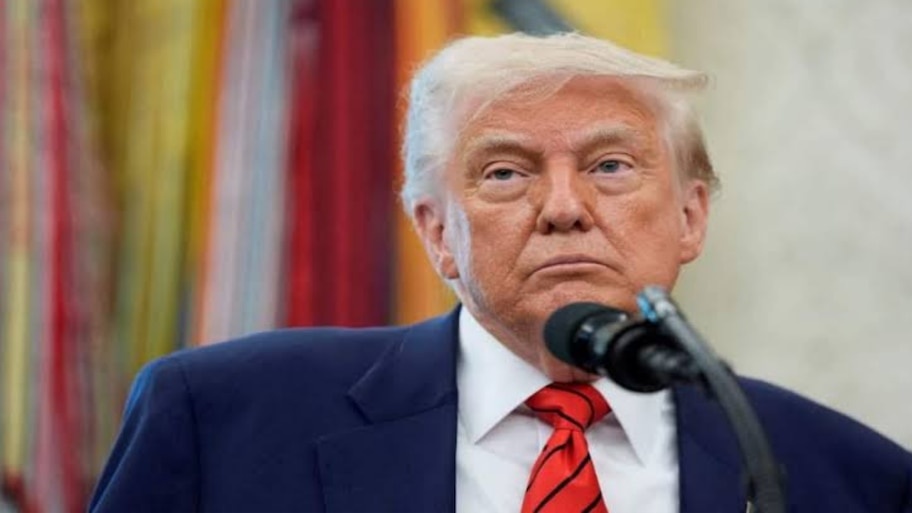
The direct impact of the ongoing fierce military and diplomatic conflict between America and Iran in the Middle East is now visible on the global energy market and the pockets of common consumers. There has been a major earthquake in the American fuel market due to the halt in the movement of oil tankers in the Strait of Hormuz, the world's most important oil transit route. According to the latest data released by the American Automobile Association (AAA), the average retail price of gasoline (petrol) in America has increased to $ 4.08 per gallon. This figure is directly 29 percent higher than the same period last year ($3.16 per gallon). Prices are touching the $5 per gallon mark in many US states, putting enormous pressure on the household budgets of ordinary citizens and posing the threat of a fresh flare-up of inflation. Donald Trump's appeal to the public: 'To stop an evil country, we will have to tolerate a little expensive oil' Amid rising oil prices and voter anger, US President Donald Trump has strongly defended his decision. Addressing a huge political rally held in Garden City, New York, Trump appealed to American citizens to tolerate the increased prices of petrol for the national interest and global security. Trump said at the rally that paying a little extra for gasoline is a small part of a broader strategy aimed at preventing a very dangerous country from acquiring nuclear weapons. He reiterated in his familiar style that the US Navy has complete dominance over the Strait of Hormuz and after the conflict ends, the US will move towards declaring this entire area as 'American territory'. However, this 29 percent price increase has become a major challenge in domestic politics for the Trump administration, which claims to reduce energy prices in its election promises. Iran's strong counterattack: 'Hormuz will not be opened by tweet or warship', clear refusal to negotiate. Tehran has taken a very aggressive stance on Trump's statements and claims of military blockade. Iran's Deputy Foreign Minister Kazem Gharibabadi hit back on the social media platform X, saying that opening or closing the Strait of Hormuz is only within Iran's jurisdiction. He clarified that this strategic path is not going to be opened by any election speech, social media post or deployment of aircraft carrier. At the same time, Iranian Foreign Minister Abbas Araghchi has confirmed that Iran has not taken any decision to resume direct or indirect talks with America. Iranian officials say that unless the US completely ends the war, military blockade and economic sanctions and restores seized assets, safe passage of ships through this waterway will not be possible. Despite mediation efforts by countries like Qatar and Pakistan, diplomatic dialogue between the two countries has come to a complete standstill. Strategic strength of the Strait of Hormuz: Why has the world's energy lifeline stopped? The Strait of Hormuz is a narrow sea channel located between Oman and Iran, which is considered the 'jugular vein' of the global economy. On normal days, about 20 to 30 percent of the world's total petroleum consumption and seaborne crude oil trade passes through this route. Major oil and LNG (Liquefied Natural Gas) exporting countries like Saudi Arabia, Iraq, UAE, Kuwait and Qatar are completely dependent on this channel for their energy exports. According to the latest data from the United Kingdom Maritime Trade Operations (UKMTO) and shipping tracking firms, ship traffic passing through Hormuz has fallen to 15 to 17 percent of its normal level. Most international shipping companies and oil tanker operators have stopped sending their ships to the Gulf countries due to fear of missiles, drone attacks and sea mines. There has been an unprecedented surge in ship insurance premiums (war risk insurance), causing the cost of ocean freight to skyrocket. Fire in the international crude oil market: Huge weekly jump in Brent and WTI. There is an atmosphere of huge uncertainty and panic in the international oil market due to the blocking of Hormuz. The prices of benchmark Brent crude futures and American West Texas Intermediate (WTI) crude are continuously rising. In the latest trading session, Brent crude gained almost 6 percent on weekly basis and WTI gained more than 5.4 percent. Energy analysts believe that if the standoff at the Strait of Hormuz continues for the next few weeks, crude oil prices could cross the psychological level of $100 to $120 per barrel. The breakdown in the supply chain is directly impacting the refineries, due to which the prices of not only petrol and diesel but also aviation fuel (ATF) and petrochemical products are increasing rapidly. Economic and political turmoil in America: Inflation and pressure of mid-term elections. The increase of petrol prices in America by 29 percent is not only an economic figure, but also a sensitive political issue. Fuel prices directly affect consumer sentiment and the cost of daily living in American culture. Due to rising transportation costs, prices of grocery, packaged food, logistics and essential services are increasing. The opposition Democratic Party has attacked the Trump administration on this issue. The opposition alleges that engagement in foreign wars and aggressive military policies are imposing an unbearable burden of inflation on ordinary American families. On the other hand, Iran is also paying a heavy economic price for this conflict. Iranian President Massoud Pejeshkian has admitted that the country is experiencing record inflation due to port blockades and US sanctions. What will be the impact on India and Asian countries? Import Bill and Inflation Concerns The impact of the Hormuz crisis is not going to be limited to America and Iran only, but heavy oil importing Asian countries like India, China, Japan and South Korea could be its biggest victims. India imports more than 85 percent of its total crude oil requirement, the bulk of which comes from Gulf countries through the Strait of Hormuz. If this surge in global oil prices continues, there will be direct pressure on India's current account deficit (CAD), the Indian rupee may weaken against the US dollar and the risk of imported inflation will increase. Although India has diversified its sources over the past few years by increasing oil purchases from Russia and other non-Gulf countries, an overall shortage of crude in the global market will make fuel and logistics expensive for all countries. What will happen next? A long period of diplomatic deadlock and uncertainty There are currently no direct peace talks taking place between Washington and Tehran, making the chances of an early end to this crisis looking slim. While the US Finance Ministry is preparing to impose new and strict economic sanctions on Iran, Iran is also not ready to bow down. Geopolitical analysts clearly believe that it is practically impossible to secure a narrow and sensitive waterway like Hormuz for a long time with the help of military power. Unless both sides return to the diplomatic negotiating table and agree on a ceasefire and security guarantees, the shadow of instability in the global energy market, expensive petrol crisis and economic recession will continue to loom.