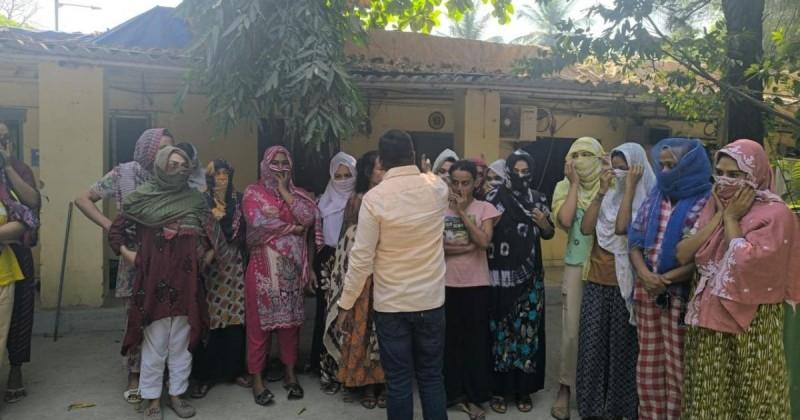
The figures and data presented by the administration before the High-Level Committee on Demographic Change, which recently visited Jammu, have revealed that the Jammu division has nearly seven times as many identified Rohingyas as the Kashmir Valley. Officials have also flagged security concerns over their presence in border districts.
Rohingyas are living not only on the outskirts of Jammu city but have also been identified in the sensitive border districts of Samba, Kathua, Poonch and Rajouri.
According to the data presented to the committee, 6,737 Rohingyas and 46 Bangladeshi nationals have been identified across the 10 districts of the Jammu division. In the Kashmir Valley, the figures stand at 919 Rohingyas and 458 Bangladeshi nationals.
The figures came to light as the committee examined demographic changes and related security concerns in Jammu and Kashmir.
It is important to mention that during its three-day visit to Jammu from August 10 to August 12, the High-Level Committee on Demographic Change interacted with cross-sections of society to seek feedback on changing demographic patterns in the Jammu region.
According to the data, 101 cases have been registered against Rohingya individuals in Jammu, involving 179 men and 21 women. In the Kashmir Valley, 16 cases have been registered, involving four men and 41 women.
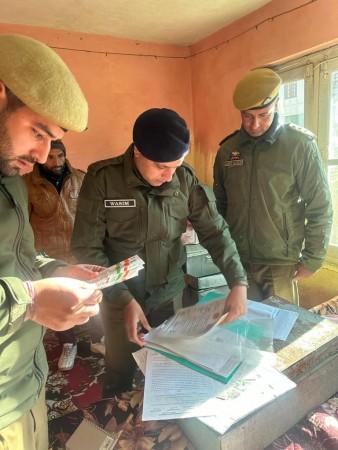
Officials told the committee that although there has been only a marginal increase in the number of Rohingya settlements over the past two years, their presence in areas close to the international border remains a security concern.
Security officials have also raised allegations of the involvement of some Rohingya individuals in organised crime, drug trafficking and human trafficking. Such allegations, however, relate to specific cases and do not imply the involvement of the entire community.
Government records have identified Rohingya settlements in Doda, Jammu, Kathua, Kishtwar, Poonch, Rajouri, Reasi, Samba, Udhampur and Ramban districts.
In the Kashmir Valley, districts where such settlements have been identified include Srinagar, Budgam, Ganderbal, Anantnag, Pulwama, Shopian, Kulgam, Baramulla, Bandipora and Kupwara.
During its assessment, the committee also discussed issues related to illegal entry and settlement in border districts, as well as the need to strengthen surveillance and security mechanisms. The panel reportedly interacted with civil society groups working with people living in these settlements.
A senior police officer also pointed to a distinction between the political discourse surrounding Rohingya settlements and their actual geographical distribution in Jammu and Kashmir.
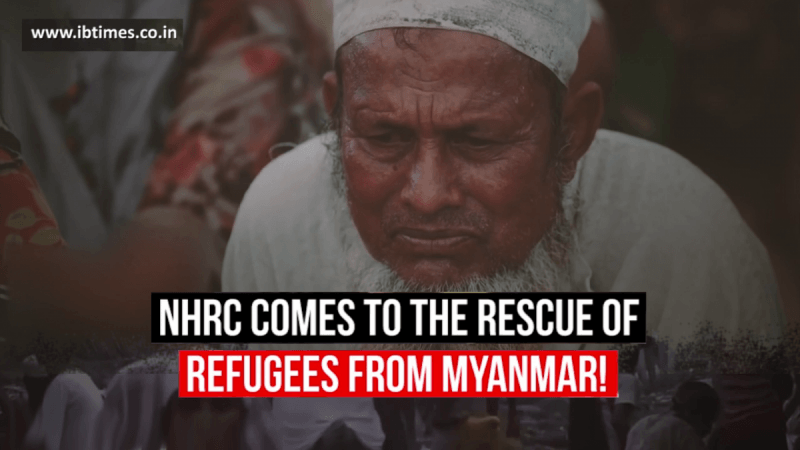
According to officials, despite Rohingyas being predominantly Muslim, the majority of those identified in Jammu and Kashmir are settled in the Jammu region rather than the Kashmir Valley.
Officials said a number of Rohingyas who entered India from Myanmar initially moved to Hyderabad before a significant number subsequently relocated to Jammu, particularly between 2012 and 2017.
Their settlement in Jammu has emerged as a particular concern for security agencies because several settlements are located relatively close to the international border.
The report also refers to allegations of human trafficking involving some Rohingya women. Sources claimed that some women had allegedly been brought from Jammu to the Kashmir Valley by Kashmiri men and married through informal arrangements.
Sources further claimed that investigations into some cases had revealed allegations of coercion and sexual exploitation. Authorities have also expressed concern over the involvement of some individuals in drug-related cases.
The Union Home Ministry constituted the High-Level Committee on Demographic Change (HLCDC) on May 26 to examine demographic changes in Jammu and Kashmir and recommend measures to address related concerns.
The committee has been tasked with submitting its report within one year. Its mandate also includes recommending a systematic and permanent mechanism for the legal and time-bound detention and deportation of migrants residing in India, wherever applicable under the law.