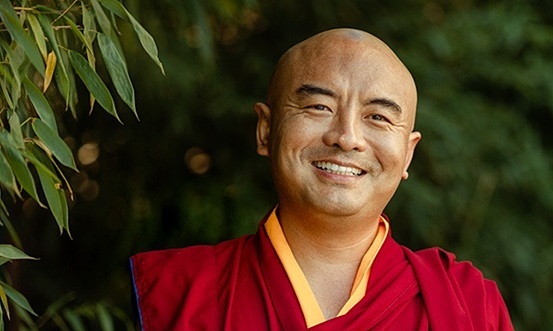
The Tibetan Buddhist lama has gained global attention after neuroscientists and media outlets, including The New York Timesdescribed him as the “happiest man in the world.”
Happiness is not something people are simply born with. It can be strengthened like any other skill through regular mental practice and small changes in everyday life, Mingyur explained.
Stop constantly chasing comfort
When people feel bored, lonely or dissatisfied, they often reach for food, coffee, social media or their phones to escape the discomfort.
Mingyur argues that trying to push unpleasant emotions away can make people miss an opportunity to understand themselves better.
“We try to get away from them, but those feelings are wisdom, in a way. The really important thing is to sit with them, embrace them as a path to explore,” he told The Guardian.
For example, instead of scrolling through a phone while watching a film simply because the mind feels restless, a person could put the device away and pay attention to that restlessness. Constantly seeking fresh stimulation, he says, can ultimately deepen rather than relieve boredom.
|
Buddhist lama Yongey Mingyur Rinpoche. Photo courtesy of Tergarsangha |
Become more comfortable with change
People do not need to experience a major crisis to become more adaptable, Mingyur said.
Small departures from routine, such as taking a different route home or cooking with an unfamiliar ingredient, can gradually teach the mind to deal more comfortably with uncertainty and change.
Train the mind through three principles
In Tibetan Buddhism, Mingyur describes mental training through three elements: view, meditation and application.
“View” refers to the way people understand themselves and others. He says everyone possesses qualities such as awareness, compassion, love and wisdom.
Meditation helps people become more aware of these qualities, while application means turning that awareness into everyday habits.
As an example, rather than deciding that an irritating colleague or acquaintance is simply a bad person, people can deliberately look for at least one positive quality in them. Repeating this practice can gradually change habitual ways of thinking.
Make gratitude specific
Mingyur says gratitude becomes more meaningful when people focus on concrete experiences rather than vague statements about what they appreciate.
Instead of simply saying they are grateful for their family or their life, they might notice the comfort of sitting in a favorite chair or the pleasure of watching a child play.
Paying attention to these small details helps people recognize sources of contentment that are already present in daily life.
Do not fight negative emotions
Mingyur experienced severe anxiety and panic attacks as a child. When he asked his father how he should deal with them, the advice was simple: “Don’t fight.”
He compares difficult emotions to clouds passing across the sky. A storm may temporarily block the view, but it does not change the sky itself.
In the same way, fear, anxiety and sadness can appear intensely but eventually pass when they are observed rather than resisted.
When emotions become overwhelming, Mingyur recommends redirecting attention to immediate physical sensations, such as sounds in the room, the temperature of the air or other details in the surrounding environment, according to Forbes.
Recognize that more does not always mean happier
People often imagine that earning more money, getting a better job or moving to another country will finally make them satisfied.
Mingyur argues that such achievements cannot guarantee lasting fulfillment.
“Genuine happiness is when we let go of that feeling of dissatisfaction, incompleteness, that something is missing,” he said.
Pause before reacting in anger
Mingyur also recommends creating a short gap between feeling angry and responding.
Even a brief pause can prevent an impulsive reaction and give people time to choose how they want to act rather than allowing anger to decide for them.