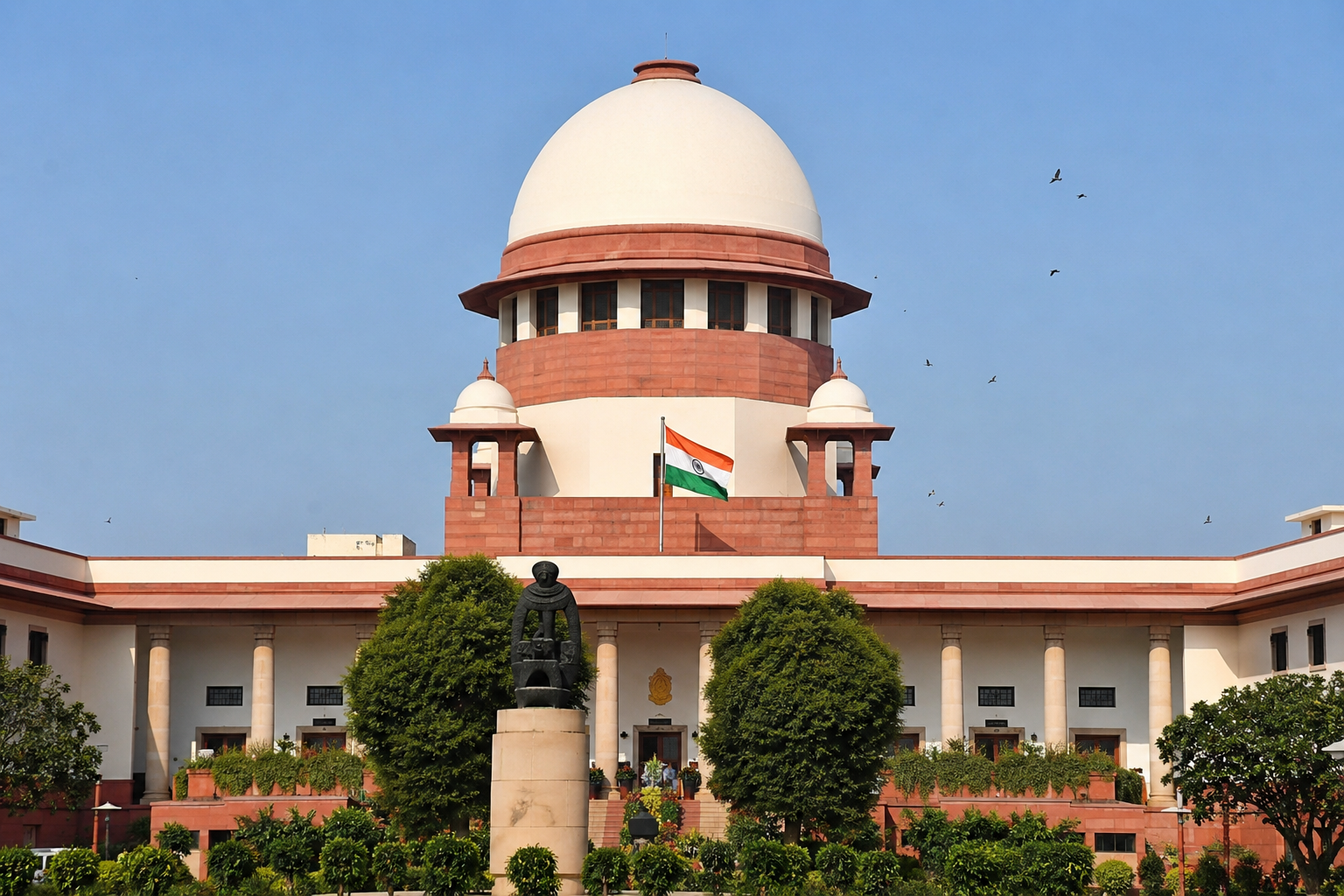
A legal battle over an alleged Rs 20 bribe has finally ended after nearly 30 years. The Supreme Court has acquitted two Gujarat government employees in the case. A bench of Justices Ujjal Bhuyan and Atul S Chandurkar set aside their conviction. The court said the prosecution could not rely only on the recovery of Rs 20 without proving that a bribe had actually been demanded. The case dates back to February 1996. It involved a clerk and a peon working at the Bechari Gram Panchayat office in Gujarat’s Anand district.
Student Sought Income Certificate
The case began when a student visited the panchayat office to obtain an income certificate. The certificate was needed to avail educational concessions. According to the prosecution, the clerk demanded Rs 120 for issuing the certificate. Of this, Rs 100 was allegedly meant for the clerk and Rs 20 for the peon.
The student later approached the Anti-Corruption Bureau (ACB). The agency then laid a trap and gave the student marked currency notes worth Rs 120. After receiving the certificate, the student handed Rs 20 to the peon. The ACB team recovered the same notes from him. However, the alleged Rs 100 meant for the clerk was never recovered.
Supreme Court Finds Gaps in Prosecution Case
The Supreme Court found several inconsistencies in the prosecution’s version. The student had reportedly given a different account of the alleged demand in another proceeding. He had then claimed that the accused first demanded Rs 200 before settling for Rs 120. However, this version did not form part of his testimony before the trial court.
The court also noted that the ACB had instructed the student to hand over the full Rs 120 if a demand was made. Despite this, he gave only Rs 20 to the peon. The bench questioned why the remaining Rs 100 was not handed over, especially when the clerk was allegedly sitting next to the peon.
Peon Said Rs 20 Was Given For Eid
During cross-examination, the student admitted that the peon himself had not demanded any bribe. The court also noted that the Rs 20 was handed over only after the income certificate had been issued. This raised further doubts about the prosecution’s case.
The peon had claimed that the student gave him Rs 20 because Eid was the next day. The Supreme Court found this explanation more reasonable in the circumstances.
Court Says Bribe Demand Must Be Proved
The bench also considered Section 20 of the Prevention of Corruption Act. It held that when the initial demand for a bribe is not proved, the mere recovery of Rs 20 cannot by itself establish the offence. The court further found the sanction to prosecute the clerk invalid because it had been granted by an unauthorised officer.
The Supreme Court consequently set aside the judgments of the trial court and the Gujarat High Court. Both the clerk and the peon were acquitted, bringing the nearly 30-year-old case to an end.
Sudeep Singh Rawat is a Copy Editor at NewsX Digital with over five years of experience in digital journalism. He covers national and international news, with a focus on politics, crime, technology, public affairs, and trending topics. Before joining NewsX Digital, he worked with Business Standard, The Sunday Guardian, and other digital media organisations. His reporting focuses on breaking news, enterprise stories, and explainers that inform readers through accurate, balanced, and context-driven journalism.
The post He Gave Rs 20, But Was It a Bribe? Why Supreme Court Acquitted 2 Gujarat Employees After 30 Years appeared first on NewsX.