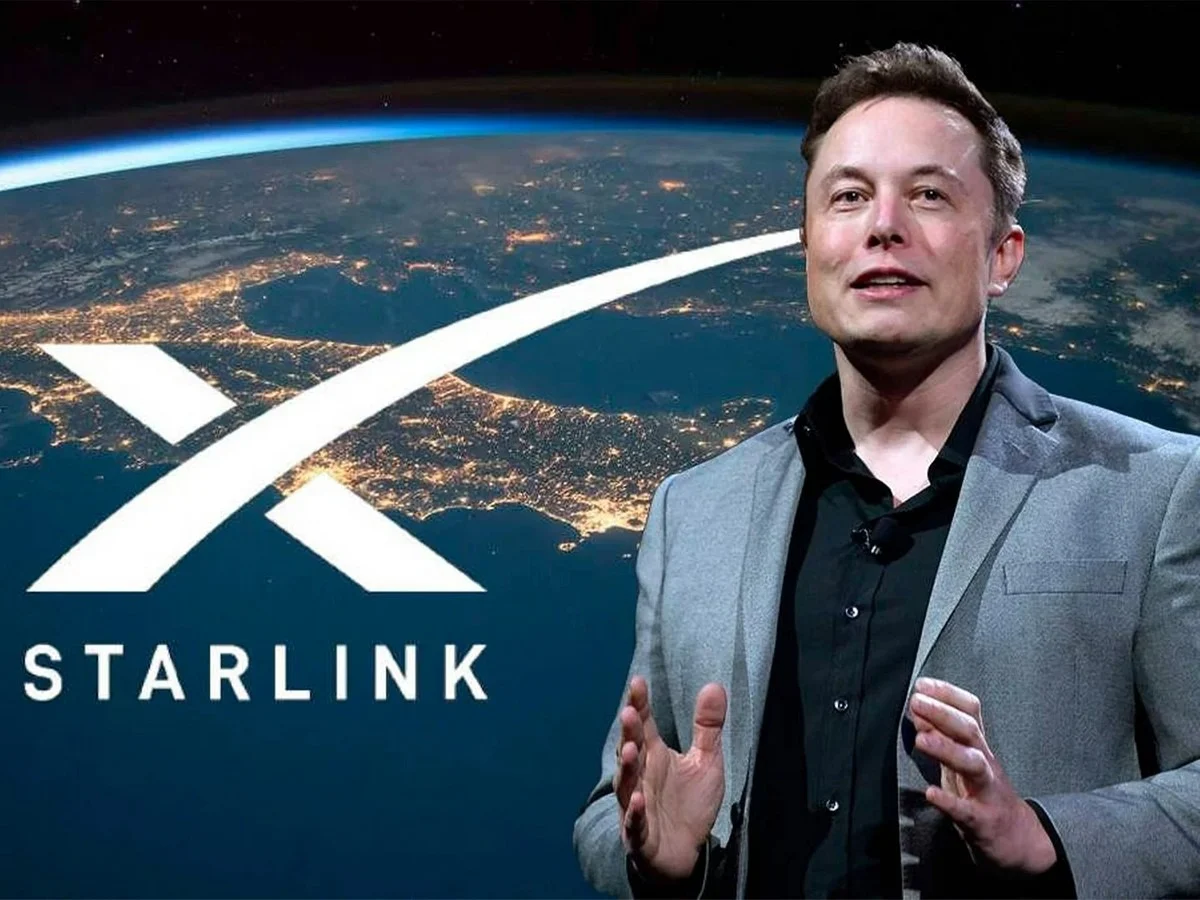
Elon Musk: Starlink has taken another step towards launching its satellite communication services in India. The company has reapplied to the space regulator. This time it has sought approval for its ‘Gen 2’ satellite constellation. It includes new technologies, including direct-to-device (D2D) connectivity.
Indian space regulator ‘Indian National Space Promotion and Authorization Centre’ (IN-SPACe) had not approved Starlink’s earlier application for an internet network of around 30,000 satellites a few years ago. The reason for this was that some features and spectrum bands were not as per the prescribed standards in the application.
Approval sought for Gen 2 Constellation
A person involved in the matter, speaking on condition of anonymity, said the company recently sought re-approval for its Gen 2 Constellation. These satellites are planned to be deployed in Low Earth Orbit (LEO) at an altitude of 340 to 615 km.
Click on this link to join our WhatsApp channel
Starlink, the world’s largest LEO satellite operator, has high hopes from India’s satellite communications market. This market is still in its nascent stage in the country, but has immense potential to grow. Starlink, the operator of SpaceX, had earlier applied for both Gen 1 and Gen 2 Constellations to start service in India.
Only the Gen 1 Constellation was approved in 2025
However, IN-SPACe only approved the Gen 1 Constellation in July 2025. It has 4,408 LEO satellites and plans to provide conventional broadband internet service. Direct-to-device (D2D) technology may be coming soon. SpaceX and IN-SPACe did not respond to queries on the matter. Facilities such as D2D are expected to be approved in India soon and more spectrum bands will be made available for satellite communication. It is for this reason that Starlink has reapplied for Gen 2.
Approval sought for 30,000 satellites
If Starlink gets the nod, it could give the company a huge advantage over its rivals in India. This includes Reliance Jio’s proposed 1,600-satellite LEO network, Amazon Leo and Eutelsat OneWeb. Experts believe that Gen 2 will give Starlink a boost in both coverage and capacity.
Starlink may need to reapply for Gen 2 Constellation. SpaceX plans to deploy about 42,000 satellites in its Gen 2 network, but has currently sought approval from IN-SPACe for about 30,000 satellites. The company may also seek approval for more satellites as required in future. IN-SPACe approval is mandatory for companies to launch satellite services in India.
Click on this link to join our WhatsApp channel
The same rules as telecom operators should apply
Currently, none of the NGSO companies, including Starlink, Utelsat OneWeb and Jio’s partnership with Luxembourg’s SES, have launched commercial services in India. The major reason for this is yet to get security clearance and spectrum allocation. The Telecom Regulatory Authority of India (TRAI) has already given its recommendations on satellite spectrum pricing. However, the government has not yet taken a final decision on it. On the other hand, discussions are going on from TRAI regarding D2D services and its recommendations may come out in the coming months.
Telecom companies in India have long viewed D2D services as a potential threat to their business. He says that if the government allows satellite companies to provide connectivity directly to mobile users, then these companies should also be subject to the same rules as telecom operators. Countries such as the US, Canada and Australia have already implemented regulations on using satellite communications to improve phone coverage.
There are also some challenges
However, while satellite communication offers a lot of opportunities, there are also some challenges associated with it. The government is particularly vigilant on issues related to national security. Hence, the government wants satellite operators to comply with all regulations while maintaining the ability to prevent misuse of space infrastructure and monitor it if necessary.