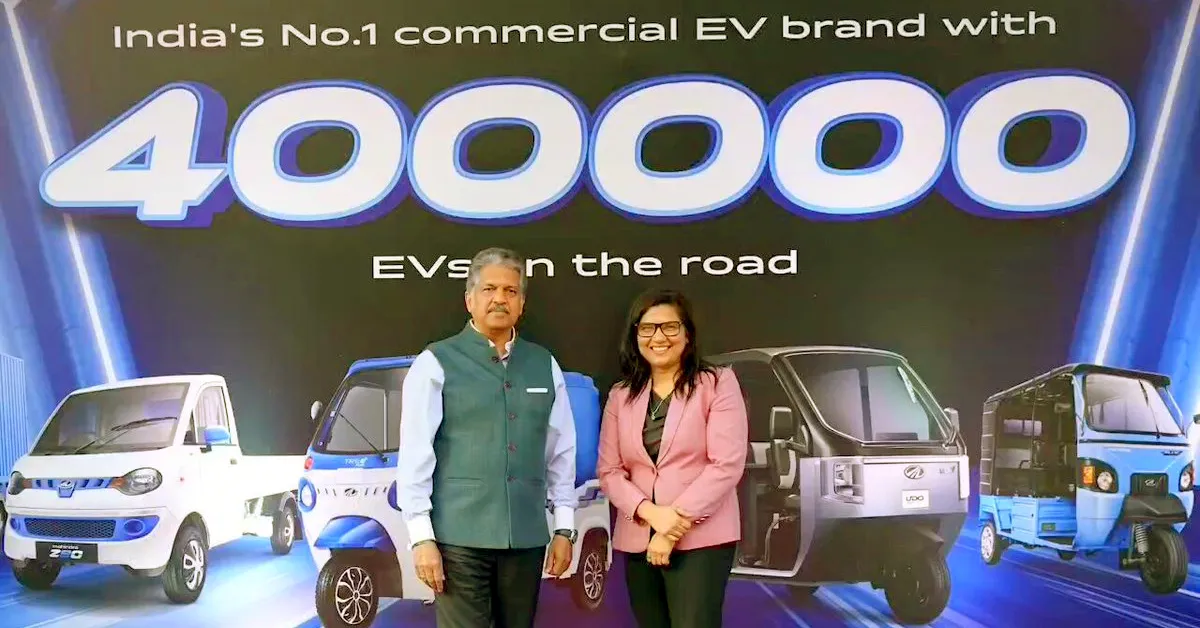
Mahindra has crossed 4 lakh cumulative electric commercial-vehicle sales through Mahindra Last Mile Mobility, becoming the first commercial-vehicle manufacturer in the country to reach the milestone. The number is easy to miss because these are not BE 6s or XEV 9es. Most of this electric growth has happened in autos, cargo three-wheelers and small delivery vehicles that work on city streets every day.
The fleet has now collectively covered more than 9 billion electric kilometres across passenger and cargo applications. Mahindra says those kilometres have avoided around 1.85 lakh tonnes of CO2 emissions.
More interesting than the headline number is how quickly the milestones are arriving. Mahindra crossed 1 lakh electric three-wheeler sales in June 2023. It reached 2 lakh cumulative commercial EVs in November 2024, 3 lakh in November 2025 and 4 lakh in August 2026. The latest one lakh therefore took only a little over nine months.
FY2026 gives a clearer picture of the pace. Mahindra Last Mile Mobility delivered 1,07,157 EVs during the financial year, up 36.5 per cent from the previous year. It also became the first electric commercial-vehicle manufacturer to sell more than one lakh EVs in a single financial year.
The momentum has continued. Mahindra says its electric three-wheeler volumes grew 85 per cent year-on-year in Q1 FY2027. The company has also reported roughly 40 per cent market share in the L5 electric three-wheeler category, while electrification of that category itself has risen from about 12 per cent to 40 per cent in just two years.
That is a very different EV story from passenger cars, where consumers often focus on purchase price, public fast chargers and highway range. A commercial vehicle can cover large distances every day on predictable routes, so energy cost per kilometre and downtime directly affect the owner’s earnings.
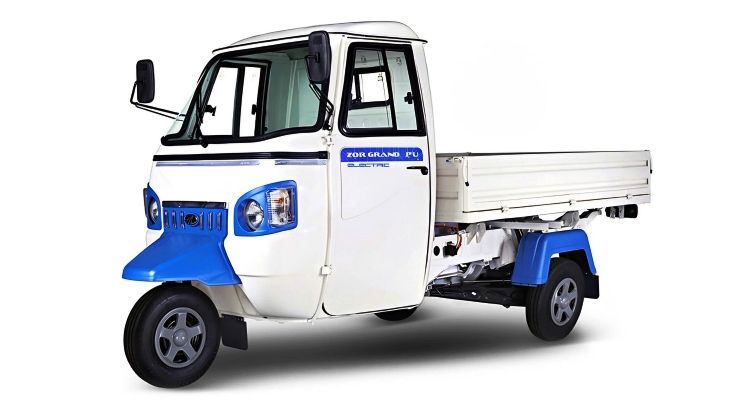
Mahindra’s current last-mile electric line-up spans passenger and cargo three-wheelers as well as a small four-wheel cargo vehicle. It includes the Treo family, Treo Plus, UDO, e-Alfa, Zor Grand and the ZEO electric mini-truck.
The numbers explain why operators are interested. The Treo Plus offers a claimed 150 km real-world range from its 10.24 kWh battery. The newer UDO stretches that to a claimed 200 km and was introduced at an offer price of Rs 3.58 lakh. It uses an 11.7 kWh battery and can carry a driver plus three passengers.
For cargo work, the Zor Grand Pickup claims around 140 km of real-world range and a running cost of about 12 paise per kilometre under Mahindra’s stated conditions. The four-wheel ZEO uses a 21.3 kWh battery, offers a claimed 160 km real-world range and can carry up to 765 kg. It also supports DC fast charging, with 0 to 80 per cent quoted at 71 minutes.
These specifications are modest compared with an electric SUV, but that is the point. Last-mile vehicles are designed around daily earning potential, payload, operating cost and time off the road rather than outright performance.
Mahindra Last Mile Mobility is aiming to put one million EVs on the road by 2031. Reaching 4 lakh gives that target some context, especially because the business has grown sixfold in electric three-wheeler volumes over the past four years.
The company has also attracted fresh investment at a valuation of Rs 10,822 crore, giving the last-mile business unicorn status. That money is going into products, financing, service support and the wider ecosystem needed by drivers and fleet operators.