Delhi Police has registered a First Information Report (FIR) following the complaint of 19‑year‑old Sahil Lochab, who alleged pellet gun injuries during the Cockroach Janta Party (CJP)-led protest in the capital on July 20.
The FIR was filed under Sections 118 and 125 of the Bharatiya Nyaya Sanhita (BNS), which deal with causing hurt through dangerous means and acts endangering life or personal safety. Notably, no individual has been named as an accused in the case.
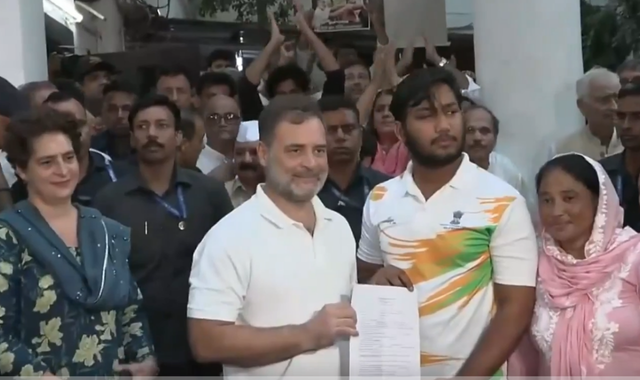
The development came after a dramatic intervention by Leader of the Opposition Rahul Gandhi, who staged a dharna at the Parliament Street Police Station demanding immediate action. Gandhi, accompanied by Lochab and senior Congress leaders, insisted that the police formally register the complaint and provide an FIR number. His sit‑in lasted until officers confirmed the filing, underscoring the political weight behind the demand.
Initially, Gandhi and his team visited the Connaught Place Police Station, but upon learning that the Deputy Commissioner of Police was stationed at Parliament Street, they shifted their protest there. The move proved decisive, as the FIR was lodged soon after.
Lochab, a resident of Haryana, claimed he sustained pellet injuries during the CJP protest in Delhi, which had turned chaotic. His complaint alleged that the use of pellet guns by authorities or unidentified individuals caused him harm, raising questions about crowd control measures and accountability.
Congress leaders framed the FIR as a victory for democratic rights and citizen safety. “This is not just about Sahil, but about every young person who dares to raise their voice,” Gandhi reportedly told supporters outside the police station. The party emphasized that the case highlights both the vulnerability of protesters and the need for transparent policing.
The FIR’s registration also reflects the growing tension between opposition parties and law enforcement agencies in the capital. While the police maintained that they followed due process, critics argued that the complaint would have been ignored without political pressure. The incident adds to a series of confrontations between Gandhi and authorities, reinforcing his image as a leader willing to challenge institutions directly.
Legal experts note that the absence of named accused in the FIR leaves the investigation open-ended. “Sections 118 and 125 of the BNS are serious provisions, but without identifying suspects, the case may stall unless evidence surfaces,” said one senior lawyer. The police are expected to examine medical records, eyewitness accounts, and video footage from the protest to determine responsibility.
For Lochab, the FIR represents a step toward justice. “I just want accountability for what happened to me,” he told reporters, adding that his injuries had disrupted his studies and daily life. Civil society groups have also expressed concern, calling for a broader inquiry into the use of pellet guns in civilian settings.
The episode underscores the intersection of politics and policing in India’s capital. Gandhi’s dharna not only secured an FIR but also spotlighted the role of opposition leaders in amplifying citizen grievances. Whether the investigation leads to concrete action remains uncertain, but the case has already become a flashpoint in the ongoing debate over protest rights and state response.