India’s Import Bill Tells A Bigger Story
India’s merchandise import bill reached $775.71 billion in FY26rising 7.56% over the previous year. While crude oil, electronics, machinery and gold dominate the headline numbers, a closer look at the data reveals a surprisingly diverse list of products entering the country.
India imported nearly $85 million worth of used clothingaround $48 million of saffron across two categoriesalmost $947 million of turn daland about $141 million worth of dog and cat food.
These relatively small categories reveal important changes in India’s consumption patterns, supply gaps and increasingly globalised economy.
Why Is India Importing Used Clothes?
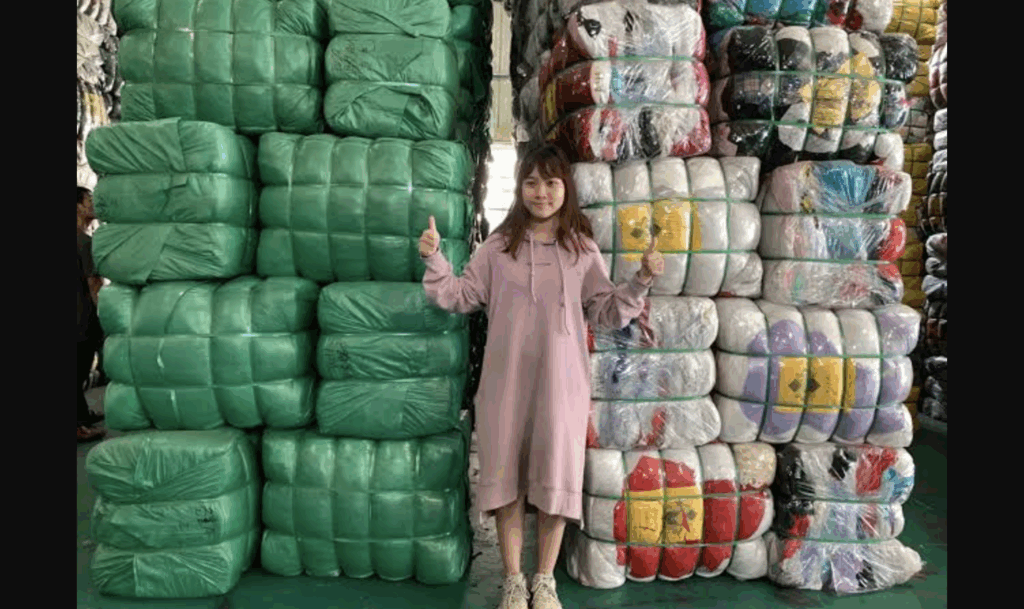
India is one of the world’s biggest textile and garment producers, yet it imported $84.93 million worth of used clothing and worn articles in FY26.
The figure was slightly higher than the $81.93 million recorded a year earlier.
The United States was by far the biggest supplier, accounting for $58.3 millionfollowed by Canada at $16.05 million.
Together, the two countries supplied almost 88% of India’s used-clothing imports.
But these imports do not necessarily mean Indians are simply buying more second-hand clothes.
Used Clothes Are Also A Raw Material
A significant portion of imported used clothing enters India’s textile recycling ecosystem.
Clothes are sorted after arriving in the country.
Items that are still usable can enter second-hand or thrift markets, while damaged textiles can be processed into fibres and recycled yarn.
Panipat in Haryana is one of India’s important textile recycling centres, where discarded fabrics can be transformed into products such as blankets, rugs and cushions.
This means some of India’s used-clothing imports are effectively raw material for the country’s circular economy.
India Imported $48 Million Of Saffron
Saffron presents a very different puzzle.
India is home to Kashmiri saffronone of the world’s best-known varieties, yet the country imported around $48.15 million worth of saffron-related products in FY26.
Imports of saffron stigma alone were worth $31.41 millionup 35.16% from $23.24 million a year earlier.
Another category, classified as “other saffron”, added $16.74 million.
Afghanistan Dominates India’s Saffron Imports
Afghanistan supplied approximately 95% of India’s saffron-related imports when the two categories are combined.
The reason is not necessarily that imported saffron is replacing Kashmiri saffron.
India’s domestic saffron production is concentrated in a relatively small geographical area and is vulnerable to weather and water availability.
At the same time, demand exists across different grades, price points and applications.
Premium Kashmiri saffron and imported saffron can therefore coexist in the same market.
Tur Dal Is A Much Bigger Import Story
Among these unusual-looking imports, tur dal is by far the most significant.
India imported $947.07 million worth of pigeon peas, commonly known as tur or arhar dal, in FY26.
Although that was 26.32% lower than the previous year’s $1.29 billion, the figure still represents almost $1 billion spent importing a staple food consumed across millions of Indian households.
The numbers highlight the continuing gap between domestic production and India’s enormous demand for pulses.
Africa Has Become A Major Dal Supplier
Mozambique was India’s biggest supplier of tur dal in FY26, exporting approximately $354.83 million worth of pigeon peas.
Myanmar supplied another $278.35 million, while Tanzania contributed $203.73 million.
Together, these three countries accounted for roughly 88% of India’s tur dal imports by value.
This means a significant portion of the dal consumed in Indian households travels thousands of kilometres before reaching Indian consumers.
Why Does India Need To Import Dal?
India has been working towards greater self-sufficiency in pulses, but domestic production remains vulnerable to weather conditions, crop yields and changing demand.
Domestic tur production was estimated at around 3.59 million tonnes in 2025-26.
However, production does not always keep pace with consumption.
Importing pulses provides an additional supply source and helps prevent sudden shortages and sharp price increases.
The government is also pursuing a long-term push towards self-sufficiency through its pulses mission.
Pet Food Imports Are Growing
Another interesting category is pet food.
India imported $140.96 million worth of dog and cat food packaged for retail sale in FY26up 4.51% from $134.87 million a year earlier.
This was the second consecutive year in which imports in this category increased by more than 4%.
The number offers a glimpse into the changing consumption habits of Indian households.
Thailand Supplies Most Imported Pet Food
Thailand dominated India’s imported pet-food market.
It supplied approximately $93.33 millionaccounting for around two-thirds of India’s total imports in this category.
Italy supplied $11.22 million, while France contributed $9.82 million.
China and Indonesia were also among the leading suppliers.
The growth indicates increasing demand for packaged and specialised pet food as India’s pet-care market expands.
Pet Food Is A Sign Of Changing Consumption
Unlike used clothing or tur dal, India’s pet-food imports are not necessarily a response to a domestic supply shortage.
Instead, they reflect changing consumer behaviour.
As pet ownership grows and more households treat pets as family members, spending on specialised food, healthcare and other products is increasing.
Imported premium products are therefore finding a growing market among Indian consumers.
India Also Imported $61.5 Million Of Art
The country’s import list extends into another unexpected category: art.
India imported approximately $61.5 million worth of paintings, drawings and pastels in FY26up 9.49% from $56.17 million the previous year.
Unlike commodities such as oil or pulses, the value of individual artworks can vary enormously.
A relatively small number of high-value transactions can therefore have a significant impact on the overall import figure.
The Bigger Picture Is Not About These Products
The real significance of these numbers lies in what they say about India’s economy.
India is simultaneously a major producer of textiles and an importer of used clothes.
It is a producer of premium saffron but also imports saffron from abroad.
It is one of the world’s largest agricultural economies but imports almost $1 billion of tur dal.
And it is developing a rapidly expanding pet-care market that increasingly relies on specialised products from overseas.
These seemingly contradictory trends are a natural consequence of a large and increasingly affluent economy.
India’s Imports Reflect Both Shortages And Choices
Some imports exist because India does not produce enough of something.
Tur dal is a clear example.
Other imports exist because consumers want products that are unavailable locally, available only in limited quantities or offered at different price points.
Pet food and saffron illustrate this pattern.
Used clothing is different again because imports can become inputs into India’s recycling and manufacturing ecosystem.
Therefore, simply looking at an import number does not reveal whether India is economically weak or strong.
The Import Bill Is More Than An Oil Story
Crude oil remains India’s biggest import requirement.
But the country’s import basket has become far more diverse.
Electronics, machinery, chemicals and other industrial inputs are essential for manufacturing and infrastructure.
At the consumer level, however, the import list reveals another side of the economy.
Indians are increasingly buying products linked to changing lifestyles, from packaged pet food to imported food products and even overseas art.
A Growing Economy Naturally Imports More
As incomes rise, consumers generally demand a wider range of goods.
Some can be produced domestically.
Others may be cheaper, better or simply unavailable in sufficient quantities within the country.
Imports therefore do not automatically represent a weakness.
The more important question is whether India is simultaneously developing domestic capabilities in strategically important areas.
The Government Wants To Reduce Strategic Import Dependence
India has been working on import substitution in several sectors.
The government has identified products that are currently imported because domestic manufacturing either does not exist at sufficient scale or lacks certain technologies.
The objective is not necessarily to eliminate all imports.
Instead, the focus is increasingly on reducing dependence on imports where India has the potential to develop competitive domestic production.
The Challenge Is To Balance Self-Reliance And Trade
Complete import independence is neither realistic nor necessarily desirable for a large modern economy.
International trade allows countries to access products, resources and technologies that may be expensive or inefficient to produce domestically.
The goal is therefore to become more competitive rather than simply replacing every imported product.
India’s import data show precisely why that distinction matters.
What These Numbers Say About India
The country’s import bill is effectively a snapshot of its economic transformation.
The tur dal numbers reveal a continuing agricultural supply gap.
The used-clothing imports reveal the scale of India’s recycling ecosystem.
The saffron data highlight strong consumer demand that extends beyond domestic production.
Pet-food imports point towards changing household spending patterns.
Art imports reflect another segment of rising consumption and wealth.
Each category tells a different story.
The Strange Import List Is Actually A Sign Of A Complex Economy
At first glance, importing used clothes while being one of the world’s largest textile producers seems contradictory.
Importing saffron despite having Kashmiri saffron appears equally puzzling.
But the underlying economics are more complicated.
Imports can serve different purposes, from filling supply gaps to providing raw materials, catering to premium consumers and supporting industries that have developed around global supply chains.
India’s import basket therefore reveals not just what the country lacks, but also what its consumers increasingly want.
India’s Import Story Is Changing
The headline import bill will continue to be dominated by energy, electronics, machinery and other major commodities.
But the smaller categories deserve attention because they reveal changes happening at the household and industry level.
From recycled textiles to African pulses and Thai pet food, India’s consumption patterns are becoming increasingly diverse.
That is the real story hidden inside the country’s enormous import bill.
Summary
India’s $775.71 billion merchandise import bill in FY26 contains far more than crude oil, electronics and machinery. The country imported $84.93 million worth of used clothing, around $48.15 million of saffron-related products, $947.07 million of tur dal and $140.96 million of packaged dog and cat food. These imports reflect different aspects of India’s economy, including textile recycling, domestic agricultural supply gaps, premium consumption and changing pet-care habits. The data show that India’s growing economy is simultaneously becoming more self-reliant in some sectors while increasingly connected to global supply chains in others.
Image Source