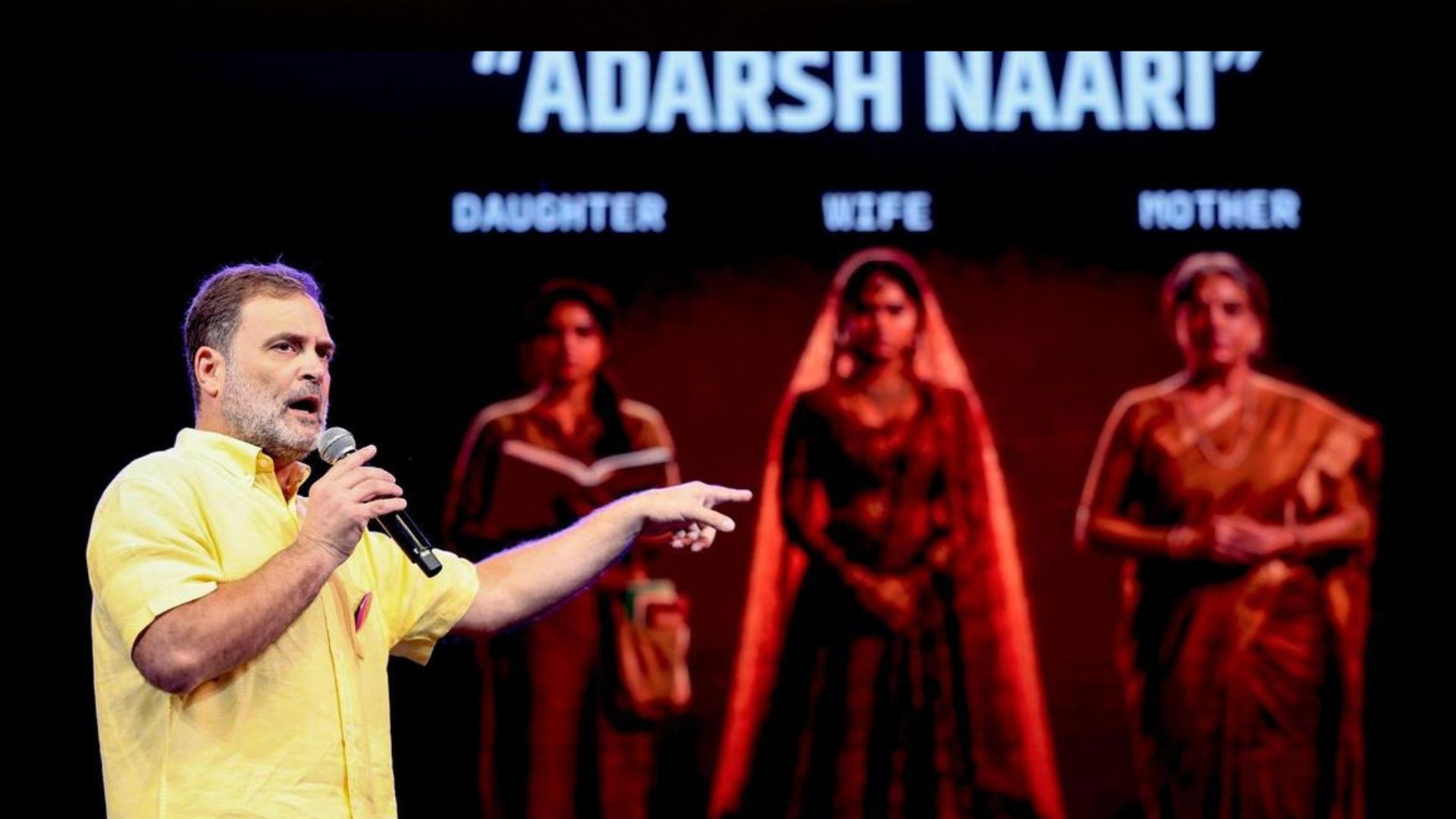
“If you are going to talk about progressive values, about women’s rights and freedoms, then you have to champion this not just symbolically, but because women are individuals holding rights and freedoms by virtue of being human beings,” said political analyst Pushparaj Deshpande, capturing the larger idea behind Rahul Gandhi’s all-women “Chhatron Ki Goonj” event in Pune.
Also read | Rahul Gandhi’s Pune strategy: Why women students are drawing attention
That distinction is at the heart of the Congress leader’s latest pitch to women. Rather than framing them as daughters, wives and mothers, Rahul sought to present women as citizens with rights and agency independent of their relationships with men. The language marks a shift from asking what is being done for women to asking whether women are being recognised as individuals in their own right.
Congress shifts women’s narrative
At the August 22 event, the fourth stop of Rahul’s “Chhatron Ki Goonj” campaign, the Leader of Opposition told a packed AISSMS College ground in Pune that women “belong to themselves”. He invoked the Manusmriti to attack patriarchal control over women and highlighted the burden of unpaid domestic work and women’s limited ownership of property.
Deshpande sees this as a deliberate attempt to take the political conversation beyond welfare and representation. For him, the significance of Rahul’s pitch lies in challenging the social structures that keep women financially and socially dependent, rather than simply expanding the benefits available to them.
The political contrast becomes clearer in how the two parties approach women voters. The BJP has built much of its women-focused politics around schemes such as Ladli Behna, Beti Bachao Beti Padhao and direct cash transfers, positioning women as beneficiaries of state support. Rahul’s pitch attempts to shift that frame, presenting women instead as individuals with constitutional rights and agency independent of their relationships with men.
“The BJP has for a long time given women schemes with direct cash transfers, addressing a problem that already exists in society — the fact that women don’t have financial freedom. Cash transfers give them a degree of emancipation, a degree of control over their lives. But these schemes don’t address the root cause of the problem, which is patriarchy. That is what Rahul is trying to tackle, and that is why he invoked the Manusmriti,” Deshpande said.
BJP challenges Rahul’s framing
The BJP pushed back against Rahul’s framing, arguing that women’s empowerment cannot be reduced to rhetoric about rights and agency. Maharashtra Chief Minister Devendra Fadnavis pointed to the Women’s Reservation Bill as a more concrete measure, saying it represented the “most revolutionary step” towards empowering women and accusing the Congress leader of having opposed and voted against the legislation.
BJP leader Keshav Upadhye took aim at the Pune event itself, dismissing it as a “political comedy show”. He accused the Congress of turning a student gathering into political theatre and alleged that students had been brought in for the event, challenging the party’s attempt to present it as a grassroots women-focused initiative.
Also read | Yogi slams Rahul over Manusmriti remarks, accuses him of defaming India
Smriti Irani, meanwhile, shifted the focus from Rahul’s Manusmriti remarks to the Modi government’s record on women’s political representation. Recalling the 33 per cent reservation for women in Parliament, the BJP national general secretary said the legislation had enhanced the dignity and representation of women in the country, positioning it as the more tangible measure of empowerment in contrast to Rahul’s Pune pitch.
Two pitches, one electorate
The contest, then, is no longer simply over what parties can deliver to women, but how they choose to see and speak to them. The BJP is banking on tangible benefits and representation already on the ground; Congress is betting on a slower shift in how women see themselves in politics and society. Both are speaking to the same electorate, but in markedly different languages: one of delivery, the other of rights. Whether voters respond more strongly to what they receive or to how they are recognised may shape the next phase of women-focused politics.