The Census and Statistics Department, which released the provisional estimates Aug. 18, counted 29,709 births between July 2025 and the end of June 2026, Hong Kong Free Press reported, down 15.6% from the 35,200 registered a year earlier in a data series that begins in 1961.
Deaths reached 50,100 over the same period, producing a natural decrease of 20,400 people.
The population still grew, rising 19,400 or 0.3% to a provisional 7,518,300.
A net 39,800 residents moved in between mid-2025 and mid-2026, more than double the 18,200 recorded the previous year. Of the mid-2026 total, 7,252,800 were counted as usual residents and 265,500 as mobile residents.
A government spokesperson attributed the increase to measures for attracting talent and importing labor, which offset the natural decline, though the South China Morning Post reported that the statement made no mention of the drop in births.
Hong Kong’s mid-2025 population was first published at 7,527,500 and later revised down to 7,498,900, the first time the mid-year count had fallen below 7.5 million since 2023. The department cautions that the latest estimates are provisional and subject to the same revision.
The Newborn Baby Bonus, which expires Oct. 24, pays a one-off HK$20,000 (US$2,550) for each baby born in Hong Kong since Oct. 25, 2023, provided at least one parent is a permanent resident at the time of application.
|
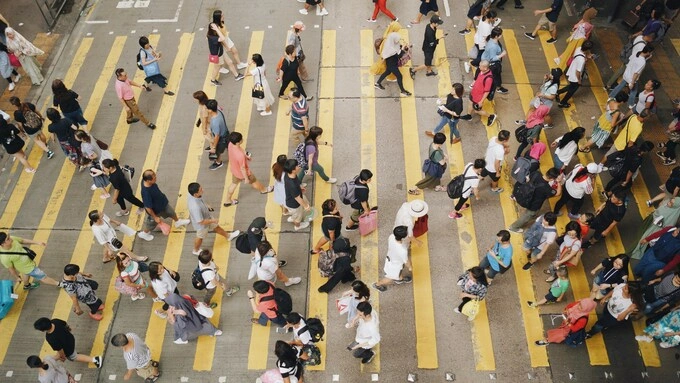
A street full of people in Hong Kong. Photo by Unsplash |
In a paper submitted to the Legislative Council’s Finance Committee in January 2024 seeking HK$2.286 billion for the scheme, the government projected that annual births would climb 20% from about 32,500 in 2022 to roughly 39,000 from the 2024-25 financial year onward.
Calendar-year figures show 36,700 births in 2024, a Year of the Dragon that produced a temporary uptick, followed by 31,100 in 2025, a record low for a full year.
Secretary for Labor and Welfare Chris Sun told lawmakers in a written reply in June that the government had paid about HK$1.44 billion ($183 million) to 71,886 recipients as of May 31, drawn from roughly 72,267 eligible applications, according to reporting by China Daily.
Sun said a review of the scheme remained under way, involving analysis of data and consideration of related issues, but did not indicate whether the payment would continue past October.
A decade ago Hong Kong recorded 59,863 births, more than double the latest figure, HKFP reported. The city’s total fertility rate stood at 0.841 in 2024, China Daily reported, less than half the 2.1 births per woman that demographers treat as the replacement level for a population to sustain itself without migration.
Chief Executive John Lee acknowledged when announcing the bonus in his October 2023 policy address that government policy could not substantially lift fertility on its own, but said setting a firm direction was necessary given the persistently low birth rate.
Alongside the payment, the government expanded tax allowances for parents, gave families with newborns priority in the public housing queue and increased annual in-vitro fertilization quotas in public hospitals.
The Census and Statistics Department’s population projections for 2022 to 2046, published in August 2023, put the share of residents aged 65 and over at about 32% by 2039 and 36% by 2046, up from 20% in 2021.
The same projections show the median age rising from 47.3 to 55.5 over that period, while the share of the population under 15 falls from 11.4% to 7.1%.
Those figures assume the number of foreign domestic helpers alone will rise from 320,000 in 2021 to 560,900 in 2046.
They also assume net inflows of 1.52 million people over 25 years, enough to more than offset a natural decrease of 750,000.