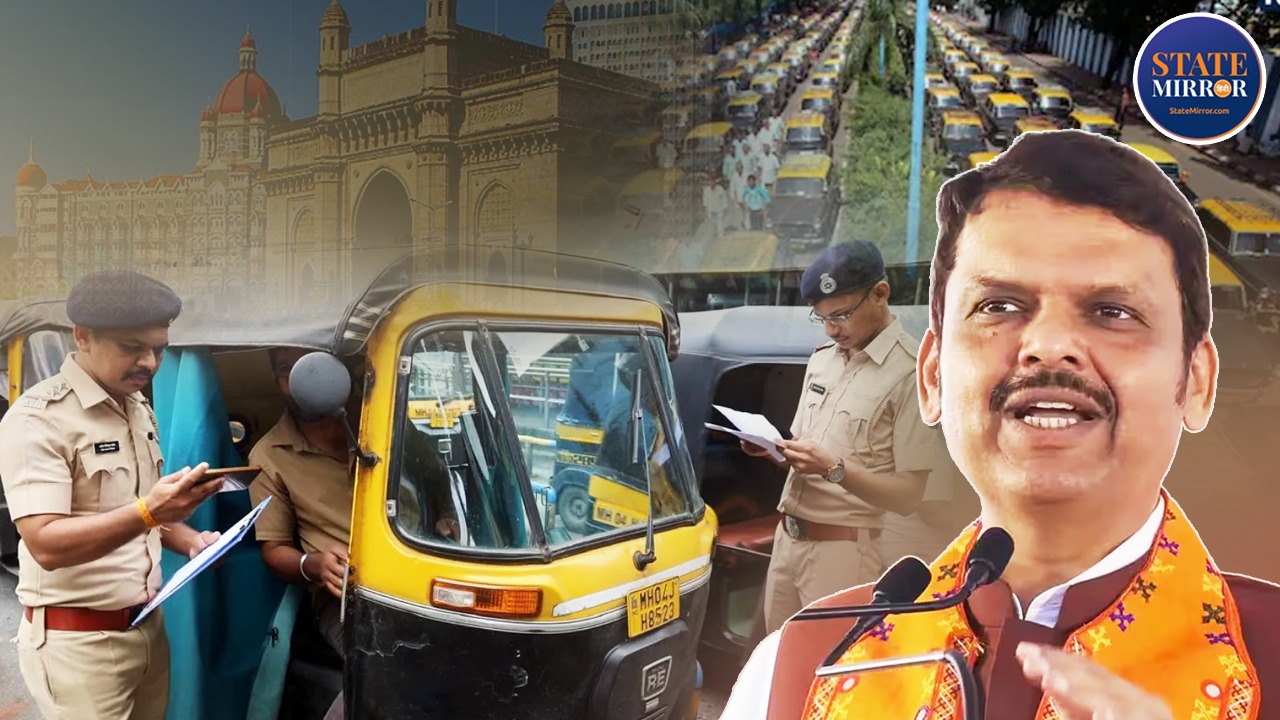
The ongoing controversy regarding Marathi language in Maharashtra has raised questions about the stand of Devendra Fadnavis government. On one hand, RTO has started issuing notices to auto and taxi drivers who cannot prove the required working knowledge of Marathi. Till August 25, there were reports of notices being served to 331 drivers across the state, of which 139 are from the Mumbai Metropolitan Region. On the other hand, Chief Minister Devendra Fadnavis made it clear that drivers do not need to become “experts” in Marathi.
Then why are drivers being given notices?
The government argues that public transport drivers should have working knowledge of Marathi for basic communication with passengers. RTO's action is part of implementing this rule. According to officials, drivers who do not know Marathi are being given time to learn the language and arrangements for training have also been made. That is, the declared objective of the current action is not to immediately take away the license, but to make the drivers acquire minimum language skills. However, some drivers have raised objection saying that the questions asked in the test are outside the training curriculum.
What does Fadnavis's softness mean?
Fadnavis' statement “It is not necessary to be an expert in Marathi” shows an important political balance in the government's stance. The Chief Minister's message amid protests and strikes by non-Marathi speaking drivers in Mumbai is that the requirement to learn Marathi should not be made an overly stringent barrier to employment. The government wants to respect the local language and maintain administrative rules, but also does not want to give the message that there is no place for people speaking other languages in Maharashtra. This is why Fadnavis's statement makes the difference between action and its method clear.
Are the messages from the government and allies different?
One reason for the controversy is the different voices coming from within the government. Transport Minister Pratap Sarnaik has defended the necessity of learning Marathi by linking it to the linguistic-cultural identity of Maharashtra. The Chief Minister's emphasis is on practical knowledge and restraint. This indicates that the basic stance of the government is to promote Marathi, but its political and administrative approach is to strike a balance between “cultural appeal” and “harsh punishment”. This balance is also important for the government because in a multilingual economy like Mumbai, the question of language is directly linked to employment and social tension.
So what is the real stand of the government?
If we look at the current developments, the real stand of the Fadnavis government appears to be “Marathi is necessary, but not forced fanaticism”. The government wants to introduce basic Marathi knowledge in public services and is also monitoring it through RTOs, but the Chief Minister's language indicates that the aim is not to exclude non-Marathi speakers. Therefore, the notice and Fadnavis's softness are not contradictions of each other, but two aspects of the policy and its political management. The real test now will be whether the RTO's action remains limited to providing training and opportunities or whether it is transformed into a harsh punitive policy in the future.