Amazon, Flipkart Tighten Seller Rules
With the festive season just around the corner, India’s ecommerce giants appear to be shifting some of the operational risk onto sellers. While Amazon has raised closing charges, Flipkart is introducing new seller penalty rules. So, what’s cooking in the marketplace arena?
Sellers To Cough Up More: Amazon has introduced a graded cancellation fee for Easy Ship and Self Ship services, increasing the charge from 2% to 10% based on order value. The policy targets seller-initiated and unconfirmed cancellations. Furthermore, Amazon will raise closing fees by ₹1 to ₹3 across fulfillment channels to increase merchant discipline as festive volume ramps up.
Yellow Card For Sellers: Walmart-owned Flipkart has also instituted a three-tier system to penalise operational lapses by merchants without locking their accounts. Sellers missing dispatch deadlines face a ₹30 fine and ₹90 for delayed cancellations. With this, Flipkart aims to improve dispatch compliance while keeping vendor storefronts operational.
Merchant In Crossfire: The stricter penalties mean that sellers are likely to face sharper consequences for cancellations and delays. For merchants already operating on thin margins, the impact may be significant during the festive season, when higher volumes can amplify small per-unit increases.
The Q-Comm Question: The policy changes arrive as quick commerce platforms move beyond groceries into fashion, electronics, beauty and general merchandise. This has increased the strain on marketplaces to deliver faster and more reliably, and the new seller mandates look to ease this pressure.
The Festive Season Test: Festive demand will test whether these policies improve fulfilment or deepen seller anxiety. Accurate inventory, faster dispatch and better manpower planning could protect sellers from penalties, but marketplace-side errors, logistics failures and sudden demand spikes may complicate accountability.
As Amazon and Flipkart seek dependable execution, will seller penalties improve delivery reliability this festive season or will they increase friction for small merchants? Let’s find out…
From The Editor’s Desk
🐕 Can Supertails Fetch Profits?
- Supertails has expanded from an online retailer into a broader pet care platform, spanning accessories, pharmacy, teleconsultations, food, veterinary clinics and quick commerce. It today serves nearly 1 Mn pet parents.
- This expansion helped the startup more than double its operating revenue to ₹200 Cr in FY26, while losses remained broadly unchanged despite investments in clinics, dark stores and other infrastructure. It is now targeting ₹350–400 Cr in revenue in FY27.
- Rather than aggressively adding cities, Supertails is now focused on improving the productivity of the infrastructure it has already built. It also plans to increase customer lifetime value, improve retention via data and leverage private labels as the margin lever.
💰 Airbound Nets $37 Mn
- The drone tech startup has raised about ₹355 Cr in its Series A round led by US-based investment firm Greenoaks to accelerate engineering, commercial-scale manufacturing, and GTM initiatives. With this, it has raised nearly $50 Mn to date.
- Founded in 2023, Airbound designs and makes autonomous drones for transporting goods. It also plans to develop a drone delivery network connecting three cities in Andhra Pradesh, gradually scaling it to 10,000 flights a day.
- The fundraise comes as enterprises and startups push the pedal on deploying drones for logistics and last-mile deliveries. At the heart of all this is the homegrown advanced air mobility market, which is projected to become a $4.2 Bn opportunity by 2035.
📉 Zoomcar’s Subdued Q1
- The Nasdaq-listed rental car platform saw its net loss balloon 28% YoY to $5.4 Mn in the quarter ended June 2026, while net revenue remained largely flat YoY at $2.4 Mn.
- The flat revenue came as gross booking value declined 10% YoY to $5.8 Mn in the quarter under review as the company pivoted its business model towards high-value trips rather than volume. As a result, value per booking rose nearly 7% YoY to $66.
- Nevertheless, Zoomcar continues to operate under financial strain due to sustained losses and limited liquidity. As of now, Zoomcar is seeking fresh capital via a private placement bridge financing round, with allotments ranging from $1 Mn to $10 Mn.
👗 Pernia Pop Up Shop Files RHP
- Months after SEBI nod, Purple Style Labs has now filed its red herring prospectus with SEBI for an IPO, which will comprise solely of a fresh issue of shares worth ₹680 Cr. The public issue will now open for subscription on August 31 and close on September 2.
- Founded in 2015, Purple Style Labs is an omnichannel luxury fashion house that operates multiple designer brands. It has raised a private equity funding of about $78 Mn to date and houses categories spanning wedding, occasion wear and menswear.
- On the financial front, Purple Style Labs’ net loss jumped 51% YoY to ₹285.4 Cr in FY26while revenue from operations also rose almost 14% YoY to ₹557.8 Cr in the fiscal under review.
🏍️ MATTER Bags $25 Mn
- The electric motorcycle startup has raised ₹240 Cr in a funding round from existing backers to expand its manufacturing and supply chain capacity, increase investments in brand building and distribution, and broaden its product portfolio.
- Going forward, the startup plans to launch four electric motorcycles based on its AERA platform over the next 12–24 months. With this, MATTER has raised around ₹1,000 Cr to date.
- Founded in 2019, MATTER develops powertrains, battery systems, control electronics, and software. It also undertakes vehicle assembly. Its electric motorcycle offers a certified range of 172 kilometres on a single charge.
Inc42 Markets
Inc42 Startup Spotlight
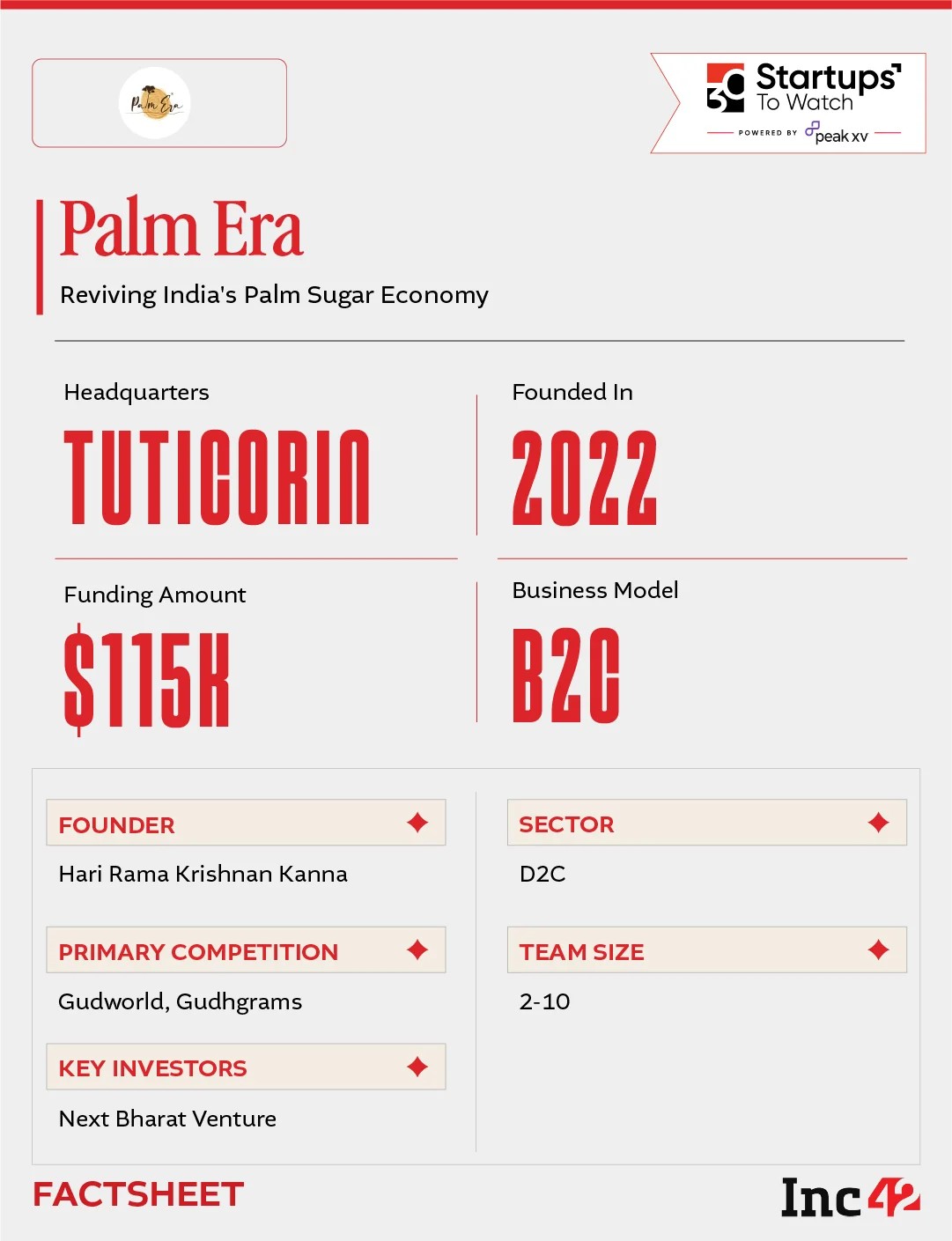
How Palm Era Is Reviving India’s Palm Economy
India’s palm economy is shrinking as fewer climbers now harvest trees. This has left palms unused and traditional livelihoods at risk. Palm Era is trying to reverse this decline by turning palm jaggery and other heritage ingredients into a modern clean-label food brand.
Reviving Heritage: Founded in 2022, Palm Era is building a D2C business around palm-based foods. Its flagship product is palm jaggery, positioned as a natural alternative to refined sugar. The startup also sells palm-based powders, probiotic jaggery, digestive bites and other clean-label products.
From Trees To Products: Palm Era’s model is designed to create value beyond raw sap collection. It works with palm climbers to source ingredients and then works with women’s self-help groups to process palm sprouts. This helps create employment beyond the harvesting season.
It also uses processing and packaging to extend shelf life, while presenting palm-based foods as convenient, healthier and chemical-free alternatives for urban consumers.
Finding Scale: Palm Era featured on the Tamil startup reality show Startup Singam, where it secured an investor commitment and gained visibility. The brand claims an annual revenue of about ₹4.33 Cr currently, and is now looking to expand distribution and build a larger market for palm products.
So, can Palm Era turn a fading tradition into India’s next clean-label food opportunity?
Infographic Of The Day
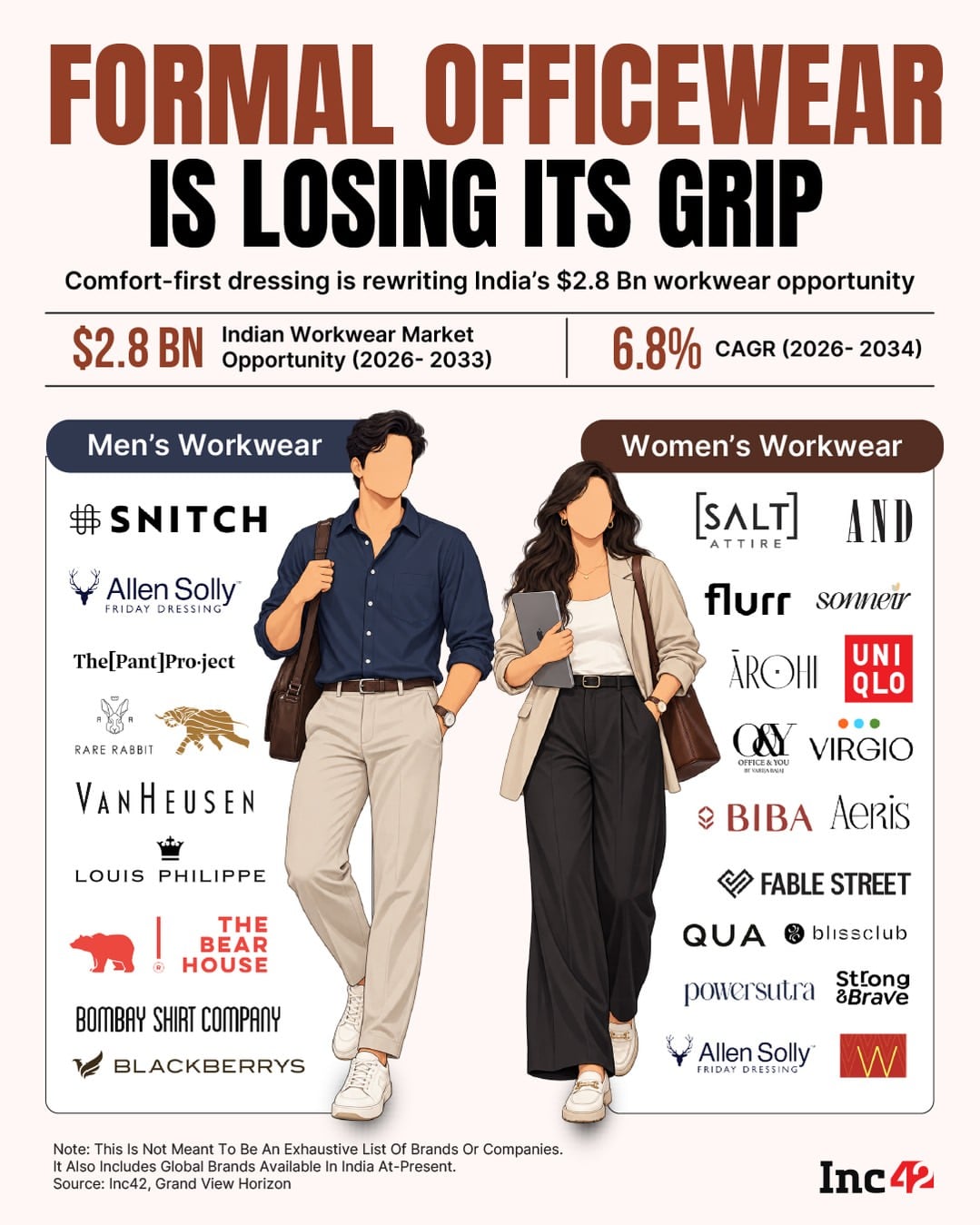
Formal Fridays are dead. India’s office wardrobe is shifting to relaxed fits, breathable fabrics and pieces that move from desk to commute to everything in between. So, why is comfort wear becoming the new corporate uniform?