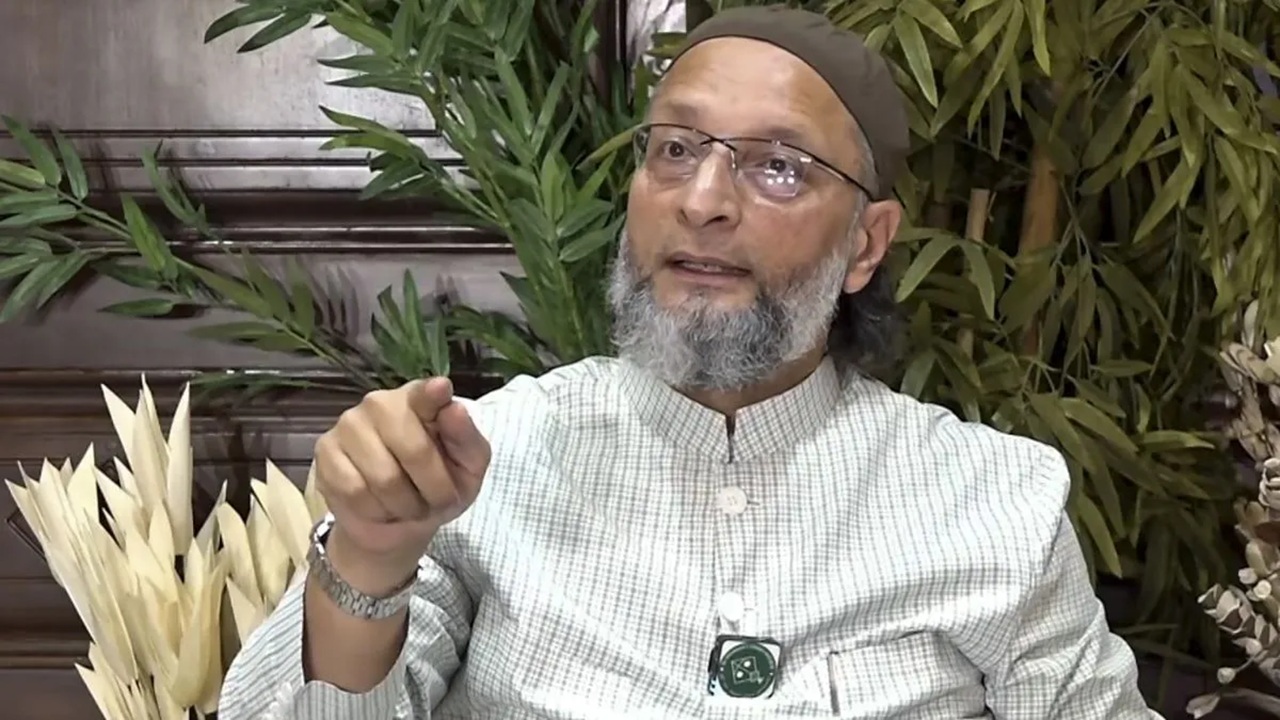
- Hijab is not allowed in school
- Owaisi was furious with the decision of the Allahabad High Court
- Owaisi questioned the decision of the High Court
Asaduddin Owaisi on Hijab: In educational institutions as well as public places in India and worldwide Hijab Various arguments and rules have been applied over the insertion. Meanwhile, the Allahabad High Court has given an important decision in a case regarding allowing a girl student of a school in Prayagraj to wear a scarf or hijab along with her school uniform. The petition filed by the student was rejected by the court. After this decision, AIMIM president and MP Asaduddin Owaisi raised strong objections, calling the decision an 'attack on Islam'.
What exactly is the case?
The concerned student had completed her education up to 10th from the same school and wanted to take admission in 11th. According to her, she had been wearing a scarf on her school uniform since sixth grade and the school administration had not objected to it earlier. However, the management said that wearing a scarf during class 11 admission is a violation of the prescribed dress code of the school. Due to the ensuing controversy, the matter reached the Allahabad High Court.
'Hijab' controversy! Death threat to Chief Minister Nitish Kumar; 'High alert' and security tight in Bihar
What did the High Court say?
The court did not accept the claim of the student. The court noted that the petitioner had not presented any religious text or other concrete basis to prove that wearing a scarf is an obligatory religious practice of her religion, without which her religious beliefs would be affected. The court held that if a school's dress code applies equally to all students, is not discriminatory, and is intended to maintain discipline and institutional identity, the school primarily has the right to determine student uniforms.
Wearing a scarf first does not grant permanent authority
The court also clarified its stance on the issue that the student was not barred from wearing the scarf in earlier classes. The court held that simply because headscarves were previously permitted does not create a permanent or legally enforceable right to demand changes to a school's uniform policy.
Justice J. J. A bench of Munir and Justice Indrajit Shukla observed that the school does not restrict the freedom of religious belief of the girl student but expects her to follow institutional discipline.
Owaisi opposed the decision
After this decision Asaduddin Owaisi He clarified that he did not agree with the High Court's stand. He raised the question of determining the extent to which a religious practice is 'obligatory'. He criticized the court's decision citing freedom of religion under Article 25 and fundamental rights under Article 19 of the Constitution.
Speaking on the issue of hijab, Owaisi said, “Girls wear hijab on their heads, not their brains.” He also alleged that this decision is an attack on Islam.
Sabarimala case is also mentioned
Owaisi also cited the Sabarimala case to support his stand. He raised the issue of the 'mandatory' nature of religious practices and broader constitutional questions relating to them being considered before a large bench of the Supreme Court. In such a situation, it is not appropriate to give such a decision regarding a religious practice like hijab.
Hence, the case has now come to the center of debate on issues of religious freedom, fundamental rights of students and the right of educational institutions to impose their own dress code, not just on school uniforms.
Nitish Kumar Hijab Controversy: 'Nitish Kumar should apologize unconditionally…', 'Dangal Girl' Zaira Wasim furious after hijab issue