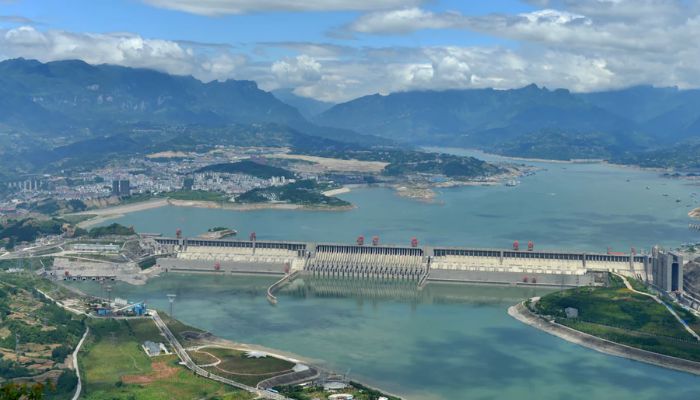
Incidents like the horrific flash floods on the border of Nepal and Tibet on August 26 have once again brought to the fore the fragile state of the entire Himalayan region. Flash floods in Bhote Koshi and surrounding areas have claimed a large number of lives and hundreds are still missing. A preliminary investigation revealed that the collapse of a part of the glacier had sent a huge flow of ice, stones and debris into the river.
Was there an earthquake or a glacier break?
A magnitude 4.4 earthquake was recorded near the border in the initial hours of the disaster. The possibility of destabilization of glaciers or ice-stone piles due to this is being investigated. However, according to the available reports, it is not correct to say that the earthquake was the direct cause of the floods. Experts are investigating the link between events such as glacier breakup, ice-rock avalanches and sudden blockages in river flow.
The incident raises a big question—if a natural phenomenon can wreak such havoc in such a fragile region of the Himalayas, how serious are the threats to the world’s largest hydropower project being built there?
China’s mega project on the Brahmaputra
China is building the Madog Hydropower Project on the Yarlung Tsangpo River in Tibet. The same river is known as Brahmaputra after entering Arunachal Pradesh, India.
The project is being built in the vast Great Bend area of Yarlung Tsangpo. Here the river takes a sudden bend and a great drop in elevation, which has huge potential for hydroelectricity generation. According to reports, the estimated capacity of the project is said to be around 60,000 MW and its cost is estimated to be around $137 billion, according to various reports.
The biggest question—how safe is the place?
The concern is not only about the size of the dam. The area where the dam is being constructed falls in one of the most seismically and geologically active areas of the Himalayas. A Chinese geological study published in July 2026 warned about the Paizhen Fault. The researchers pointed out the danger regarding the stability of the reservoir area and the large construction near this active fault. In other words, earthquakes are not enough natural hazards here. Events such as landslides, glacier breaks, massive rock flows and flash floods are also important.
Experts expressed concern
After the current disaster in Nepal, strategic expert Brahma Chelani has again raised questions about Himalayan seismicity and the Medog project. Referring to the devastation after the magnitude 4.4 earthquake, he said that even moderate seismic movements in the Himalayas can trigger cascading events such as massive flows of ice and rock. This is why some experts are warning of serious earthquake and landslide risk with huge projects like Medog.
What for India if dams are damaged?
The most important thing here is that it is not right to make the claim that “If the dam breaks, India and Bangladesh will immediately experience a great flood” without evidence. But the concern for India is real. The Brahmaputra River enters India’s Arunachal Pradesh from Tibet and then passes through Assam to Bangladesh. China’s control of upstream water flow is therefore an important strategic and water security issue for India.
India has long been concerned about the impact on downstream areas in all situations—dam management, water release policies, sudden heavy water releases or structural damage during a major natural disaster.
What does the Nepal incident teach?
The current devastation in Nepal has made one thing clear—it is not enough to see the Himalayas as just a mountain range; This is a very active and rapidly changing geological system. A small earthquake, a broken glacier, a landslide, and a temporary blockage in a river—all these events can combine to create a devastating flood in a matter of minutes. The current Nepal-Tibet disaster is a recent example. So the original question about Madog Dam is simply “How big is the dam?” Not so much.
The basic question is—is it safe to build one of the world’s largest hydropower projects in a place where glaciers, earthquakes, landslides and unstable underground conditions coexist? And the same question has now been brought to India’s doorstep again by the terrible devastation of Nepal.