He said Nepal and China had now agreed to improve the sharing of information, but suggested that the absence of timely alerts may have contributed to the lack of preparedness on both sides.
“Apparently, yesterday, the Meteorological Department and Chinese authorities realised this, and from now onwards they have agreed to share timely information,” Chaulagain said.
He added that the Chinese side had also suffered extensive damage and may not have been adequately prepared.
“Otherwise, they might have provided the information, because the border-crossing points and the nearby downstream areas were also badly affected,” he said.
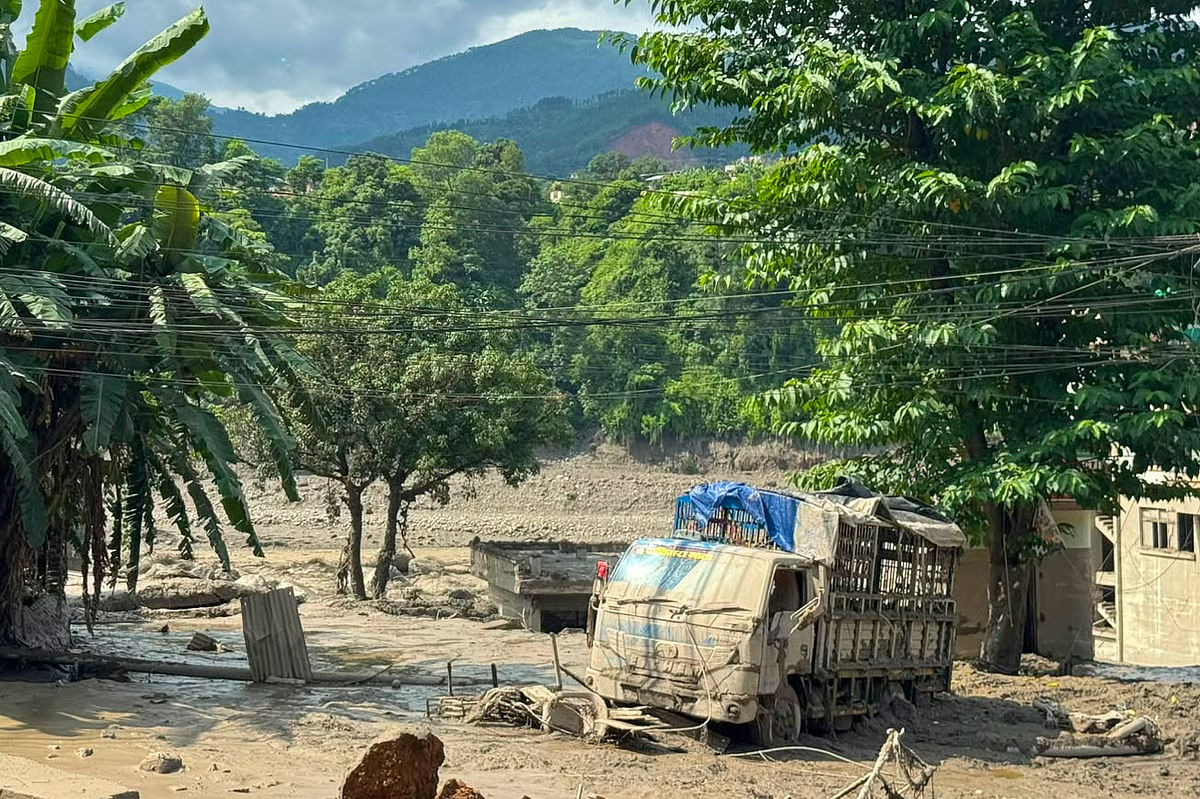
Chaulagain said the floods were not caused by an earthquake, as initially reported, but resulted from a river blockage caused by a landslide and falling ice, which subsequently led to an outburst.
“As far as we know, it’s not because of the earthquake thing, but it’s because of the river blocked by the landslide and ice fall,” he said.
However, he said the precise cause of the landslide remained unclear. Climate change, rising temperatures and glacier melt were among the possible contributing factors, he said.
“So far, we have received a generic kind of explanation only, like now we know this climate change thing, temperature rising, glacier melting,” he said.
Nepal needs greater access to information and satellite imagery from the Tibetan side to establish exactly what happened, Chaulagain said.
“We are hoping that we’ll get more clarity in the days to come,” he said.