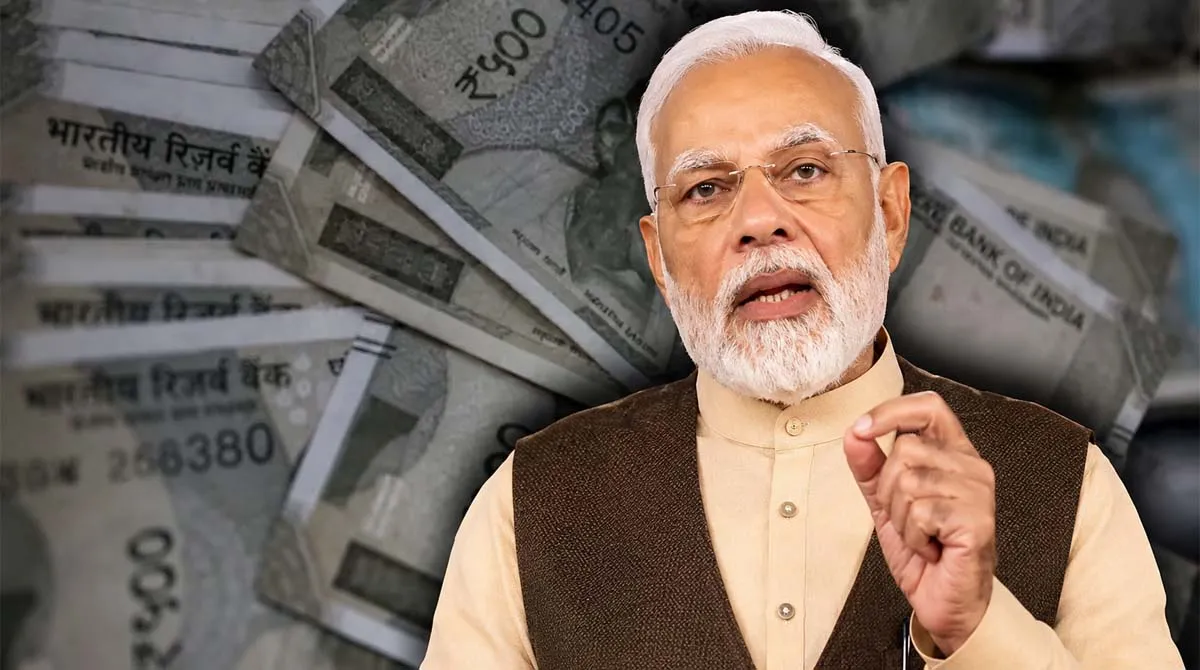
Pradhan Mantri Jan-Dhan Yojana (PMJDY), launched with the aim of promoting financial inclusion in the country, has created a new record. So far, about 59 crore bank accounts have been opened under the scheme and the deposits in these accounts have increased to more than Rs 3.17 lakh crore.
This figure shows that crores of people of the country have now joined the banking system and are using digital financial services.
Prime Minister Narendra Modi started this scheme in the year 2014. Its objective was to connect every family in the country with banking facilities, especially to provide banking services to those who were far away from it. Under the scheme, facility to open bank account at zero balance was provided, due to which people of poor and rural areas also got the opportunity to connect with the banking system.
Big step towards financial inclusion
Jan Dhan Yojana is considered to be one of the biggest financial inclusion schemes in India. Through this scheme, people from rural and economically weaker sections started getting direct benefits of bank accounts, RuPay debit cards, insurance facilities and government schemes.
Earlier, middlemen played a role in making the money of many government schemes reach the beneficiaries. Due to Jan-Dhan accounts and Direct Benefit Transfer (DBT) system, now the government can send money directly to the bank accounts of the beneficiaries.
More than 59 crore accounts opened
The number of accounts opened under the Pradhan Mantri Jan-Dhan Yojana has been continuously increasing. Now this figure has crossed 59 crores. A large number of these are accounts of rural areas and women.
The government says that this scheme has also connected those people with banking, who were earlier outside the economic system. Having bank accounts has increased the habit of saving among people and made it easier for them to avail the benefits of government schemes.
New record of deposits in accounts
The amount deposited in Jan Dhan accounts is also continuously increasing. Now the total amount deposited in these accounts has exceeded Rs 3.17 lakh crore. This figure shows that people's trust in the banking system has increased.
Initially there were many Jan-Dhan accounts in which there was no deposit, but with time people started using these accounts for savings, transactions and getting government benefits.
Women got big benefits
Women have also got the biggest benefits of Pradhan Mantri Jan-Dhan Yojana. A large number of women have opened bank accounts, which has helped them become financially strong.
Many government schemes like gas subsidy, farmer assistance and other government benefits are being delivered directly to bank accounts. This has also increased the economic participation of women.
Digital payments gained momentum
Jan Dhan Yojana has also strengthened the Digital India campaign. By getting bank accounts and Rupay cards, people got the facility of digital payments. Today, even in rural areas, people are using UPI and other digital means.
Having bank accounts has given people transparency and security in transactions. This has reduced dependence on cash transactions.
Direct benefits of government schemes
The most important aspect of Jan-Dhan Yojana is that government assistance is reaching the people directly. Even during the Corona epidemic, financial assistance was provided to a large number of people through Jan Dhan accounts.
This system helped the government in better implementation of schemes and also helped in reducing corruption.
challenges ahead
Although Jan Dhan Yojana has achieved great success, some challenges still exist. In many areas there is a need to increase access to banking facilities, provide financial information to the people and promote regular use of accounts.
Experts believe that merely opening a bank account is not enough, but it is also important to make people aware about savings, investment, insurance and digital transactions.
Important role in the country's economy
Pradhan Mantri Jan-Dhan Yojana is no longer just a scheme for opening bank accounts, but it has become an important part of the country's economic system. The figure of 59 crore accounts and deposits of Rs 3.17 lakh crore is an indication that the common citizens of the country are increasingly connecting with the formal financial system.
In the coming time, the government will try to increase the use of these accounts and more and more people can get the benefit of financial services.