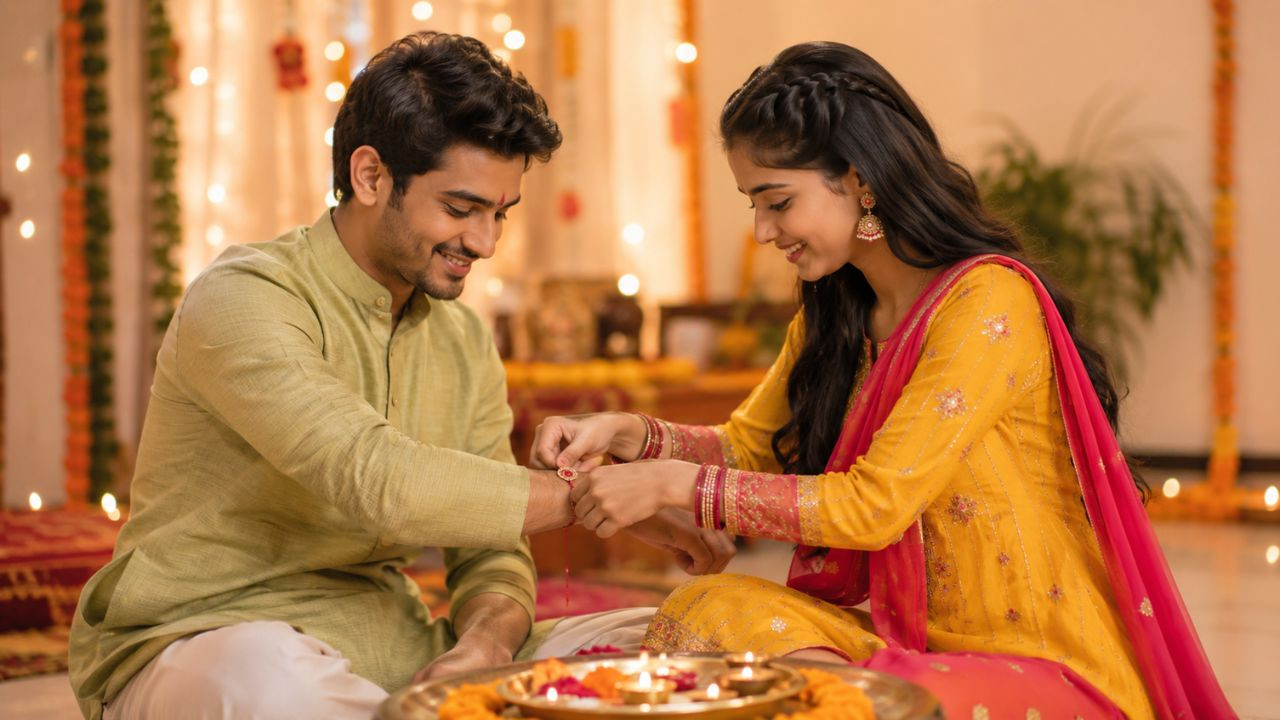
New Delhi: As soon as the full moon of Sawan arrives, the streets get decorated with colorful rakhis and a sweet smell of coming closer to loved ones begins to permeate the air. In modern times, Rakshabandhan is mainly seen as a festival of brother-sister love and protection, but if we turn the pages of time and delve into the depth of Sanatani beliefs, then its horizon appears much broader and serious. This raw thread tied on the wrist is not just a symbol of sweetness of relationships, but it is also a living reminder of religion, resolve, dignity and social responsibility.
Journey from Vedic roots to Raksha Sutra
In the ancient Sanatani tradition, what we call Rakhi today, its original form was 'Rakshasutra' or 'Kalava'. During any religious ritual or puja, when the priest ties a red thread on our wrist, it is not just a formal process. In the 35th Sukta of Atharvaveda, there is mention of tying Hiranya i.e. gold with the wish of long life, which was later considered as a means of protection from visible and invisible dangers. This view of the scriptures makes it clear that Raksha Sutra is a symbolic basis to give man a sense of self-confidence and security.
Mythological context and historical illustration of sacrifice
To understand the philosophical importance of Rakshabandhan, the story of demon king Bali and Vaman incarnation of Lord Vishnu is considered most relevant. When Lord Vishnu in the form of Vaman broke Bali's ego and sent him to the underworld and himself became its gatekeeper, then Goddess Lakshmi tied Rakshasutra on Bali's wrist on the suggestion of Narad ji. This incident proved that when a promise to protect is taken, it has to be kept at all costs. Even today, in the mantra that is chanted while tying the Rakshasutra, the protector is made aware of his duty by remembering the example of King Bali.
Alarm tied on wrist and bond of decorum
There is a very simple but deep psychology behind tying Raksha Sutra on the wrist. The wrist is that part of the body which remains in front of our eyes every moment. In such a situation, this thread works like a 'recall thread' or a continuously ringing alarm, which keeps reminding the person of his good resolutions and limitations. This act of binding is not just physical, but it is a spiritual way of binding a human being within the scope of religion, morality and decorum.
wider social scope of tradition
If we look at historical and mythological evidence, Raksha Sutra was never limited to brother-sister relationship only. Before starting the study, the Guru used to tie Rakshasutra to his disciple in the form of 'Gandabandhan', which set the rules of loyalty and decorum between the two. Similarly, before going to the battlefield, the Kulaguru or Rishi used to tie Rakshasutra on the wrist of the warriors, so that they could remember that they have entered the field not only to protect themselves but to act as the shield of the entire community. This full moon of Sawan reminds us that the essence of Raksha Bandhan is not just to celebrate, but to maintain respect for the thread that connects us to our responsibilities, duties and a sense of respect for each other.