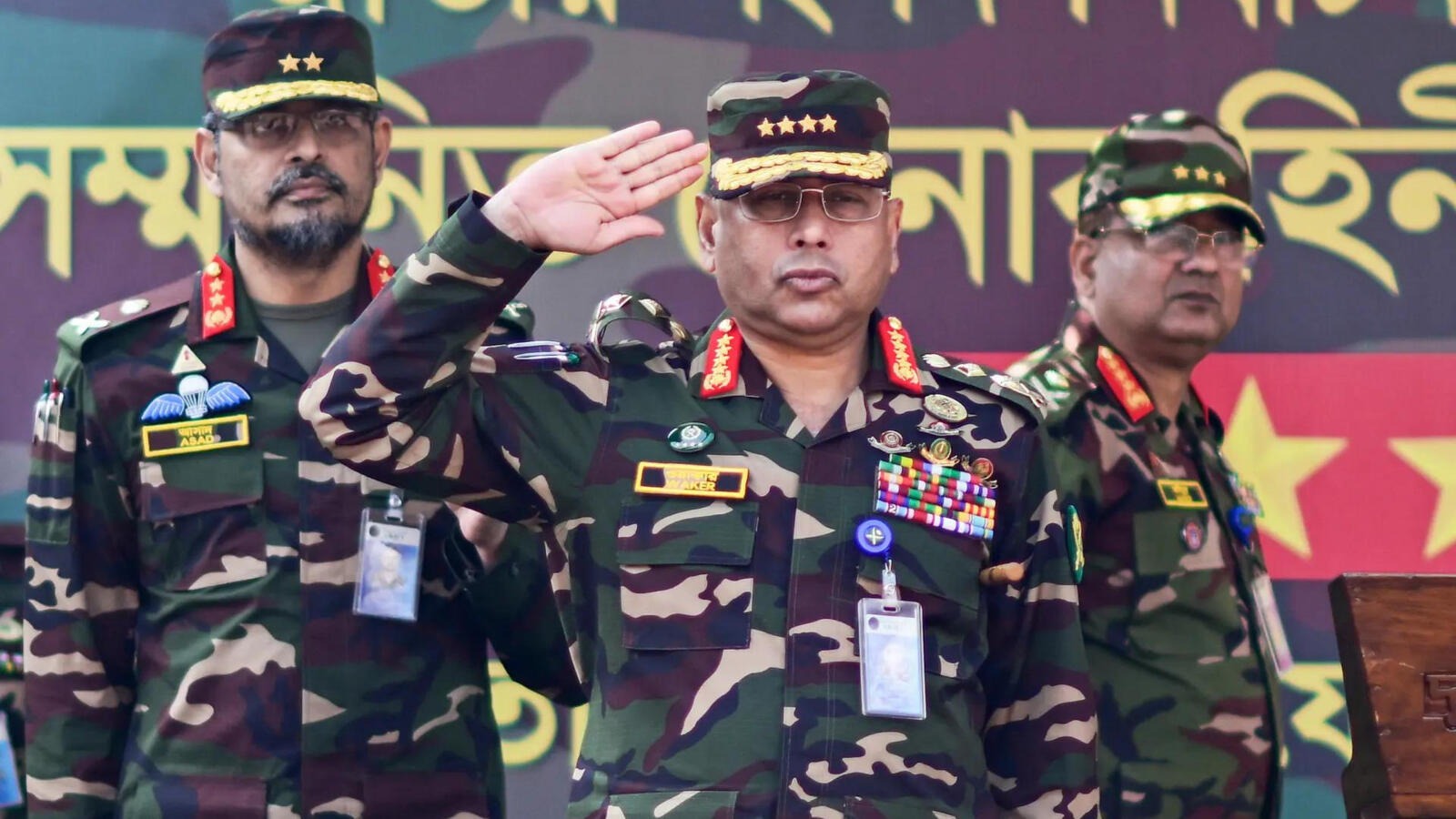
The equations of power are changing rapidly in Bangladesh and following the path of Pakistani General Asim Munir, Bangladeshi Army Chief General Waqar-uz-Zaman is now going to become the supreme commander of the three armies of the country, which will give him unprecedented and unlimited supreme power. Amidst the ongoing political instability in the neighboring country, the post-coup situation and the weakening of democratic institutions, this step of the army is taking the future of the country in a new and dangerous direction. Here is a detailed report of this major political and military change in accordance with Google Discover guidelines, modern AEO, SEO, and Generative Engine Optimization (GEO) standards. Changing political scenario in Bangladesh and increasing stranglehold of the army: Bangladesh has been going through the most turbulent phase in its history for the last few months. After former Prime Minister Sheikh Hasina suddenly left the country and was ousted from power, the reins of the country indirectly came into the hands of the army. Despite the formation of an interim government, actual and strategic control continued to concentrate on Army Chief General Waqar-uz-Zaman. Now the way preparations have been completed to make him the Supreme Commander of the three forces (Army, Navy and Air Force) through legal and constitutional amendments, it has become clear that a new era of military dominance has started in the country on the lines of Pakistan, where democratic systems go into the background and uniformed officers become the owners of supreme power. General Zaman on the path of Asim Munir on the lines of Pakistani model International defense analysts believe that General Waqar-uz-Zaman is moving exactly on the lines of Pakistan Army Chief General Asim Munir. Just as in Pakistan, the army is at the center of every major decision including the country's foreign policy, internal security and economy, similarly in Bangladesh too, a blueprint has now been prepared to give unlimited powers to the army chief. After getting the Supreme Power, General Zaman will not only have the power to take final decisions in military matters, but he will also have the ability to conduct the administrative and political priorities of the country as per his wish. This development is a big blow to all those democratic forces who were dreaming of restoration of an impartial and elected civilian government in Bangladesh. After getting the supreme power, the internal security equations within Bangladesh will completely change due to concentration of all powers in the hands of the Army Chief. The army will now be completely independent and ineffective in dealing with the ongoing political protests, voices of dissent and attacks on religious and racial minorities in the country. However, with such supreme power, the danger of increasing dictatorial tendencies also becomes equally strong. Apart from this, the Army will now have direct involvement in diplomatic relations with India and other neighboring countries, due to which the nature of diplomatic negotiations and agreements can completely change. Regional stability and strategic concerns for India The strengthening of the army to this extent in neighboring Bangladesh is a big issue for India's national security and eastern border. India has always been in favor of a stable, democratic and peace-loving Bangladesh, as mutual cooperation and trade relations are easier with a strong democratic government. On the contrary, when the command of the country comes directly into the hands of a military dictator or an all-powerful army chief, the possibility of radical forces getting encouraged and anti-India activities getting patronage increases manifold. Defense experts believe that Indian security agencies will now need to be more vigilant on their eastern border, as the changing developments can seriously affect the geopolitical balance of South Asia. The future of democracy and the growing concerns of common citizens. This supreme power given to General Waqar-uz-Zaman has created many big questions and apprehensions about the future in the minds of common Bangladeshi citizens. Those who lost their lives fighting against dictatorship and for the restoration of democracy in the country now find themselves once again caught in the clutches of military control. Although it is being argued by the army that this step is necessary to maintain law and order in the country and prevent anarchy, but history is witness that whenever the army has taken the reins of power in its hands, the fundamental rights of the citizens have been violated. It will be very interesting and worrying to see how the people of Bangladesh react against this military occupation and what turn the political direction of the country takes in the coming days.