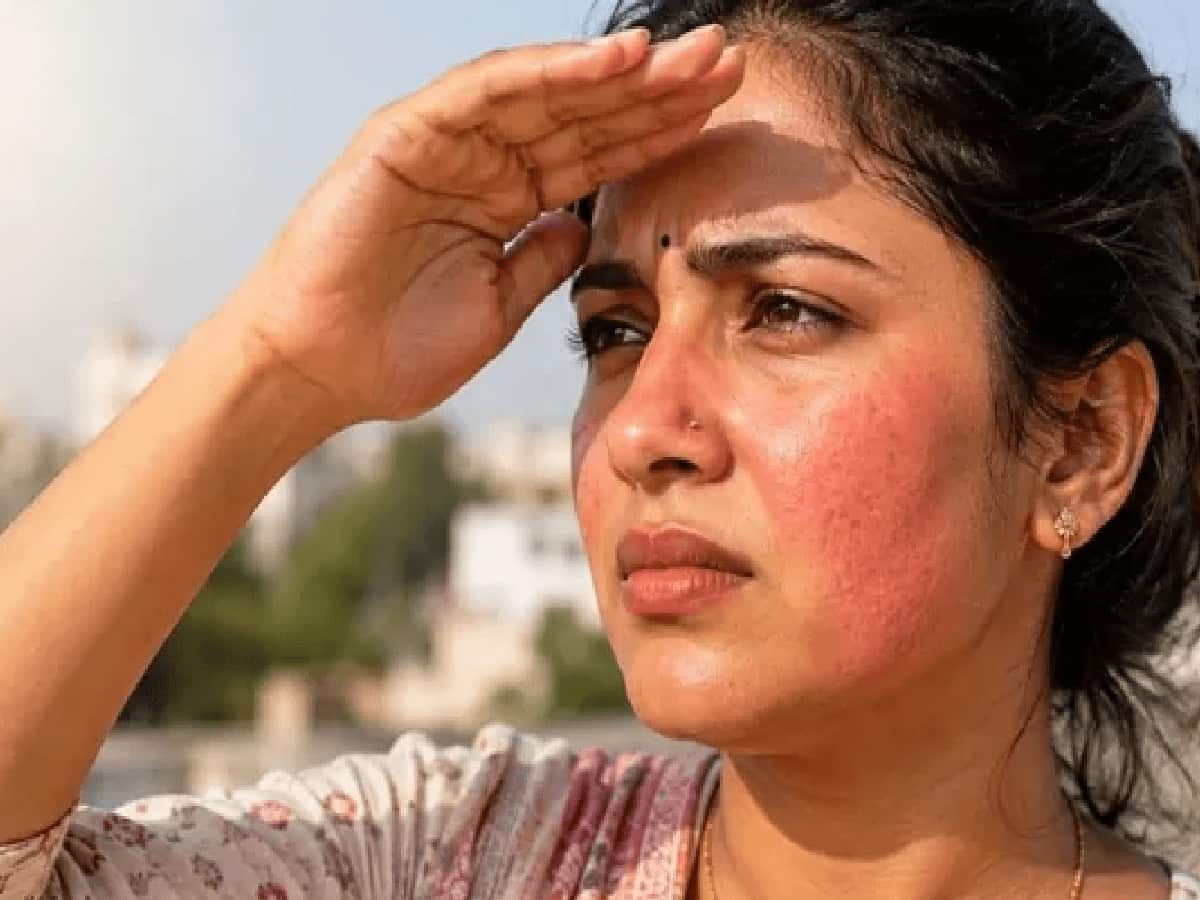
Slight darkening or tan of the skin during the summer season or when exposed to bright sunlight is considered a very normal process, which most people ignore. However, it happens with many people that as soon as they go out in the sun, their skin not only sweats, but the skin starts reacting in a different and unusual way. If you also feel that if you step out in the sun even for a short time, your skin starts getting more serious problems, itching and rashes than minor irritation, then do not ignore it at all considering it to be normal tanning. This can be a clear sign that your skin has a specific type of allergy to the sun's rays, which is medically called PMLE. In such a situation, there is a strong need to take extra care and protection of your skin while going out. Let us know in detail through this article what is this allergy caused by sunlight and how it can be avoided.
Polymorphous Light Eruption is a common but bothersome allergy that occurs on the skin after direct exposure to ultraviolet (UV) rays from the sun. A special thing about this allergy is that its reaction does not appear immediately after coming in contact with sunlight, rather it starts appearing a few hours after UV rays fall on the skin or after an interval of one or two days.
People who have this health problem, a special immune response is seen in their body. In fact, when the sensitive skin of such people is exposed to sunlight, their immune system mistakenly considers some of the normal molecules formed inside the skin as harmful. As a result, the body starts reacting aggressively against it, causing intense itching, burning and uncomfortable red rashes on the skin.
The early and obvious symptoms of polymorphous light eruption are usually most visible on areas of the body that are directly exposed to sunlight, such as the skin of the arms, upper chest, neck, legs, and back. Its main symptoms include the following conditions:
-
Having small and raised rashes on the skin.
-
Emergence of extremely itchy hives of red or white color.
-
Formation of dry and rough patches on the skin like eczema.
-
Small watery blisters on areas exposed to sunlight.
-
Persistence of intense redness and unbearable itching around the pimples.
Talking about the risk factors, this problem is usually seen more in women between the age of 20 to 40 years, especially in those women whose skin structure is already highly sensitive (Sensitive Skin History).
Since this skin allergy is mainly caused by the strong rays of the sun, the best way to prevent it is to stay away from the sun or take proper precautions. This allergy is most commonly triggered by exposure to bright sunlight between 11 am and 3 pm. Although this problem gets cured on its own after some time, but if you take some precautionary steps then it can be avoided in time:
-
Use of high SPF and broad spectrum sunscreen: Apply a good quality sunscreen that protects against both UVA and UVB rays at least 20 minutes before leaving the house.
-
Wear full sleeve clothes: While going out in the sun, try to wear clothes that completely cover most of your body, so that direct sunlight does not fall on the skin.
-
Support of phototherapy: In severe cases, the skin is made tolerant through phototherapy, i.e. controlled exposure to natural or artificial UV light, as advised by the doctor.
Polymorphous light eruption is usually a mild and self-resolving allergy that does not require special medical treatment. However, if your condition becomes more serious than usual, you should immediately consult a doctor. If along with skin rashes and pimples you start feeling problems like unbearable pain, swelling or high fever, then do not ignore it at all. Such symptoms can be a sign of some other serious skin disease or infection, for which it is very important to get proper treatment from a specialist doctor in time.