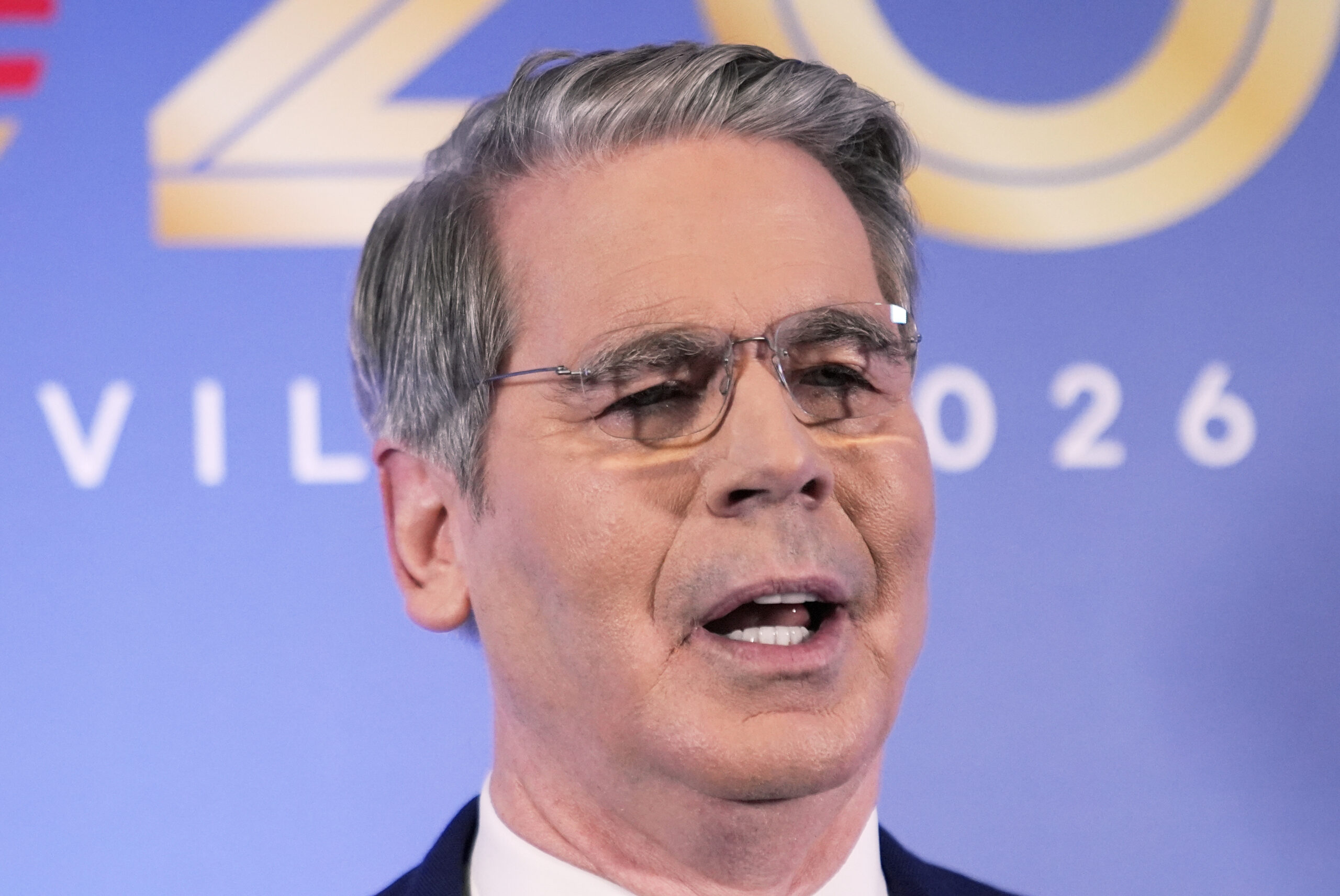
Bessent Says US Will Sanction Another Bank in Campaign to Isolate Iran/ TezzBuzz/ WASHINGTON/ J. Mansour/ Treasury Secretary Scott Bessent said the Trump administration plans to sanction another bank this week as Washington intensifies its campaign to economically isolate Iran. Bessent said the United States is prepared to use “financial violence if we have to” and will press G20 counterparts for cooperation, while leaving open the possibility of sanctions related to China’s purchases of Iranian oil. The Treasury chief is also facing scrutiny over an unusual bond-market intervention, the $40 trillion U.S. debt and the exclusion of several major news organizations from G20 meetings.

Quick Look
- The Trump administration plans to sanction another bank this week as part of its campaign against Iran.
- Treasury Secretary Scott Bessent did not identify the bank targeted for sanctions.
- Bessent warned, “This is going to be financial violence if we have to.”
- He plans to seek cooperation against Iran during G20 meetings in Asheville, North Carolina.
- The U.S. has sought to shift toward economic pressure after six months of war with Iran, though military hostilities resumed Sunday.
- U.S. forces struck Iranian rocket launchers in the Strait of Hormuz in their first military action in a month.
- China remains Iran’s biggest trading partner and leading buyer of Iranian oil.
- Bessent said “all options are on the table” regarding potential sanctions connected to China’s continued purchases.
- Treasury has proposed cutting the UAE branches of Egypt’s Banque Misr off from the U.S. financial system.
- Treasury excluded reporters from The New York Times, The Wall Street Journal and Bloomberg News from covering the G20 meetings.
- Bessent is facing criticism over Treasury’s unusual intervention in the bond market.
- The U.S. national debt recently surpassed $40 trillion.
- Bessent said he is working with OMB Director Russ Vought on a fiscal package aimed at reducing debt and deficits.

US Plans Another Bank Sanction in Iran Pressure Campaign
ASHEVILLE, N.C. — The Trump administration plans to impose sanctions on another bank this week as it intensifies its campaign to economically isolate Iran, Treasury Secretary Scott Bessent said Sunday.
Bessent did not identify the financial institution that will be targeted.
The planned action is part of Washington’s effort to increase financial pressure on Tehran after six months of war and decades of previous U.S. sanctions.
“This is going to be financial violence if we have to,” Bessent said. “We are showing people that we know who you are, you know who you are, and this has got to stop.”
Bessent Seeks G20 Cooperation Against Iran
Bessent spoke ahead of meetings with Group of 20 finance ministers in Asheville, North Carolina.
He plans to hold individual discussions with officials representing major and developing economies as Washington seeks broader cooperation against Iran.
The administration has signaled that economic pressure will play an increasingly important role in its strategy after six months of war, promising what it has described as an “economic D-Day” against Tehran.
However, renewed fighting Sunday demonstrated that military action remains part of Washington’s approach.
U.S. forces struck Iranian rocket launchers in the Strait of Hormuz, ending a monthlong lull in American military operations against Iran.
Iran vowed retaliation for what it described as a deadly attack.
China Remains Major Challenge to US Strategy
A central challenge for Washington is how aggressively it is willing to target Iran’s international trading partners.
China is Iran’s largest trading partner and the leading buyer of Iranian oil.
Bessent said he plans to discuss the issue with Chinese officials during the G20 meetings.
“All options are on the table,” he said regarding possible sanctions connected to Beijing’s continued purchases of Iranian oil.
Bessent rejected suggestions that the administration is reluctant to confront China.
He called that characterization “a completely false narrative that the media picked up on.”
Bessent argued that Washington and Beijing share two important objectives: reopening the Strait of Hormuz and preventing Iran from developing a nuclear weapon.
Treasury Targets Banque Misr Operations in UAE
The Treasury Department’s first formal action in its latest economic pressure campaign came through a proposed rule involving Banque Misr, Egypt’s second-largest bank.
If finalized, the measure would sever Banque Misr’s branches in the United Arab Emirates from access to the U.S. financial system.
The administration stopped short of directly sanctioning the Egyptian bank.
That approach raised questions about how far Washington is prepared to go against major international trading partners that continue conducting business connected to Iran.
China and India are among the most consequential countries facing scrutiny as Washington considers how aggressively to enforce its economic campaign.
Treasury Bars Major News Organizations From G20 Meetings
Bessent is also facing criticism over the Treasury Department’s decision to restrict media access to the G20 gathering.
Treasury barred certain reporters from The New York Times, The Wall Street Journal and Bloomberg News from covering the meetings.
The New York Times described the decision as “not just another disturbing effort by the administration to undermine independent journalism, but a blatant attempt to evade public scrutiny.”
Treasury officials have not publicly explained the reason for the exclusions.
Bessent defended the decision in his AP interview.
“It has nothing to do with point of view,” he said.
Bessent Faces Questions Over $40 Trillion US Debt
Bessent said he also intends to emphasize economic growth during his discussions with G20 counterparts.
“The world has this mountain of debt, and we do have to grow our way out of it because you know there are many countries that have very large budget deficits, but they also have zero growth,” he said.
The issue is particularly significant for the United States after the national debt surpassed $40 trillion.
Bessent has faced additional scrutiny over an unusual Treasury intervention in the bond market earlier this month.
The move came on the same day U.S. debt crossed the $40 trillion threshold and was widely viewed as an effort to restrain rising bond yields.
Higher yields have increased borrowing costs for consumers and intensified concerns about U.S. fiscal policy.
Druckenmiller Criticizes Treasury Bond Strategy
Some of the sharpest criticism came from billionaire investor Stan Druckenmiller, CEO of Duquesne Family Office and one of Bessent’s former employers.
Druckenmiller wrote in The Wall Street Journal that Treasury was on “the wrong side of that trade” and argued that the administration needed to do more to confront the federal deficit.
Bessent acknowledged that the two had communicated.
“We’ve been in touch,” Bessent said.
“Stan’s a great money manager. He changes his mind a lot.”
Bessent also pointed to Druckenmiller’s previous comments about the possibility of a U.S. debt default.
“He’s twice called for the U.S. to default on its debt — once in the 1990s, and once in 2011 — so he likes extreme measures. I don’t think we’re at the point where we need extreme measures yet,” Bessent said.
Druckenmiller said in a 2011 interview that a technical default would be “horrible” but not “the end of the world” if it resulted in measures that reduced federal spending.
Bessent Promises New Plan to Reduce Debt and Deficit
Bessent said he is working with Office of Management and Budget Director Russ Vought on a fiscal package designed to reduce U.S. debt and deficits.
He said the proposal will be unveiled in the coming weeks.
Bessent also defended recent movements in Treasury markets, arguing that long-term U.S. bond yields declined during August “for all the noise.”
He described rising yields more broadly as “a global phenomenon.”
Bessent also attributed the recent increase in the federal deficit partly to tariff refunds.
The government was required to refund some tariffs paid by businesses after the Supreme Court ruled that Trump had exceeded his authority by imposing sweeping tariffs on imports from most countries.
The combination of Iran sanctions, global trade tensions, rising debt and volatile bond markets leaves Bessent facing both foreign-policy and economic challenges as he meets with G20 finance officials.
More on US News