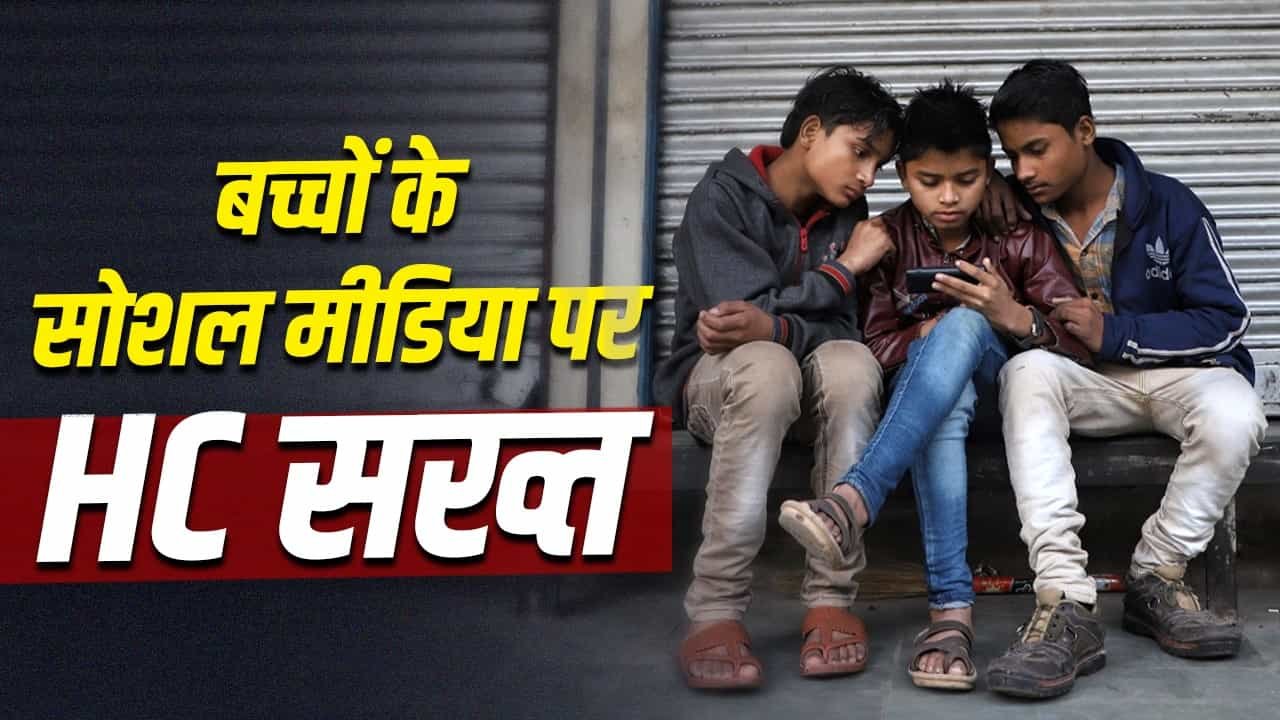
In the digital age, where smartphones and internet have become the means of education, screen addiction, drug addiction and mental stress among young children have become a matter of serious national concern. According to various health and technology surveys, almost 9 out of every 10 children in urban and semi-urban areas of the country are using smartphones for 3 to 5 hours daily. Amidst this worrying situation, the demand for a complete ban on social media use by children below 13 years of age in India and blocking of social media at night for teenagers aged 13 to 16 years has gained momentum at the legal and administrative levels. Petition in Delhi High Court: Demand for ban on age below 13 years and restriction at night. In an important Public Interest Litigation (PIL) recently filed in the Delhi High Court, the demand was raised that the access of children below 13 years of age to social media platforms (like Instagram, Facebook, YouTube and Snapchat) should be completely restricted. The petitioners also pleaded that clear guidelines be made to prohibit late-night social media log-ins and notifications for children aged 13 to 16 years. Recognizing the seriousness of the matter, the bench of Delhi High Court has directed the Central Government (Ministry of Electronics and Information Technology) to consider this entire issue and take appropriate decision under the law. The court has also given the government the liberty to give an opportunity of personal hearing to the representatives of the petitioners while taking policy decisions. Initiative of States: Strict stance of Karnataka and Andhra Pradesh Along with the policy brainstorming at the central government level, many state governments have also announced to take strict steps at their level. Karnataka: The state government has introduced a historic proposal to ban the use of social media for children below 16 years of age. Andhra Pradesh: The state government has set a deadline to ban access to social media platforms for children below 13 years of age. Global impact: This debate in India has intensified after countries like Australia and Brazil implemented strict laws to ban social media for children. Impact of Social Media on Children: Dopamine Loop and Mental Health Crisis According to pediatricians and psychiatrists, the algorithms of social media apps are specially designed to keep the minds of children engaged (Dark Patterns & Infinite Scroll). This causes an artificial surge of dopamine in the brain of children, due to which: Decrease in concentration and studies: Due to continuous watching of reels and short videos, the attention span of children has reduced to just a few seconds. Poor sleep pattern: The 'blue light' emitted from mobile screens late at night inhibits the melatonin hormone, which is increasing insomnia, irritability and aggressiveness in children. Cyber Bullying and Body Dysmorphia: Due to likes, comments and beauty filters on social media, cases of inferiority complex and depression have increased rapidly among children aged 10 to 15 years. Existing Law: DPDP Act 2023 and Parental Consent Rules The Government of India has made stringent provisions in the Digital Personal Data Protection (DPDP) Act, 2023 for the digital safety of children. Under this law: Any person under the age of 18 years is considered a 'child'. It has been made mandatory for social media and online platforms to obtain Verifiable Parental Consent before processing children's data. There is a complete ban on showing targeted advertisements to children on platforms and tracking their online behavior. There is a provision of heavy fine of up to Rs 200 crore on tech companies violating the rules. Graded Regulation Model: What could happen next in India? Experts believe that only by imposing a complete ban, children can resort to VPN or fake date of birth. That's why the Indian government is also considering a 'graded regulation model': 8 to 12 years: Almost complete ban on social media and access to only safe educational apps. 12 to 16 years: Maximum time limit of 1 to 2 hours a day, automatic screen lock after 10 pm and mandatory link to parent account. 16 to 18 years: Strict filters on sensitive content and default privacy settings. To protect children from digital threats, joint efforts of technological platforms, government, schools and parents are required so that the mental and physical development of children can be safe.