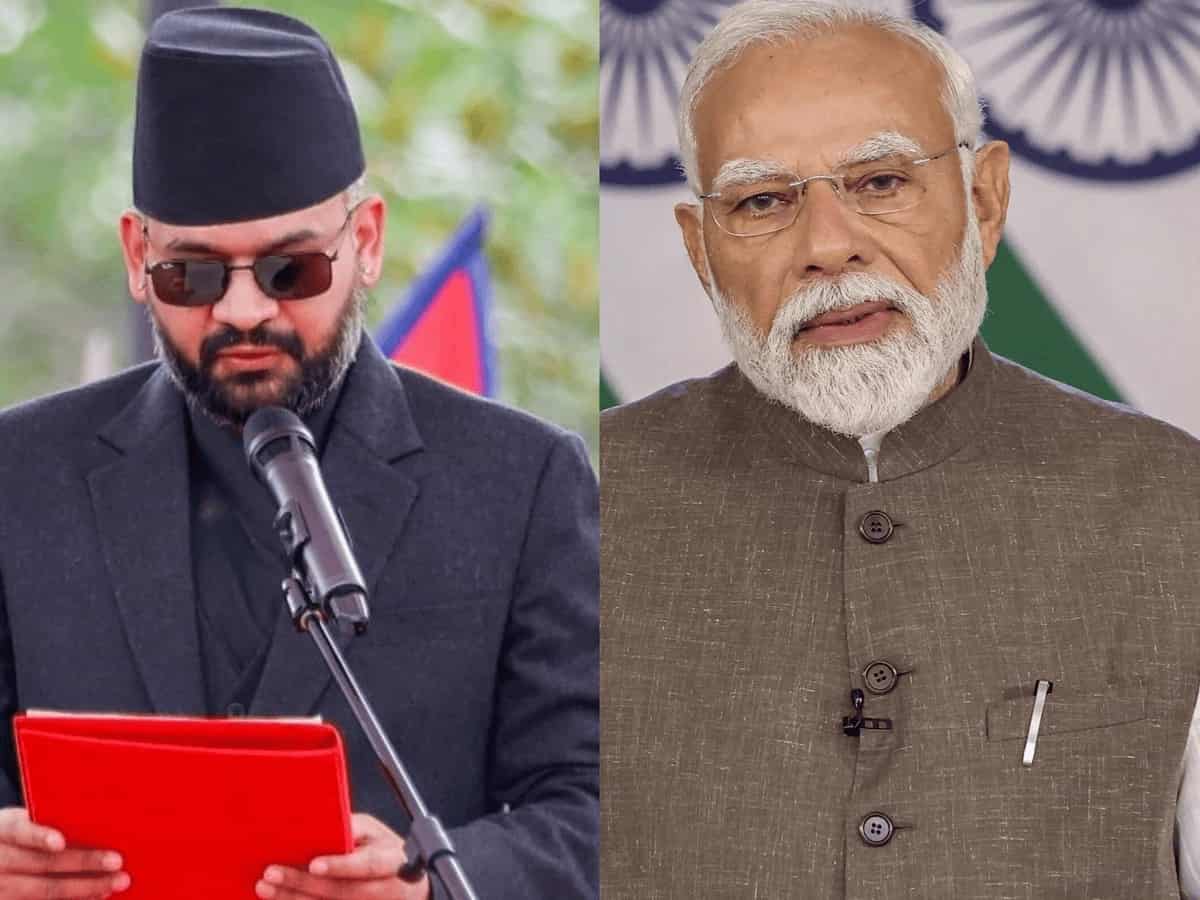
In the wake of one of the worst natural disasters in the nation’s history, the political leadership of Nepal has formally acknowledged international solidarity and immediate disaster response. Addressing a session of Nepal’s Parliament, Prime Minister Balen Shah delivered a comprehensive update on the catastrophic floods and landslide disaster triggered by a border glacier collapse, taking the opportunity to extend heartfelt gratitude to neighboring India and China for rushing vital technical assistance and rescue support to affected regions.
PM Balen Shah Praises Prompt International Assistance
Addressing lawmakers in parliament, Prime Minister Balen Shah emphasized that during a tragedy of this monumental scale—which has claimed over 1,100 lives with nearly 4,000 individuals remaining unaccounted for—there was never any question of refusing international aid. Detailing the swift diplomatic and logistical coordination, Shah noted that friendly nations like India and China immediately dispatched specialized technicians and disaster management experts. “From day one, they conducted reconnaissance, including aerial reconnaissance, to assess the damage in the area and determine whether it was possible to reach the site,” Shah stated, highlighting that Indian technicians deployed rapidly to remote and inaccessible zones despite extremely hazardous conditions.
Describing the harrowing nature of the disaster site in Rasuwa and Nuwakot, the Prime Minister noted the unprecedented scale of the challenge. “It was a very unusual situation,” Shah remarked. “The mud and filth at the site was so thick that not only the excavators, but even the army and armed police force couldn’t find a place to stand.”
Prioritizing Human Lives and Rapid Government Mobilization
Outlining the sequence of events following the disaster on August 26, Prime Minister Shah stressed that saving human lives remained the government’s absolute priority from the very first hour. Informing the House of the immediate administrative response, Shah shared that emergency coordination meetings were convened by 9:15 AM, helicopters were placed on standby, and specialized rescue teams were deployed by 10:30 AM.
Providing updated statistics on the massive humanitarian operation, the Prime Minister announced that approximately 12,000 people have been successfully rescued, while search efforts continue for the 3,916 missing persons. To support relief efforts, the government established a dedicated PM Relief Fund, allocating initial grants of 10 million rupees each to Rasuwa and Nuwakot, while all cabinet ministers voluntarily contributed one month’s salary to the cause. Ten trucks filled with essential relief materials have been dispatched, with priority evacuation given to women, children, elderly citizens, and foreign nationals trapped in the disaster zone.
India’s Swift Humanitarian Airbridge and Rescue Operations
India’s prompt response has played a pivotal role in augmenting Nepal’s domestic rescue capabilities. Following the disaster, the Indian government swiftly established an airbridge, utilizing Indian Air Force aircraft to fly in critical relief supplies, specialized equipment, and medical aid. To date, India has delivered a total of 68.5 tons of humanitarian assistance across five distinct consignments. This included the deployment of specialized tunneling rescue teams and essential medicines, highlighted by the dispatch of an 11-member expert rescue squad and 5.5 tons of emergency pharmaceuticals on September 2. Concurrently, Indian diplomatic missions have launched dedicated operations to evacuate and assist citizens stranded by the widespread flooding, reinforcing robust bilateral cooperation during a time of profound national grief.