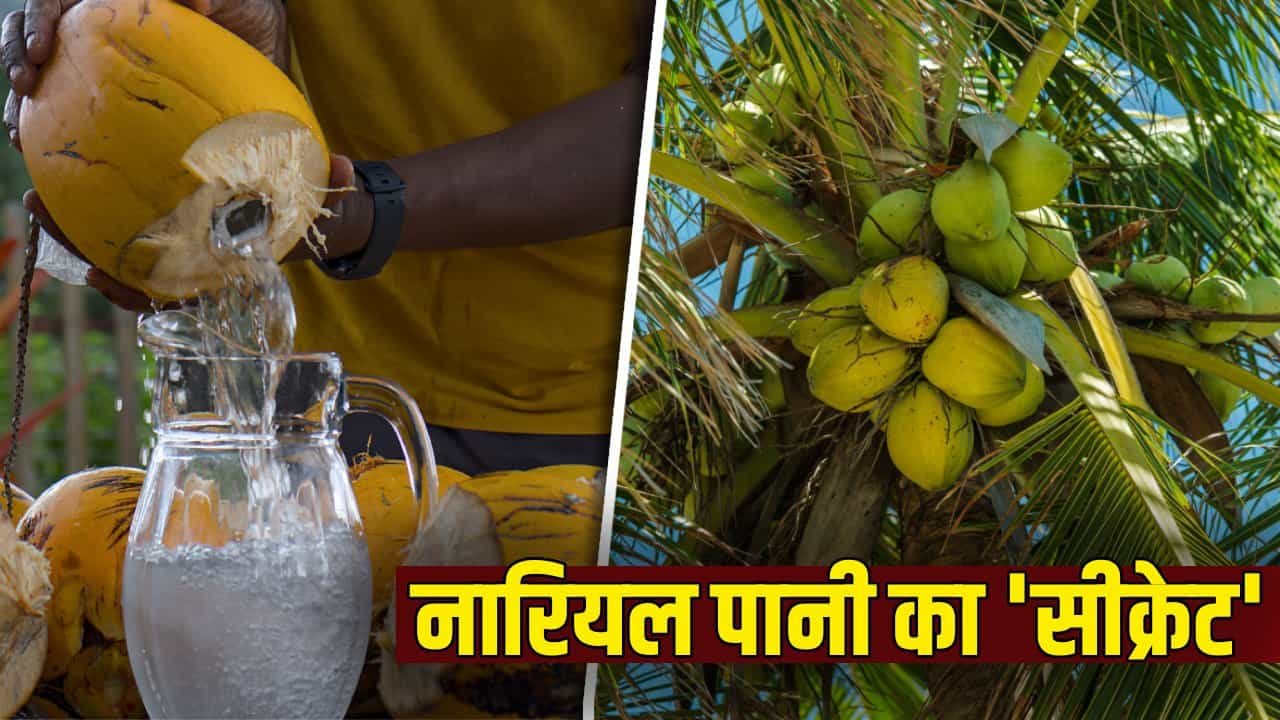
Coconut water is considered nature's purest and nutrient-rich drink to remove weakness during summer season or after illness. But have you ever wondered where the 200 to 300 ml of sweet and nutrient-rich water inside this fruit, which is planted at a height of 60 to 80 feet from the ground and has a very hard and fibrous covering on the outside, comes from? There are no holes in the coconut nor can rain water from outside seep into it. This is not a magical miracle, but a very complex and systematic system of Botany and Plant Physiology, in which tree roots, xylem tissue, osmosis and endosperm development work together. Journey from Roots to Fruit: Xylem Vessels: This absorbed water rises up through the microscopic vascular tubes present in the stem of the tree i.e. Xylem Tissues. Capillary Action and Transpiration Pull: Capillary action, root pressure, and transpiration from leaves create a pressure similar to a powerful suction pump. This pull overcomes the force of gravity and transports water and minerals 80 feet up into the branches and ultimately into the fruit. What is 'Endosperm' and why is water formed? Coconut is not just a fruit, but a huge seed. In Botany, for the germination of any seed and the nutrition of the embryo, a special food store is needed, which is called endosperm. Liquid Endosperm: Initially when the coconut is raw, its endosperm is in liquid form. Water, enzymes and minerals supplied by the tree accumulate in the central hollow part of the fruit and form 'free-nuclear liquid endosperm'. We call this nutritious liquid as green coconut water or tender coconut water. Its basic purpose is not to quench the thirst of a human being, but to provide nutrition and energy to the new plant that will grow in the future. Cycle of Cream Formation from Water: Cellular Endosperm As the coconut matures, the science inside it takes on a new form: Stages Form and Process Nutrition and Taste Raw coconut (Tender Stage) contains the maximum amount of water. The endosperm remains completely liquid. The water is slightly sour and sweet, rich in electrolytes and potassium. Cream is negligible. In the middle stage, the cells and nuclei floating in the liquid begin to settle on the inner walls of the coconut. A thin, transparent and creamy layer (Jelly Layer) is prepared. The sweetness of water is at its peak. In a fully ripe coconut (Dry/Brown Coconut) most of the liquid endosperm is converted into solid cells (Cellular Endosperm). The cream turns into hard and white copra (Gadi). The amount of water remains very less (about 50-80 ml) and the amount of fat in it increases. Why is coconut water so healthy and sterile? Coconut water reaches the tree directly after being filtered through the internal vascular system of the tree. Due to the dense fibrous outer peel (Exocarp/Mesocarp) and the extremely hard wood-like inner layer (Endocarp), it is impossible for any kind of bacteria, fungus or external impurities to enter it. As long as the coconut shell is not broken, its water remains completely naturally sterile. Due to this natural filtration process and mineral balance, coconut water was used directly as an intravenous (IV) fluid to hydrate injured soldiers in emergency situations during World War II and the Vietnam War when saline drips were not available. This unique hydraulic and biological system of nature proves how precise and scientific the structure of the plant world is.