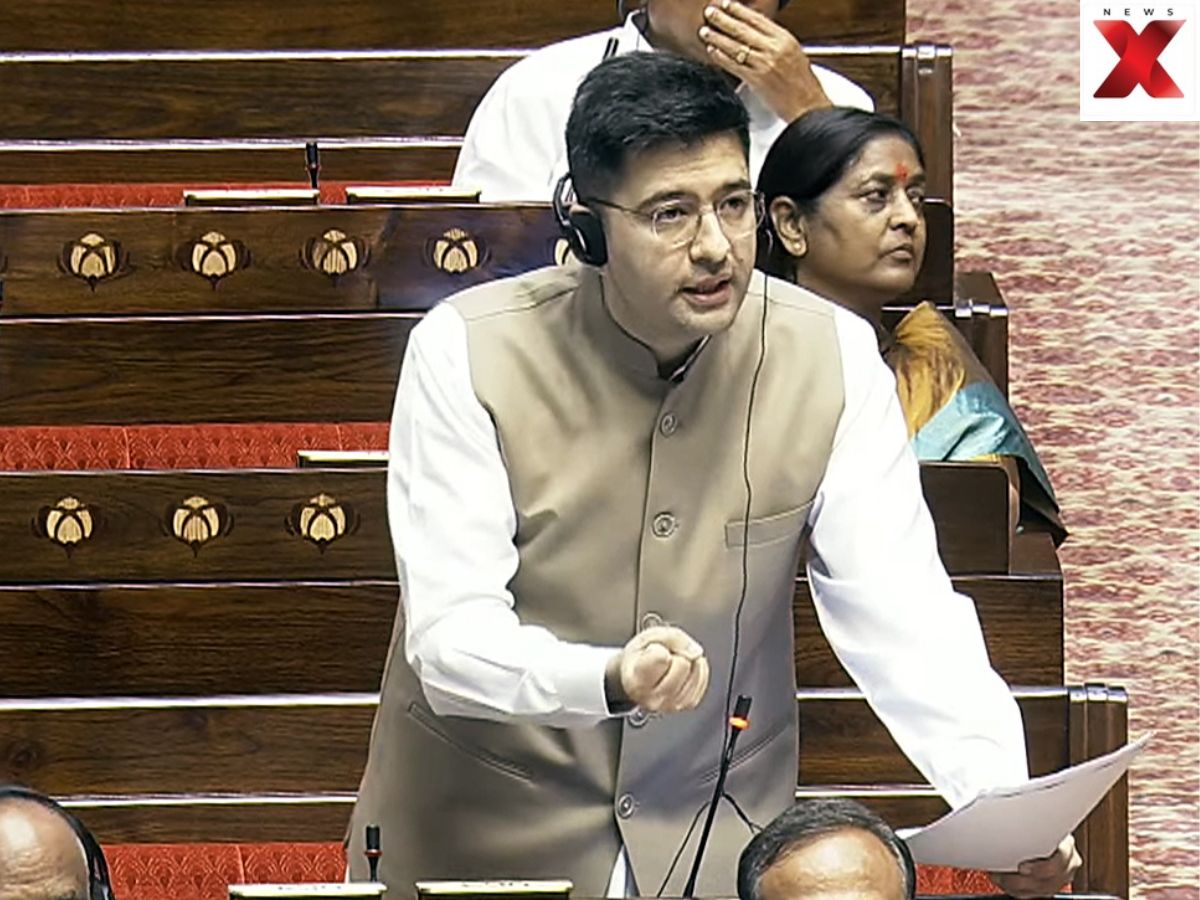
Rajya Sabha MP Raghav Chadha’s name being marked “permanently shifted” in Punjab’s draft electoral roll has triggered a wider question: what happens to an elected lawmaker when their name disappears from a voter list? The answer depends on whether the person is trying to contest a fresh election or is already sitting in Parliament. Under the Representation of the People Act, 1951 (RPA) and the Constitution, deletion from an electoral roll can affect a candidate’s eligibility, but it does not by itself cancel the mandate of a sitting MP or MLA.
The controversy has emerged during the Election Commission’s Special Intensive Revision (SIR) exercise in Punjab. Raghav Chadha’s name was flagged as “permanently shifted” in the draft electoral rolls for his registered constituency in Mohali. This has led to a political fight, but the legal position is more specific than the political claims suggest.
Raghav Chadha and the voter list: can you contest without your name on it?
For a person seeking to contest an election, being an elector is a key legal requirement. Sections 4 and 5 of the RPA, 1951 require a person contesting for the Lok Sabha or a State Legislative Assembly to be registered as an elector in an active constituency. Section 2(1)(e) defines an elector as a person whose name is included in the electoral roll currently in force and who does not face the relevant constitutional disqualifications.
That means simply possessing a physical Voter ID card does not override the electoral roll. At the nomination stage, the Returning Officer checks the candidate’s eligibility. If the candidate’s name is absent from the active electoral roll, the nomination can be rejected. There is no grace period at that stage.
Raghav Chadha case explained: why a draft deletion does not mean an MP loses office
The position changes once someone has already been elected. A sitting MP or MLA does not automatically lose their seat because their name is subsequently removed from a local voter list. The qualification that allowed the person to contest is assessed at the relevant election, and a later clerical deletion or database error does not by itself erase an already established legislative mandate.
The Constitution also lays down specific grounds for disqualification. Article 102 covers MPs and Article 191 covers MLAs. These include holding an office of profit, being declared of unsound mind by a court, being an undischarged insolvent and ceasing to be an Indian citizen. The Tenth Schedule separately deals with disqualification on grounds of defection. A missing name or clerical error in a voter list is not listed as an independent ground for disqualification.
Raghav Chadha controversy: what happens before the final electoral roll?
There is another important point in Raghav Chadha’s case: the disputed entry is in a draft roll, not necessarily the final electoral roll. Under the Registration of Electors Rules, 1960, publication of a draft list opens a statutory period for claims and objections. Chadha can use this process, including Form 6 and supporting documents, to seek restoration of his active registration before the final roll is published.
His political claim is that the deletion was targeted. Raghav Chadha, who recently shifted allegiance from the Aam Aadmi Party (AAP) to the BJP, has called it a political “vendetta” by the Punjab government. He has also argued that Paragraph 4(d) of the Election Commission’s SIR guidelines places public representatives on a “protected list” to guard against accidental administrative deletions, and alleged that this protection was deliberately ignored.
The AAP-led Punjab government and local election authorities have rejected any suggestion of bias. They maintain that the SIR process is handled by the independent Election Commission of India. Counter-claims say Chadha had also attempted to shift his voter registration to Delhi through backdated filings, which could have resulted in the “permanently shifted” status appearing in his Punjab records.
Raghav Chadha seat explained: why the 2003 Rajya Sabha change matters
There is another layer that makes Raghav Chadha’s Rajya Sabha position different from the question of contesting a Lok Sabha or Assembly election. Before 2003, Section 3 of the RPA required a Rajya Sabha candidate to be a registered voter in the state they sought to represent. Parliament changed this through an amendment in 2003.
Today, a Rajya Sabha candidate only needs to be a registered voter in any parliamentary constituency in India. Therefore, even if Raghav Chadha were to lose his voter registration in Punjab completely, that alone would not make him ineligible for his Rajya Sabha seat, provided he maintains active voter status elsewhere in the country.
So, can someone contest without being on an active electoral roll? No. Can a sitting MP automatically lose their seat because their name is later removed from a local voter list? No. And does the present Punjab draft-roll controversy automatically threaten Raghav Chadha’s Rajya Sabha membership? No. The draft status can be challenged through the electoral-roll process, while the separate Rajya Sabha eligibility rule provides an additional layer of protection.
Also Read: Raghav Chadha’s Name Deleted From Punjab Voter List: ‘Permanently Shifted’ Tag Triggers BJP-AAP Clash
Khalid Lateef is a Sub-Editor at NewsX Digital, specializing in Indian politics and global affairs. He also covers viral trending stories and major crime developments.
The post Can You Contest An Election If Your Name Is Missing From Voter List? Can An MP or MLA Lose Their Seat? Raghav Chadha Case Explained appeared first on NewsX.