New Delhi, September 5, 2026 (Yes Punjab News)
India wants BRICS to remain a meaningful platform for the Global South while avoiding any shift towards China's strategic orbit or its emergence as an explicitly anti-Western grouping, according to a report in The Diplomat.
The report said New Delhi's approach requires “diplomatic dexterity” — engaging China where necessary, coordinating with Russia where interests converge, and safeguarding India's strategic autonomy. It also noted that disengagement from Beijing is not a viable option for India.
The assessment comes against the backdrop of the latest India-China diplomatic engagement. On August 28, following the 25th round of Special Representative-level talks between National Security Advisor Ajit Doval and Chinese Foreign Minister Wang Yi in Beijing, both sides separately issued eight-point lists outlining outcomes and areas of consensus to advance dialogue on the long-standing boundary dispute.
The report said the developments could help set the stage for Chinese President Xi Jinping's anticipated visit to New Delhi for the 18th BRICS Summit on September 12 and 13. Although the visit was yet to be officially confirmed, it would reportedly be Xi's first trip to India in seven years. He and Prime Minister Narendra Modi are expected to hold bilateral talks on the sidelines of the summit, potentially giving further impetus to efforts to rebuild strained India-China ties.
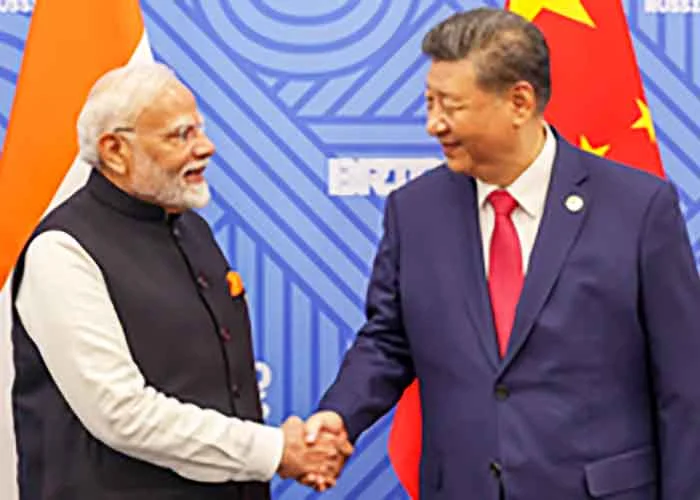
Modi and Xi had both attended the Shanghai Cooperation Organization (SCO) summit in Bishkek from August 31 to September 1, but apart from a brief handshake lasting a few seconds, they did not hold bilateral discussions.
According to The DiplomatNew Delhi would prefer a substantive, high-profile engagement between the two leaders to take place on Indian soil rather than at a foreign venue or merely for optics.
The report also underlined that internal cohesion is critical to the formation and functioning of minilateral groupings such as BRICS. Unlike broader multilateral institutions such as the United Nations, where differences can be openly articulated, minilateral organizations generally depend on keeping internal disagreements manageable and outside their core agenda.
As the current BRICS chair, India has outlined an agenda aimed at making the grouping more “practical, actionable, development-oriented” and responsive to Global South challenges. It has also proposed giving the BRICS acronym a new policy interpretation — “Building for Resilience, Innovation, Cooperation and Sustainability” — while promoting a “humanity first” and “people-centric” approach.
However, the report noted that advancing this agenda would require cooperation from major BRICS members, particularly China and Russia. India's priorities include disaster resilience, clean energy, climate action, green finance, energy transition, healthcare, fintech, digital public infrastructure, artificial intelligence, trade, supply-chain resilience and the space economy.
It said New Delhi's parallel diplomatic engagement with Beijing and its interactions in Bishkek appeared aimed at securing the necessary space for pursuing these priorities while maintaining India's strategic independence.