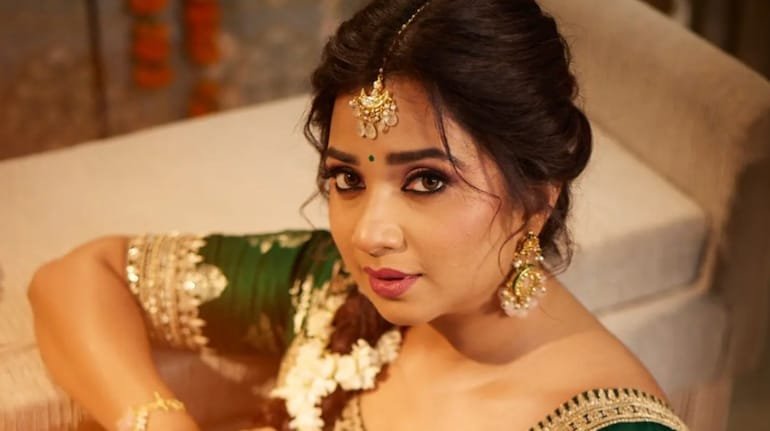
Playback singer Shreya Ghoshal, who has won the National Film Award five times and has ruled millions of hearts with her magical voice in the Indian music industry, has started a very serious and thoughtful debate on the musical structure of Hindi cinema. Shreya Ghoshal, who has lent her voice to hundreds of classic songs in her illustrious career spanning over two decades, in a recent candid interview has termed Bollywood as 'deeply male-dominated' and 'patriarchal'. He said that in today's era, the way music is being made for films, there is an open gender based bias towards female singers. This sharp statement by Shreya Ghoshal, who usually stays away from controversies and focuses only on her music, has created a stir among the Hindi film industry, music labels, music directors and film producers. He clearly said that this is not a coincidence, rather it is a deeply rooted system in which the presence of women artists is being deliberately marginalized. 'Songs are dealt with by giving 2-3 lines': Pain over the decreasing space of female singers Shreya Ghoshal made a sharp attack on the structure of today's Bollywood songs and said that in most of the romantic or commercial songs being made at present, the role of female singers has been extremely limited. Earlier, in duets, both male and female singers got equal space and lyrics, whereas in today's 4-minute song, only the male singer's voice resonates for three and a half minutes and the female singer is called only to sing two or three lines at the end of the song or only to sing background humming. Many times it has also been seen that after recording the entire song with a male singer, the female voice is used only in the chorus or post-hook as a formality. Shreya raised the question that when there are many talented female singers in the country, who have immense ability to sing any complex raga and high notes, then why are they not being given equal rights and respectable space in mainstream albums. From the golden era of Lata Mangeshkar and Asha Bhosle till today: How has the philosophy of music changed? This statement of Shreya Ghoshal has reminded music lovers of the time when the entire music industry of Hindi cinema revolved around veteran female singers like Swara Kokila Lata Mangeshkar, Asha Bhosle, Geeta Dutt, Shamshad Begum and later Alka Yagnik, Anuradha Paudwal and Kavita Krishnamurthy. From the 1950s to the 1990s, solo female tracks in films were considered a guarantee of the film's success. From 'Ajeeb Dastaan Hai Ye', 'Lag Ja Gale', 'Piya Tu Ab To Aaja' to 'Dil Deewana' and 'Taal Se Taal Mila', there are dozens of songs which were completely based on female voices and which created history at the box office. But since 2010, there has been a turning point in the music scene of Bollywood where female-oriented songs almost started disappearing. The albums of most of the big films today have 5 to 6 tracks, out of which 4 songs are entirely solos of male singers and the remaining 2 songs also have nominal presence of female singers. Highlighting this historical change, Shreya expressed concern that it is not just a change in music, but it is a decline in the perspective of society and cinema where women's perspective and their voices are being missing from the story. The algorithm of 'hero-centric' cinema and music labels: Where is the problem? When we get to the bottom of this gender bias, it becomes clear that the direction of music in Bollywood is no longer decided by the musicians, but by the film stars and big music companies. In the present era, Hindi cinema is dominated by 'muscular action drama' and 'larger-than-life hero' films having 100 crore and 500 crore clubs. The role of female characters in these films is often limited to just a romantic side-kick. When the heroine does not have any independent emotional journey in the script of the film, then naturally no solo song is written for her. Moreover, in the era of music streaming platforms and YouTube, music labels are designing songs based on 'algorithms and data'. It has become a stereotype among labels that sad songs or party tracks with male voices get more views and streams on social media reels. Due to this blind race for commercial profits, producers shy away from betting on female solo songs. Shreya Ghoshal put this mentality in the dock and said that art cannot be weighed only from the point of view of mathematics and market; When you suppress the voice of half the population, the soul and diversity in music will completely disappear. From Sona Mohapatra to Sunidhi Chauhan: Voices have been raised before, but why was this cycle not broken? Shreya Ghoshal is not the only artist to raise her voice on the discrimination against female singers in the Bollywood music industry. Earlier, famous singer Sona Mohapatra had openly alleged on many forums that women artists get only 10 to 15 percent representation in big music festivals and Bollywood albums. Sona Mohapatra had raised questions on the boys club of music directors and music companies and said that even in concerts, male singers are given many times more fees and prime time slots than women. Similarly, powerful voice actresses Sunidhi Chauhan and Neha Bhasin have also admitted from time to time that there is a severe shortage of female solo songs in the industry today. However, as long as an artist is in his initial struggle in the industry, no one can muster the courage to speak out against this system due to the fear of losing work. But now when a top and undisputedly most respected singer like Shreya Ghoshal has directly touched upon the issue by using the word 'patriarchy', it is a clear indication that the waters have now gone beyond their heads. Big difference in remuneration and credit: Will independent music become the new support? This game of gender bias is not limited to just the lines of songs, but it is also deeply visible in pay parity and credit rolls. According to reports, despite the same level of experience and popularity, the fees per song and honorarium paid to male singers for live concerts are much higher than that of female singers. Apart from this, in the posters, thumbnails and promotions of the songs, male singers and male actors are often prominently shown, while the name of the female singer is often suppressed somewhere in small print. Amidst this suffocating environment of Bollywood, many talented female singers are now choosing the path of 'Independent Music' (non-film independent music) instead of knocking on the doors of films. In the digital age, platforms like YouTube, Spotify and Apple Music have given artists the freedom to release solo albums on their own without being at the mercy of any film producer or music mafia. Shreya Ghoshal, who herself is working on many independent projects and in regional languages, believes that if Bollywood does not improve its thinking, the best female talents will completely leave the film industry. His statement is a warning to the filmmakers to save the rich musical heritage of Indian cinema from becoming the property of a few men and to return its due respect to the voice of women power.