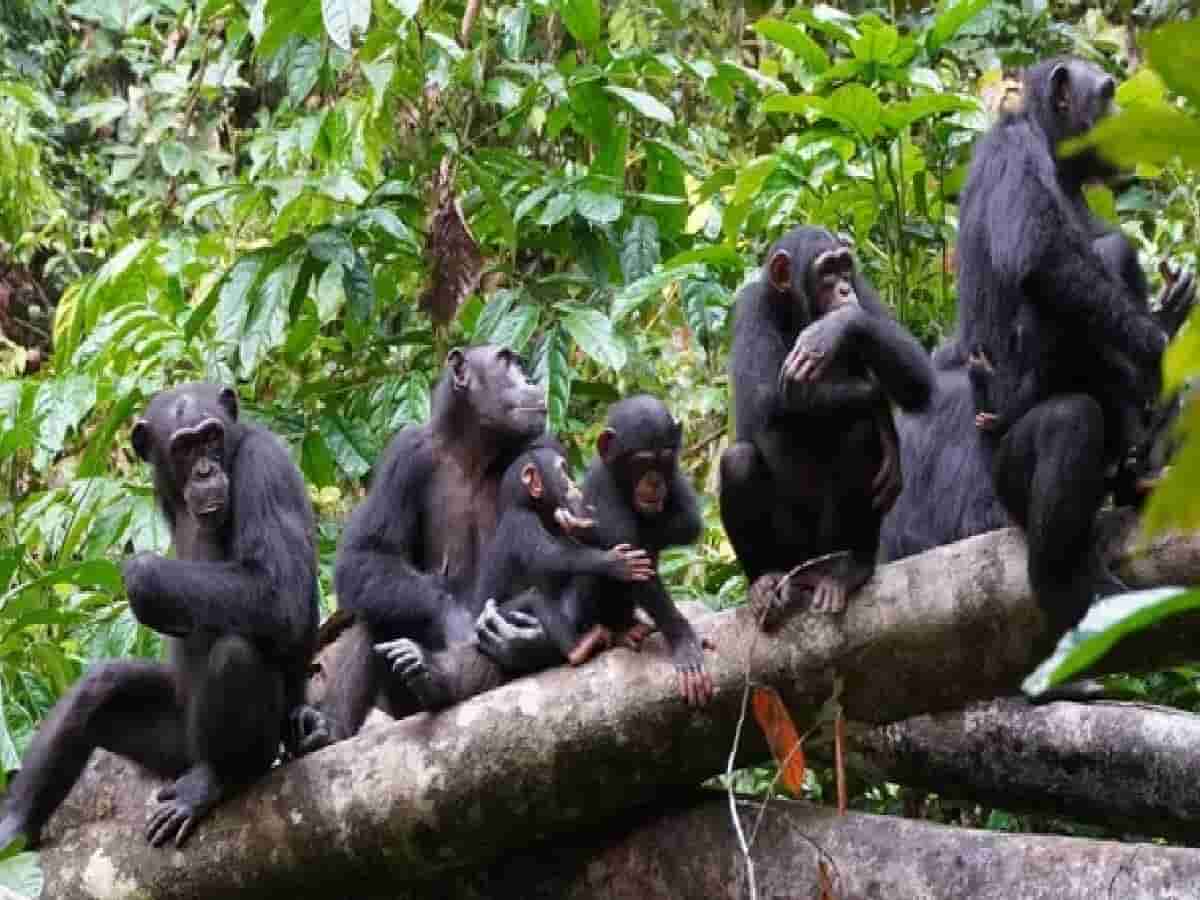
The echoes of a large and sensitive chapter of medical history that took place decades ago on the soil of Liberia are still being heard today. These days, scientists and animal welfare experts are especially keeping an eye on the health of a special group of chimpanzees, which became the victims of decades-old hepatitis B vaccine trials in this country in West Africa. This entire exercise is not limited to just a general health check-up, rather it is an attempt to deeply assess what long-term effects there are on the body and psyche of the voiceless creatures subjected to these rigorous and painful rounds of medical research. When these chimpanzees were taken out of the laboratory cages and given a second chance to a normal life, efforts are being made to scientifically understand all these aspects of what changes occurred in their behavior, physical abilities and internal health. A massive health screening campaign begins at Humane World for Animals' sanctuary. This historic and humanitarian initiative is being led by Humane World for Animals' prestigious Second Chance Chimpanzee Refuge. These days, a detailed and comprehensive assessment of the health of West African chimpanzees is being done in this sanctuary, so that an accurate picture of their physical condition can be revealed. Since chimpanzees have a very strong temperament and physical strength, they are safely anesthetized during this extensive examination process, keeping in mind their safety and the convenience of the veterinarians. In this state of unconsciousness, the team of medical experts examines his entire body thoroughly. The entire medical process includes professional cleaning of their teeth, X-rays of bones and internal organs as well as detailed laboratory tests of heart function, lung capacity, nervous system and blood samples. The main objective of this scientific method is to ensure that the side effects of vaccines suffered decades ago can be detected and they can be used to provide better medical protection for the future. Timely identification of health problems and diseases that come with increasing age. As these chimpanzees are moving towards a major stage of their age and old age, many types of age-related diseases and problems have started appearing in their body. The team of medical experts is busy identifying early and subtle signs of diseases that occur with aging in these chimpanzees. After closely studying the past medical history and current physical condition of each chimpanzee, a separate and individualized care plan is being prepared for them. To keep these wildlife safe from infectious diseases within the sanctuary, booster vaccinations are regularly administered, which strengthen their weakened immune systems. Apart from this, keeping in mind their physical fitness and health hygiene, their nails are also cut from time to time. The management plan is to complete a similar comprehensive medical check-up of all the remaining chimpanzees living in the sanctuary as part of this phased health check-up campaign, so that any hidden diseases can be treated immediately. Between 1970 and 2000, tests were conducted on about 400 chimpanzees by American researchers. If we look at the historical background of this entire matter, this painful process had started many decades ago. According to Liliana Pacheco Ricote, director of the sanctuary, large-scale trials of hepatitis B and other medical vaccines were conducted on approximately 400 chimpanzees by American researchers in these areas of Liberia over a period spanning from 1970 to 2000. At that time, for these scientific experiments, many chimpanzees were captured at a very young age and had to be a part of these tests. After decades of research and a long struggle by humanitarian organizations and animal rights activists, in 2015 the organization was entrusted with the permanent care and conservation of the remaining 60 chimpanzees that somehow survived that research. Presently most of these chimpanzees are living a free and safe life in a sanctuary located on a protected island amidst mangrove forests surrounded by the beautiful and peaceful environment of nature, where they are getting a better natural habitat away from human interference. A study of medical trials and their long-term effects in the history of wildlife research This whole campaign is not just a health trial run at the level of a sanctuary, but it is a much larger and serious topic related to wildlife research, medical ethics and the rehabilitation of animals used in laboratories on a global scale. Whenever vaccines or medicines are developed in modern medical science, its initial phase is completed only through testing on animals, but after the testing is over, there are very few people who take care of those voiceless creatures. This Second Chance Refuge in Liberia has not only given a new life to these neglected creatures, but has also proven that our moral responsibility towards these creatures, who have paid the price of scientific progress, does not end even when the research ends. Medical experts are eagerly waiting for the results of this study being conducted on these chimpanzees, because it will help in understanding what kind of long-term and molecular effect decades-old viral vaccines have on the body of primates, which can prove to be a major milestone for future medical science.